Top Signs You Need Garage Door Service – Don’t Ignore These
A garage door that takes two seconds longer to open than it did six months ago isn’t “getting older.” It’s a motor working against a spring that’s lost tension, and the motor is going to burn out first. The signs of a failing door are almost always mechanical, and they show up weeks before the door actually breaks. The trouble is that they’re easy to shrug off because the door still opens. So read the symptoms below as predictions, not complaints. If you’d rather skip the diagnosis and have someone look at it, call (844) 670-3544 for a free estimate.
Quick answer: what are the top warning signs?
The most reliable early indicators are slow operation, uneven or jerky movement, and a door that’s gotten noticeably louder. Any of the three means a component group is wearing, and each points to a different one. Add visible cable fraying, a door that reverses strangely, or a door that’s too heavy to lift by hand and you’re looking at something that needs service now, not someday.
Which signs mean “call now” and which can wait a few weeks?
Split the symptoms into two buckets. The first bucket is imminent failure: something that can strand your car or drop a door in Skokie within weeks. The second is a scheduled repair window: real wear that you can book on your own timeline instead of a frantic morning. Knowing which bucket you’re in is the whole game.
Imminent failure (weeks, not months):
- A snapping or popping sound when the door moves. That’s often a torsion spring that’s about to break.
- Visible fraying, kinks, or a loose curl on a lift cable.
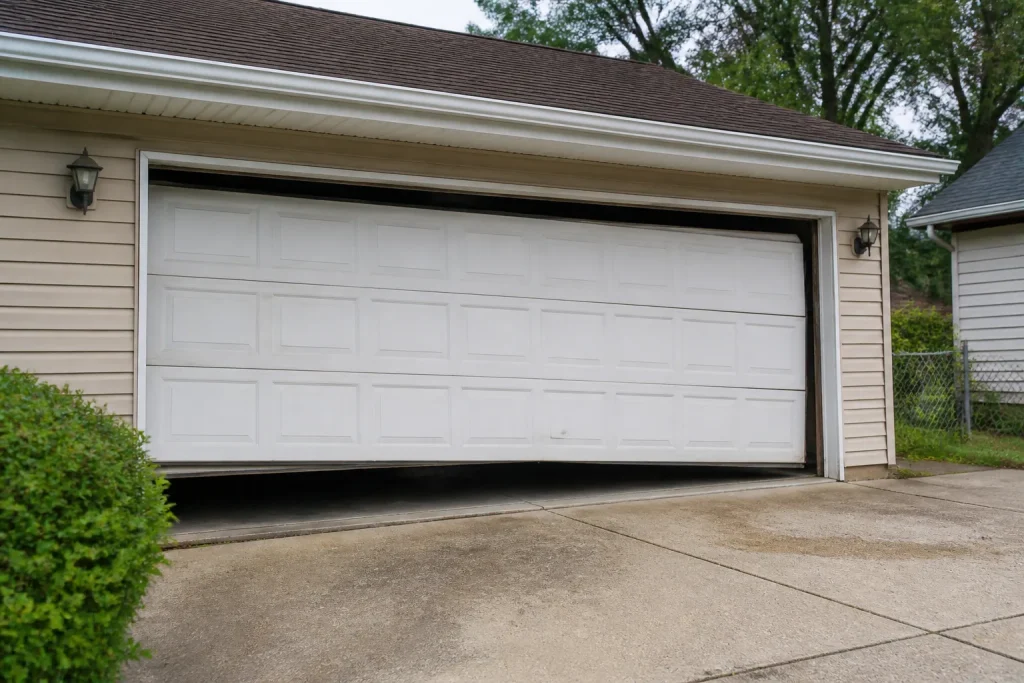
- The door reverses or stops partway down without a clear obstruction.
- The door feels extremely heavy when you lift it by hand with the opener disconnected.
Scheduled repair window (weeks to a couple of months):
- Gradual increase in noise, or a slight rattle at the end of travel.
- Worn rollers or loose hinges that you can see and hear.
- An opener that’s working harder than it used to but still completes the cycle.
The reason this prioritization matters is simple: the “imminent” list involves high-tension springs and cables, and those fail without warning. A trained professional should handle that work. The “scheduled” list is where you get to breathe and plan.
Slow, uneven, and noisy: three different problems, not one
Homeowners tend to lump these together as “the door acting up.” They’re not the same signal, and in our experience treating them as one is how people end up replacing parts they didn’t need to. Here’s how they separate:
- Slow operation points to the opener and the spring balance. If the springs have lost tension, the opener has to lift weight the springs were supposed to carry. The motor draws more, runs hotter, and ages faster. A slow door is usually a spring problem wearing down a motor.
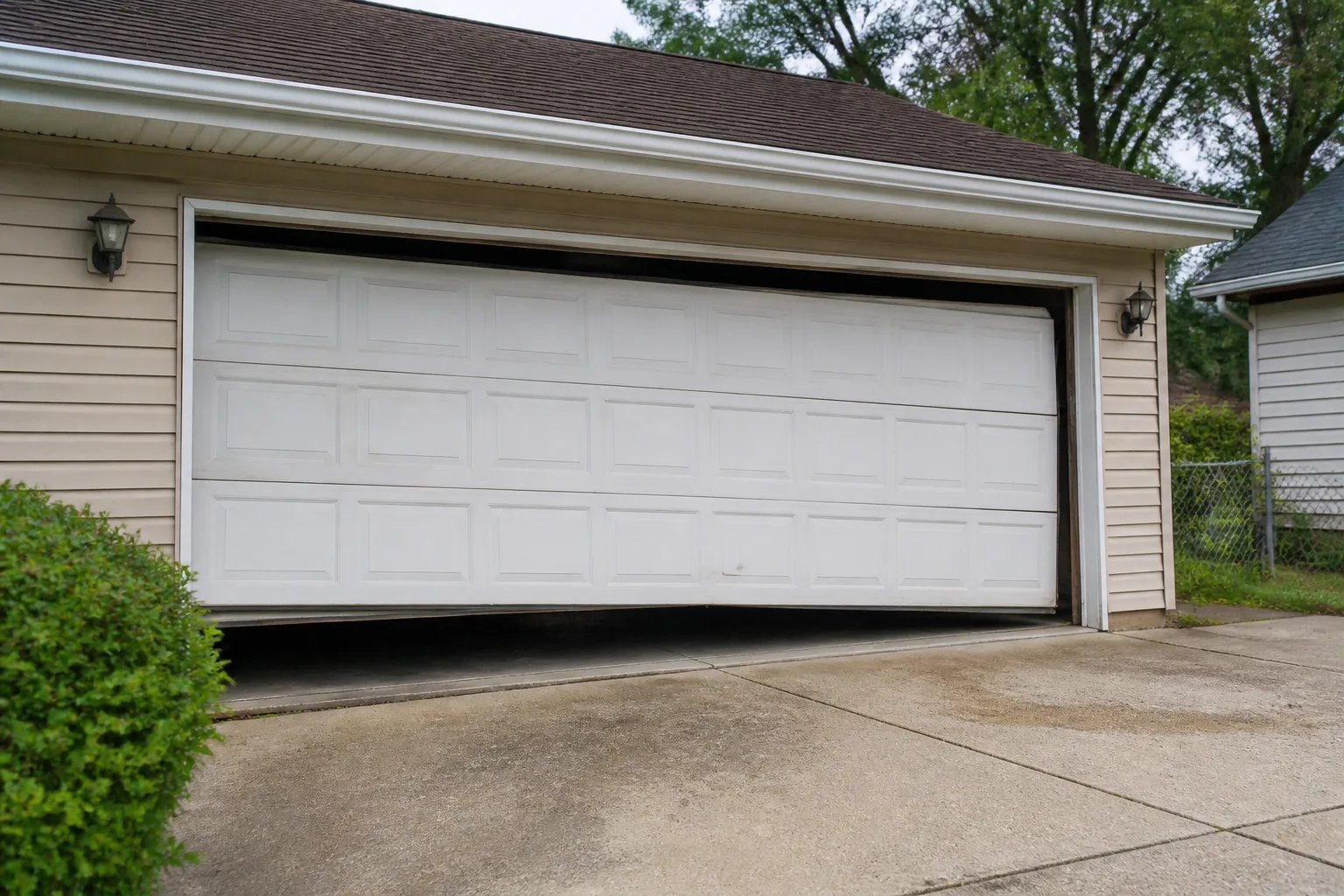
- Uneven movement (one side lags, the door tilts) points to the track, rollers, or a cable that’s slipped or stretched on one side. If left alone, this can bind the door and stress the opener.
- Increased noise points to the mechanical wear parts: rollers, hinges, and the spring system. A grindy or squealing noise in Skokie is usually rollers, while a metallic clunk at the start of travel leans toward springs or hinges.
One symptom, one area to inspect. Chasing the wrong one is how a small fix becomes a replacement conversation.
The four-minute inspection you can do from the garage floor
You don’t need a ladder for a first-pass look at your door in Skokie. Stand on the floor and do this, with the door closed:
- Cables: look along each side. Fraying, a kink, or a cable that’s jumped off its drum means stop and call. Don’t touch it.
- Rollers: glance at the wheels in the track. Flat spots, cracks, or wobble mean they’re worn and are adding friction to every cycle.
- Hinges: check for looseness, rust, or a gap where the hinge meets the panel.
- Tracks: a bend or a dent in a track will pull the door off-line. Look for a visible kink.
That’s it. You’re looking for visible damage, not fixing it. Springs and cables are under high tension and can cause serious injury, so the goal here is a four-minute “do I call someone” check, not a repair. If anything on that list looks wrong, don’t operate the door repeatedly to “see if it gets better.”
When to call a pro: any frayed cable, any snapped spring, or a door that won’t move without force. That’s the point to stop and get a technician out. If you’d rather not DIY the diagnosis at all, that’s fine too. Related services in Skokie: garage door repair and garage door spring repair.
How your opener behaves when the spring system is failing
The opener is the tell. When springs lose tension, the opener picks up the slack, and you’ll see specific patterns long before the spring gives out:
- Reversal hesitation: the door pauses or stutters on the way down, then reverses. That delay can be a sign the opener is straining to move a door the springs should be balancing.
- The manual weight test: disconnect the opener (pull the release cord with the door closed) and lift the door by hand. A balanced door should lift with modest effort and stay put about halfway up. If it’s heavy, won’t hold, or drops on its own, the spring system is out of adjustment or worn.
- Shorter opener life: an opener that’s fighting weight it wasn’t meant to carry will fail faster. If you have a Genie or Chamberlain unit that’s been working harder, it’s often cheaper to fix the springs than replace the motor.
The brands your opener runs on matter for the diagnosis. We work on LiftMaster, Chamberlain, Genie, and Craftsman openers specifically, so we know their travel and force settings and can tell a spring problem from an opener problem without guessing. For garage door opener repair in Skokie, that distinction saves you from paying for a motor you didn’t need.
Which warning signs are actually dangerous?
Some of these are cosmetic and some make the door a liability to operate until it’s serviced. Here’s the honest split:
- Cosmetic: a squeak from a dry hinge, a scuff on a panel, a slightly slower cycle. Worth fixing, not an emergency.
- Liability: a frayed or slack cable, a snapped spring, a door that won’t stay balanced, or a door that reverses unpredictably. Operating it in that state risks the door coming down hard or a cable snapping.
Doors on Clopay, Amarr, and Wayne Dalton systems in Skokie carry real weight, and a failed spring can send that weight down fast. The safe move for anything on the liability list is to stop cycling the door and get a technician out. We’d rather tell you a hinge is fine than have you stand under a door that isn’t.
If a door fails and you’re stuck with a car inside or a house open to the street, we offer emergency garage door service so it’s not a multi-day wait. And because we handle the whole arc, a repair that turns into a replacement doesn’t send you looking for a second company. When it does come to a new door, our Skokie Garage Door Repair Co team can walk you through the options and quote a free measure with a written price before anything is ordered.
The Bottom Line
The warning signs are mechanical and visible, and they show up well before the door quits. Slow means springs. Uneven means track or cable. Noisy means wear parts. Your four-minute check on cables, rollers, hinges, and tracks catches the rest. The one rule that overrides everything: if a spring, cable, or the balance is involved, it’s a job for a trained technician, not a weekend project. Acting on the early signs is how you avoid a stuck car and a bigger bill.
If you’re in Skokie and need help, Skokie Garage Door Repair Co offers free estimates – call (844) 670-3544. Our technicians have up to 14 years of experience, and the price is quoted and agreed before any work starts.
Frequently Asked Questions
A door that’s gotten slower or louder than it used to be is usually the first sign. That’s because the spring system carries the door’s weight, and when it loses tension, the opener has to work harder. Catching it there means a spring adjustment or replacement instead of a burned-out motor. Call (844) 670-3544 for a free estimate.
Light squeaking from a dry hinge or worn roller is fine to use short-term while you book a repair. A grinding, popping, or clunking noise, or a door that jerks, means stop cycling it and get it looked at. Noise plus uneven movement is the combination that most often predicts a break. When in doubt, call and describe the sound. Estimates are free.
Disconnect the opener and lift the door by hand. If it’s heavy and won’t hold halfway up, it’s the springs, and fixing the opener won’t solve it. If it moves easily by hand but the opener still struggles, the opener is the suspect. Because we service LiftMaster, Chamberlain, Genie, and Craftsman systems, we can tell which it is quickly. Call (844) 670-3544 for an exact quote.
Repair when the tracks, panels, and frame are sound and the problem is springs, cables, rollers, or the opener. Replace when panels are rusted or bent, the door is off its track repeatedly, or the repair cost climbs toward what a new door would run. We handle both, so you get one honest recommendation rather than a hand-off. Call (844) 670-3544 for a free estimate and a written price.
Written by the team at Skokie Garage Door Repair Co.
Need Garage Door Help?
Call Skokie Garage Door Repair Co - the local pro we connect you with is licensed and insured, here with fast after-hours help in Skokie.
(844) 670-3544