Last updated November 23, 2026
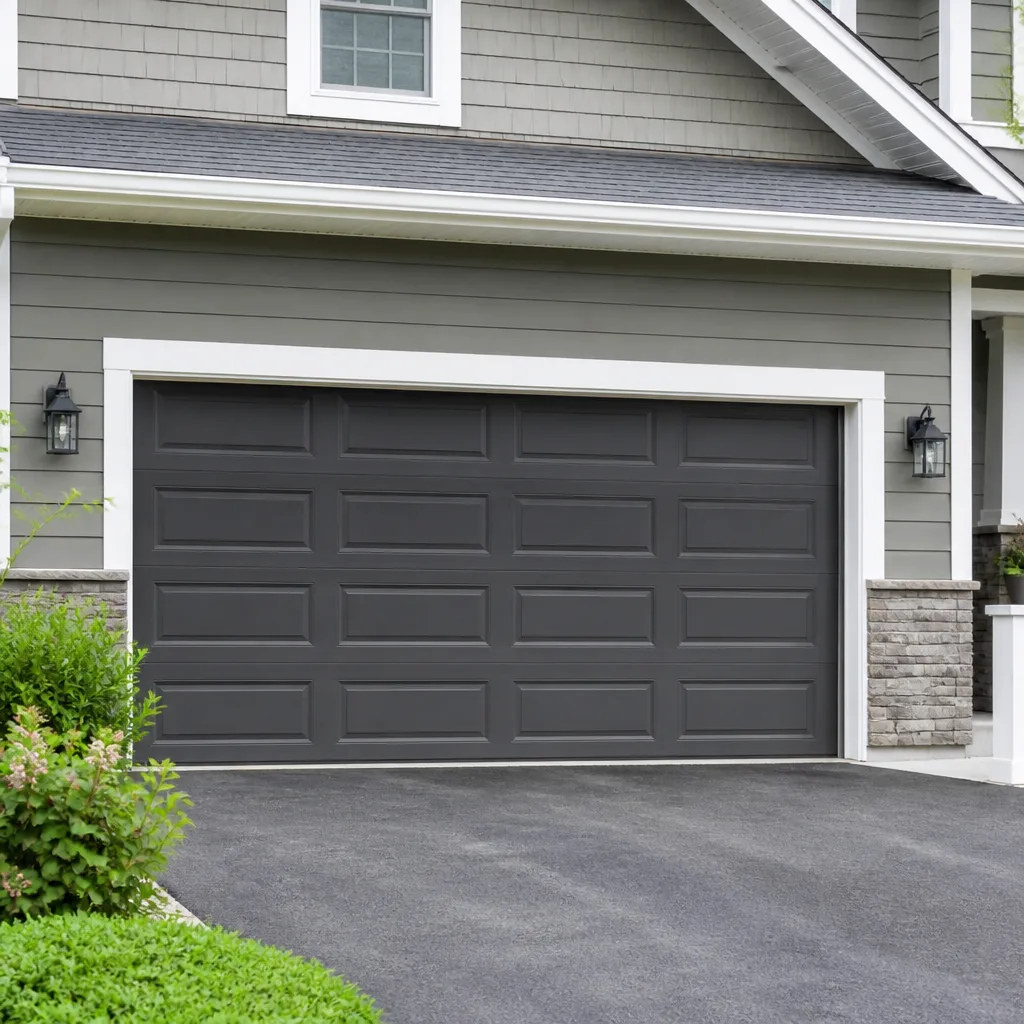 Raised-panel steel
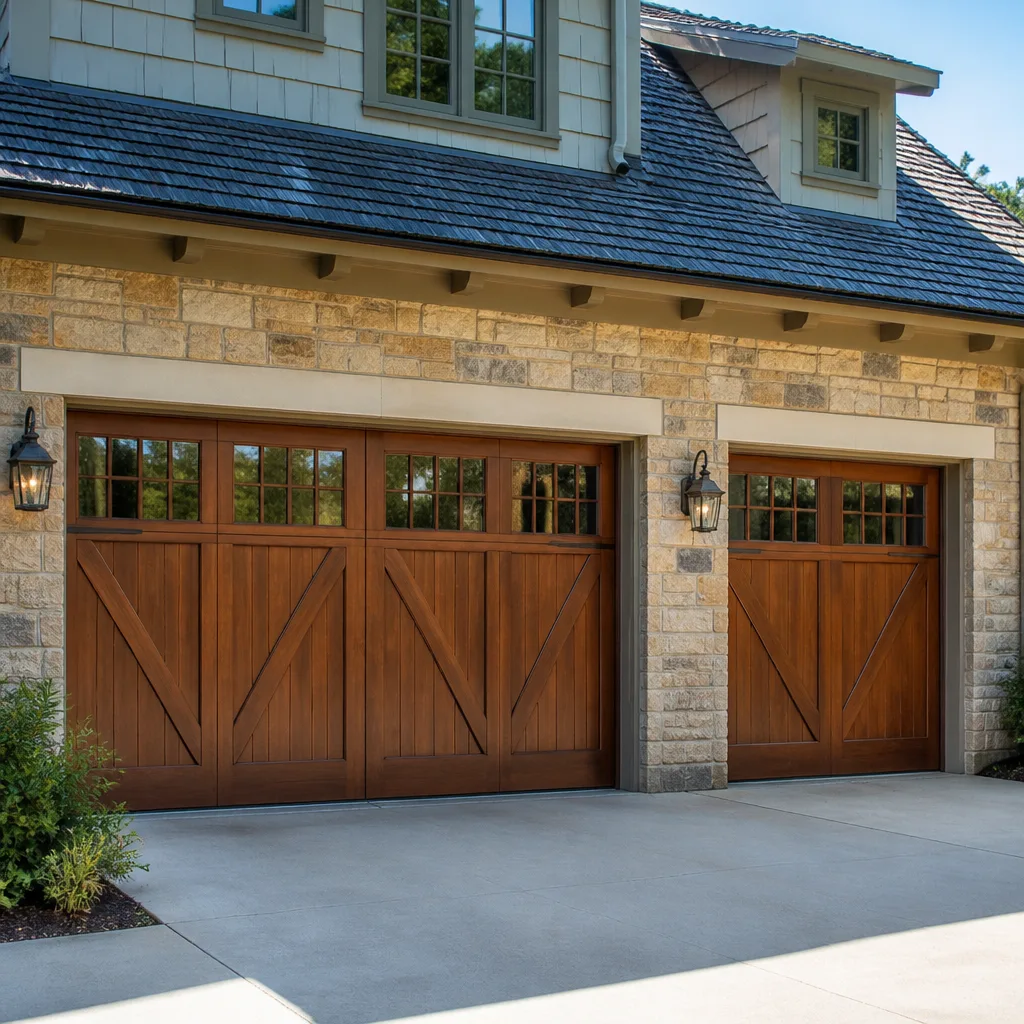 Carriage house
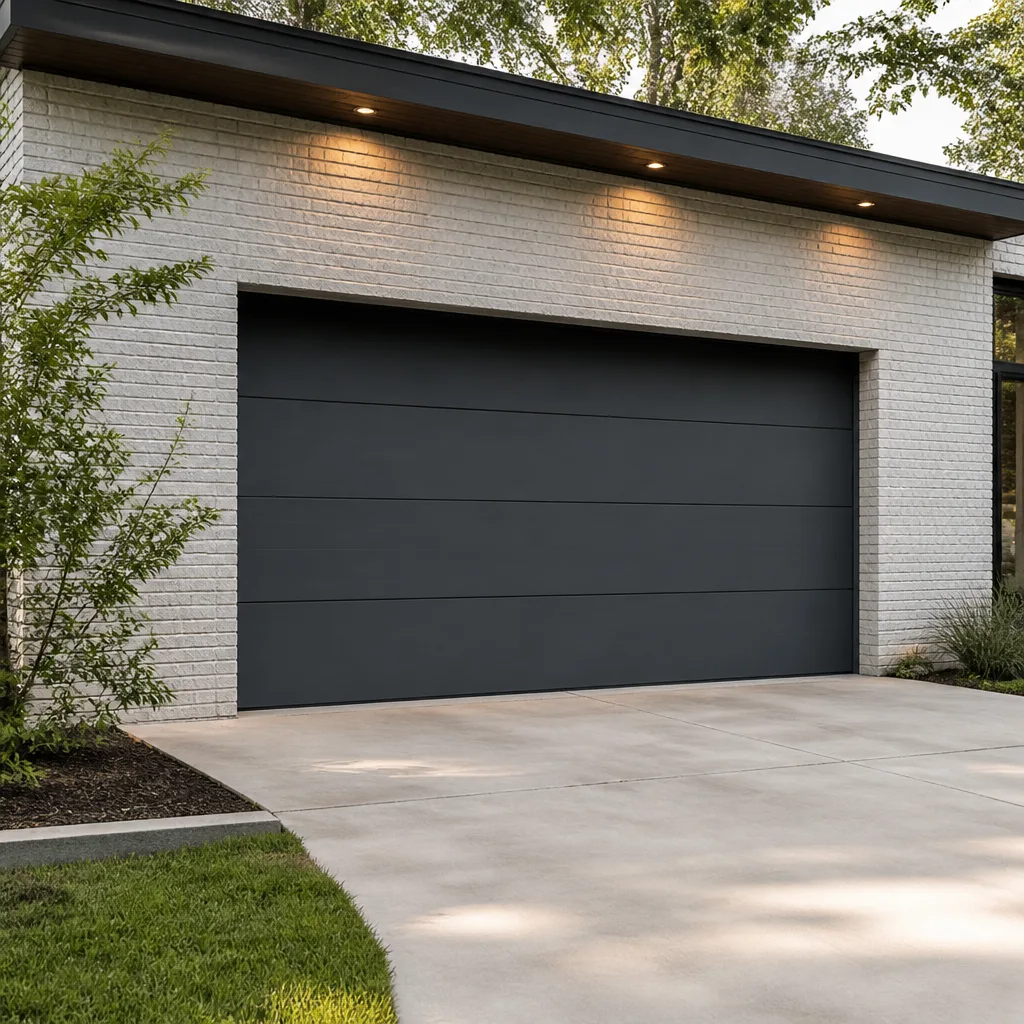 Modern flush
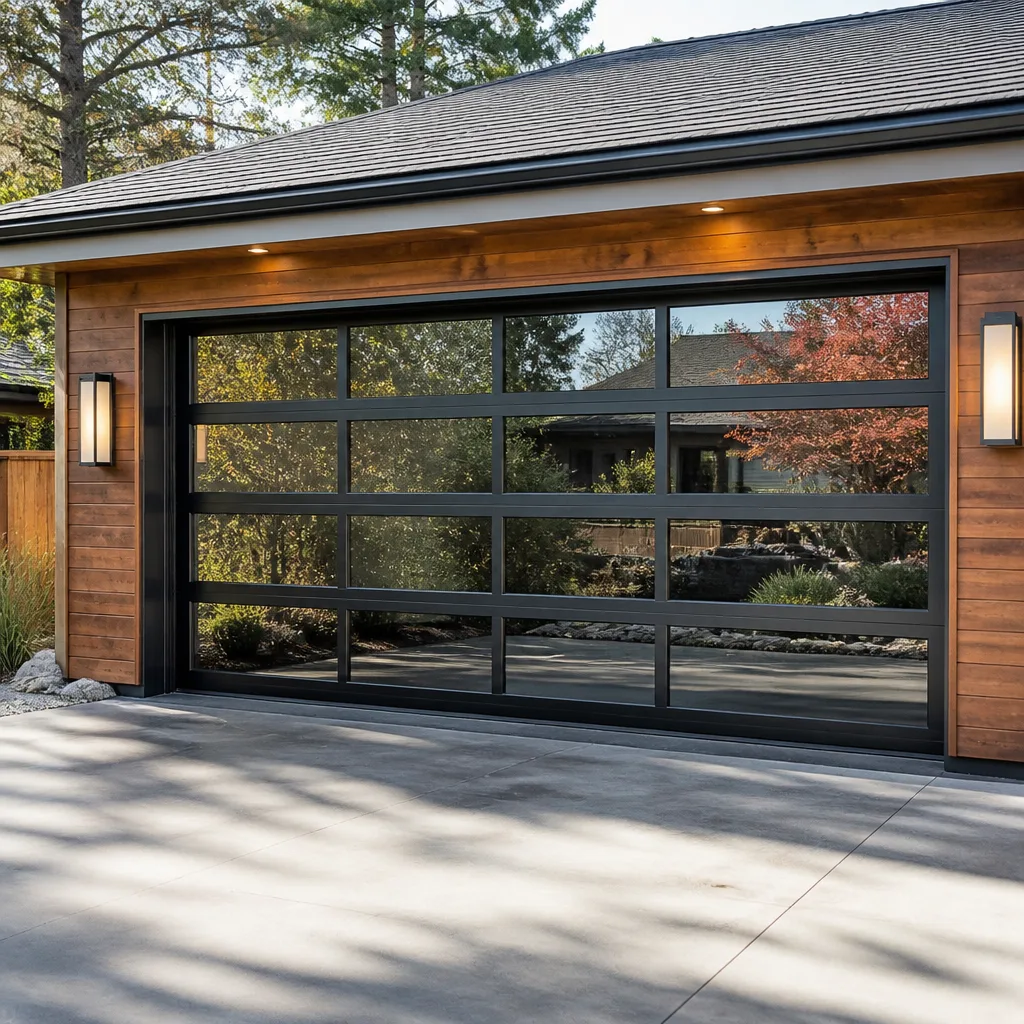 Full-view glass
 LiftMaster openers
 Chamberlain openers
Full 25-point door and opener safety check with every visit - springs, cables, rollers, tracks, and your LiftMaster or Chamberlain opener included
You get a price before we start. It does not change when the pro arrives.
Get your free estimateGarage Door Repair Troubleshooting in Skokie: Common Problems and How to Fix Them
The door that “just started acting up” usually gave three earlier warnings that got ignored. A little grinding in January. A pause before the door comes down. A remote that needs two presses instead of one. Garage doors in Skokie don’t fail overnight; they drift out of adjustment slowly, and the symptoms stack up until one morning the door stops halfway and won’t budge. Knowing which of four mechanical categories you’re actually in tells you whether you’re facing a five-minute homeowner check or a call-the-technician situation. This guide maps symptoms to root causes so you stop chasing the wrong repair, and it covers how Skokie’s temperature swings change what’s normal in March versus what signals real wear.
Quick Answer
Most garage door problems in Skokie fall into one of four categories: spring system failure, opener or motor fault, track and roller misalignment, or safety sensor trouble. You can isolate which one you’re dealing with in under five minutes by checking whether the opener motor runs, whether the door is dead-heavy by hand, whether the tracks are visibly bent, and whether the safety eyes are lit. Anything involving torsion springs or overhead cables is a stop-here moment: call a trained technician rather than touch it yourself.
Styles & brands we work with
- Raised-panel steel
- Carriage house
- Modern flush
- Full-view glass
- LiftMaster openers
- Chamberlain openers
Table of Contents
- The Four Categories Every Garage Door Problem Falls Into
- Why “The Door Won’t Open” Has Six Different Causes
- The Five-Minute Symptom Triage
- Manual Release, Bypass, and the Steps That Aren’t Safe
- How Skokie’s Temperature Swings Affect Your Door in March and Beyond
- Safety Sensor and Photo-Eye Faults
- The Stop-Here Checklist: When Troubleshooting Ends and a Technician Starts
- What Repair Typically Costs in Skokie and How We Quote It
The Four Categories Every Garage Door Problem Falls Into
Every garage door system is a balance of four subsystems: the spring counterweight, the opener, the track-and-roller guide, and the safety reversal system. When a door misbehaves, the symptom points you back to one of those four. Sorting the problem into the right category before you touch anything keeps you from adjusting a track that was never the issue or replacing an opener when the spring was the real culprit.
Spring system failures are the most common category and the most dangerous. If your door feels impossibly heavy, hangs crooked, or won’t stay up on its own, the counterbalance springs have given out. Never reach for the springs. Overhead torsion springs hold enormous stored force even after the door stops moving, and release that force instantly if handled without the right winding bars and training.
Opener and motor faults show up as a motor that hums without moving the door, a motor that’s completely silent, or a door that travels only partway before reversing. The door itself may be physically fine here: the issue lives in the motor, the drive mechanism, or the control board. Opener brand matters because troubleshooting steps differ between a LiftMaster or Chamberlain logic board and a Genie or Craftsman unit.
Track and roller problems announce themselves with grinding, squealing, or a door that shudders as it moves. Tracks can bend from a bump, rollers can wear flat, and hinges can loosen. This category is often repairable without touching the spring system, which is why it’s worth isolating early.
Sensor and safety faults are the easiest to spot and the easiest to fix. The door reverses immediately on closing, or the wall control flashes a warning pattern. That’s photo-eye territory, not spring territory. Four categories, four different approaches, and four different price ranges. Categorize first; the right fix follows.
Why “The Door Won’t Open” Has Six Different Causes
A door that won’t open is not one problem. It’s six, and each has a different path to repair. The fastest way to isolate the cause is to listen: does the opener motor run or stay silent?
- Broken torsion spring. A loud snap followed by a door that won’t lift usually means a snapped spring. The motor runs but the door barely moves because the counterweight is gone. Stop here and call for garage door spring repair.
- Dead opener motor or blown logic board. You press the remote and hear nothing. The motor isn’t running. Check the wall outlet and the breaker, then check the manual lock if the door has one; after that, it’s an opener diagnosis.
- Engaged manual release. If someone pulled the red release cord and forgot to re-engage the trolley, the motor runs but the carriage is disconnected from the door. Re-engaging the trolley may solve it without a technician.
- Misaligned or bent track. The door starts up, then binds. Look at the vertical tracks with the door closed: a visible kink or dent is the culprit.
- Safety sensor obstruction. The door starts down, then reverses in a second. The photo-eyes are blocked, misaligned, or fogged up. Clearing the path and wiping the lenses usually fixes it.
- Remote or keypad programming. The door works from the wall control but not the remote. That’s a code or battery issue on the remote side, not the door itself.
Run through that list in order. You’ll have your answer in less than five minutes, and you’ll know exactly what to tell a technician when you call. For a full diagnostic walkthrough, our garage door repair work covers all six causes and gets to the right one before any parts are quoted.
The Five-Minute Symptom Triage
Here’s a safe isolation sequence you can run yourself in about five minutes. It doesn’t require tools, and it doesn’t put you anywhere near the springs.
- Press the wall control while standing next to the door. Does the motor hum, run, or stay silent? Note what you hear.
- Look up at the springs above the door. A torsion spring is a coil across the header above the door; extension springs run along the sides. A visible gap in a torsion spring means it has snapped. Stop here.
- Test the door weight by hand with the opener disengaged. Pull the red release cord only if the door is fully down and you can comfortably lift it. A door that won’t rise at all by hand, or that drops fast, is spring territory. Stop here.
- Check the two photo-eye lenses near the floor. Each should have a steady LED. A blinking or dark light means misalignment or blockage.
- Look at the vertical tracks with the door closed. Any visible kink, dent, or bow toward the door is a track problem.
- Try the wall control and then the remote. If one works and the other doesn’t, you have a signaling issue, not a door-mechanics issue.
That last step matters more than people expect. When the wall control works but the remote doesn’t, homeowners often assume the opener is dying and start shopping for a replacement. In our experience, most of those calls resolve to a battery, a remote that needs re-pairing, or interference from LED bulbs nearby. No door replacement required.
If several of those steps come back clean and the door still misbehaves, the issue is likely inside the opener’s travel-limit or force settings, which we cover under garage door opener repair. Those are adjustable settings, but tweaking them to mask a mechanical problem can hide a failing spring or a bent track for weeks until something worse happens.
Manual Release, Bypass, and the Steps That Aren’t Safe
Some bypasses are safe for any homeowner. Others are genuinely dangerous and belong to a trained technician with the right tools. Knowing the line between the two protects both the door and you.
Safe for homeowners:
- Pulling the manual release cord when the door is fully down and the springs appear intact.
- Clearing obstructions from the photo-eye path.
- Wiping the photo-eye lenses with a soft cloth.
- Replacing remote batteries and re-pairing the remote using the manufacturer’s manual.
- Checking the breaker and wall outlet for a silent opener.
- Re-engaging the trolley by pulling the release cord and running the opener to reconnect the carriage.
Not safe, and reserved for a trained technician:
- Adjusting, winding, unwinding, or replacing torsion springs.
- Touching overhead cables, which are under tension and can cause serious injury.
- Removing the bottom bracket of the door, which is directly loaded by the cable system.
- Cutting or modifying extension springs under load.
- Removing the opener’s rail or motor assembly without first releasing the door tension.
A manual release is the one safe intervention that matters most after a spring snap. It lets you lift the door by hand to get a car out, then lower it and let it stay down until a technician arrives. Never leave a door up on a broken spring: the door can slam with substantial force. If the door is stuck and won’t budge, that’s an emergency call, and we treat it that way. Skokie Garage Door Repair Co offers emergency service for doors that pose an access or security problem, and our technicians have up to 14 years of experience on torsion and extension spring work specifically.
How Skokie’s Temperature Swings Affect Your Door in March and Beyond
Skokie winters are cold, wet, and long, and Chicago-area springs arrive with repeated freeze-thaw cycles. Metal expands and contracts with those swings, and a garage door is mostly metal. This produces a predictable seasonal pattern of complaints that are normal adjustments, not repair emergencies.
Normal in March:
- A door that squeaks or groans more than it did in autumn. Lubrication points have dried out over winter.
- A door that feels slightly tighter in cold weather and looser on a warm day. This is thermal contraction and expansion, and it settles on its own.
- A remote that needs two presses in very cold weather. Cold drains remote batteries fast.
- A door that hesitates on the first few operations after a hard freeze. The opener is working against cold grease.
Signals of real wear, any season:
- The door hangs slightly crooked or won’t sit flush at the floor.
- A grinding noise that follows one specific roller or hinge rather than the whole door.
- The door reverses partway up without an obstruction present.
- A visible gap in a torsion spring, or a door that can’t be lifted by hand.
- Rust spots on the bottom panel or panel seams. Chicago-area winters drive road salt onto garage floors and splash it up onto door panels. That’s a slow cosmetic issue, but cracks in the bottom section can let water in and speed up panel deterioration.
Skokie’s housing stock runs from older brick homes near Oakton Street and downtown to newer construction out toward Old Orchard and the western edge of town. Older doors often carry heavier steel panels and closer to the end of their service life, while newer installs tend to wear through opener and sensor issues first. If you’re unsure which category your door falls into, ask your technician to walk through the seasonal pattern with you rather than just quoting a fix. For doors that need replacement rather than repair, we handle installation too, including Clopay and Amarr systems when a repair assessment turns into a replacement conversation. You never get handed to a second company.
Safety Sensor and Photo-Eye Faults: The Easiest Diagnosis in Troubleshooting
Photo-eye faults account for a large share of “my door won’t close” calls, and they’re the simplest issue in this entire guide to isolate. Two small lenses sit just above the floor on either side of the door opening, one sending an invisible beam and one receiving it. If the beam is blocked, the door reverses immediately on every close attempt as a safety default.
Common causes, in order of frequency:
- Something in the path: a broom, a bicycle tire, a trash bag, a fallen leaf pile.
- Dirty lenses. Winter road grime and summer dust both fog them.
- Knocked-out alignment. A bumped lens or a shifted bracket can throw the beam off by an inch, and an inch is enough.
- Sunlight pouring in at a low angle, which can overwhelm the receiver on bright mornings.
- A wiring fault behind the wall, or a dead sensor on an older unit.
Clear the path and wipe both lenses first. If the door still reverses, look at the LEDs on each sensor: if one is dark or the receiving light is blinking, either the sensors need re-aiming or the sensor wiring has failed. On LiftMaster and Chamberlain systems, the wall control often flashes a diagnostic code pattern that tells you which of the two eyes is at fault. On Genie and Craftsman units, you usually get a different light pattern, which is why brand familiarity saves time. Our technicians work on all four of those opener brands and read their diagnostic codes without the trial-and-error guesswork a general handyman brings.
One thing to resist: never tape over, unplug, or bypass the safety sensors to get the door to close. They exist because a closing garage door can seriously injure a child or pet, and a bypassed system is a hazard every time the door runs.
The Stop-Here Checklist: When Troubleshooting Ends and a Technician Starts
There is a clear line between “check this yourself” and “put the tools down and call.” Here’s the exact list of situations where troubleshooting should end and a trained technician should begin.
- Any suspicion of a broken or worn spring. A visible gap, a door you can’t lift by hand, or a door that slams down on its own. Springs are under enormous tension even when the door isn’t moving. This is the single most important stop-here item in this entire guide.
- A cable off its drum or wrapped wrong. Overhead cables are as dangerous as springs and can cause serious injury.
- The door is off its tracks or badly crooked. Forcing it back into place can drop the door.
- The opener sparks, smokes, or smells burnt. Unplug it and call.
- The door reverses repeatedly after you’ve cleared the path and cleaned the sensors. The problem is likely in the wiring or the opener’s logic board and needs diagnosis.
- The door closed on top of something and stayed put. Force-limit settings are masking a mechanical problem, or you’ve got safety-system damage.
- You’ve tried a fix twice and the symptom persists. Two attempts is enough. The right answer isn’t a third one.
Across all of these, the pattern is the same: if the fix requires being near the spring, the cable, or the bottom bracket, stop. If the fix requires understanding a specific opener’s diagnostic codes, it’s usually faster and cheaper to hand it to a technician than to guess.
What Repair Typically Costs in Skokie and How We Quote It
Cost is the question every homeowner has after “can you fix it.” The answer depends on category, and the ranges below are typical for the Chicago-area market. Bear in mind: a spring price covers one spring. Matched pairs are usually replaced together, so a pair runs roughly twice the single-spring figure.
- Spring replacement (single torsion spring): $180 – $340 typical.
- Spring replacement (matched pair): roughly double the single-spring range.
- Extension spring replacement: $150 – $280 per pair typical, depending on door weight and spring type.
- Opener motor or logic board repair: $150 – $400 typical, depending on brand and part.
- Track and roller repair: $100 – $250 typical, depending on how many components are involved.
- Safety sensor replacement or realignment: $80 – $180 typical.
- Remote or keypad re-pairing: usually a small service call.
- Cable replacement: $150 – $300 per side typical.
Those ranges are estimates, not quotes. The written estimate you get after diagnosis is the price, and we agree to it before any work starts. No fix begins until you’ve seen the number and said yes. If the diagnosis turns out to be something different than expected, we talk it through with you first, not after the invoice.
Spring repairs are worth understanding on their own terms because the cost varies with door weight and spring type. Our garage door spring repair work covers both torsion and extension springs, and our technicians have up to 14 years of experience with that specific job. For comparison work on openers, our garage door opener repair service covers LiftMaster, Chamberlain, Genie, and Craftsman systems with brand-specific diagnostic steps. If you’re wondering what a full replacement would cost instead, our garage door repair assessment includes that comparison when it’s the right call, and we handle installation in-house through our Skokie Garage Door Repair Co service. For a free estimate on your Skokie door, call (844) 670-3544.
Common Mistakes to Avoid
- Adjusting travel limits to hide a broken spring. When the door won’t close all the way, changing the down-limit on the opener forces it closed by pure motor force. That works for a few weeks, then burns out the opener and leaves the spring problem unsolved.
- Pulling the manual release on a door that isn’t fully down. If the door is anywhere up when you pull the release, it can drop fast. Lower the door fully first, then release it.
- Using white lithium grease on tracks or photo-eyes. Tracks should stay dry and clean; grease attracts grit and eventually clogs the rollers. Photo-eyes should be wiped, not greased.
- Bypassing the safety sensors to get the door to close. Taping a lens or unplugging the sensors defeats the door’s most important safety feature. A closing garage door hits hard.
- Tightening track bolts without checking alignment. Bolts that are too tight on a slightly bent track bend the track further. Loosen, realign, then snug.
- Ignoring a spring replacement because the door “still works.” Matched springs are designed to fail together. When one breaks, the other is usually close behind, and running on one spring overstresses the system.
- Assuming the door brand doesn’t matter. Clopay, Amarr, Wayne Dalton, and Raynor doors all balance differently, and Raynor in particular uses some unique hardware on older models. A technician who knows your door brand starts the fix faster than one who’s guessing.
See the difference
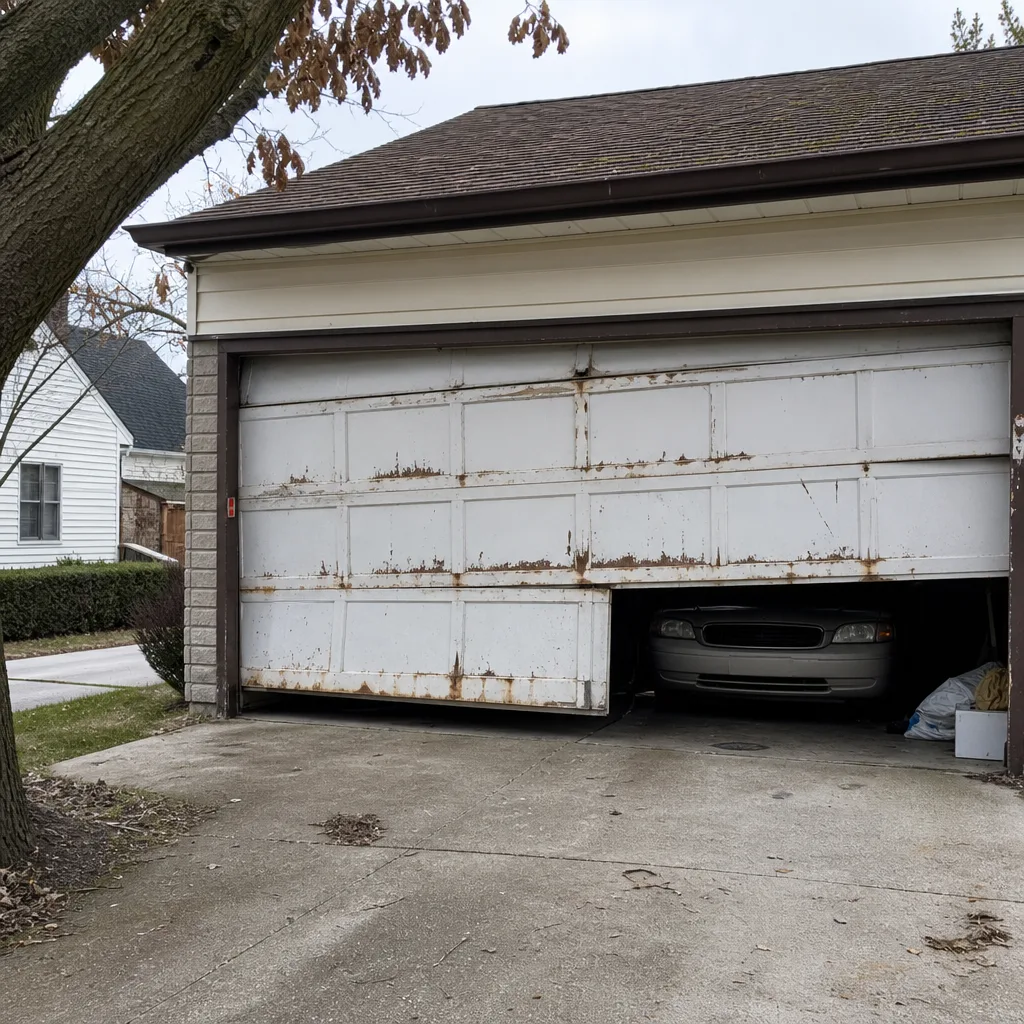 Before
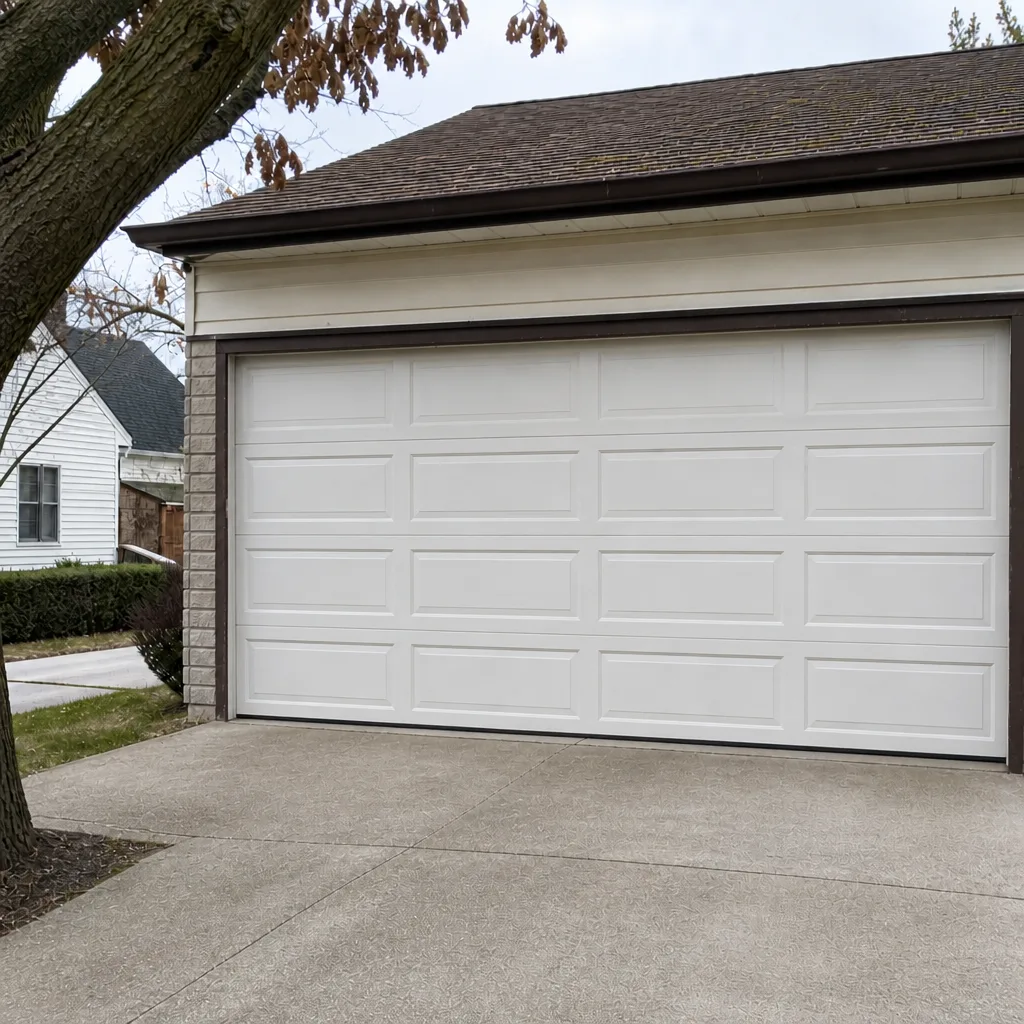 After
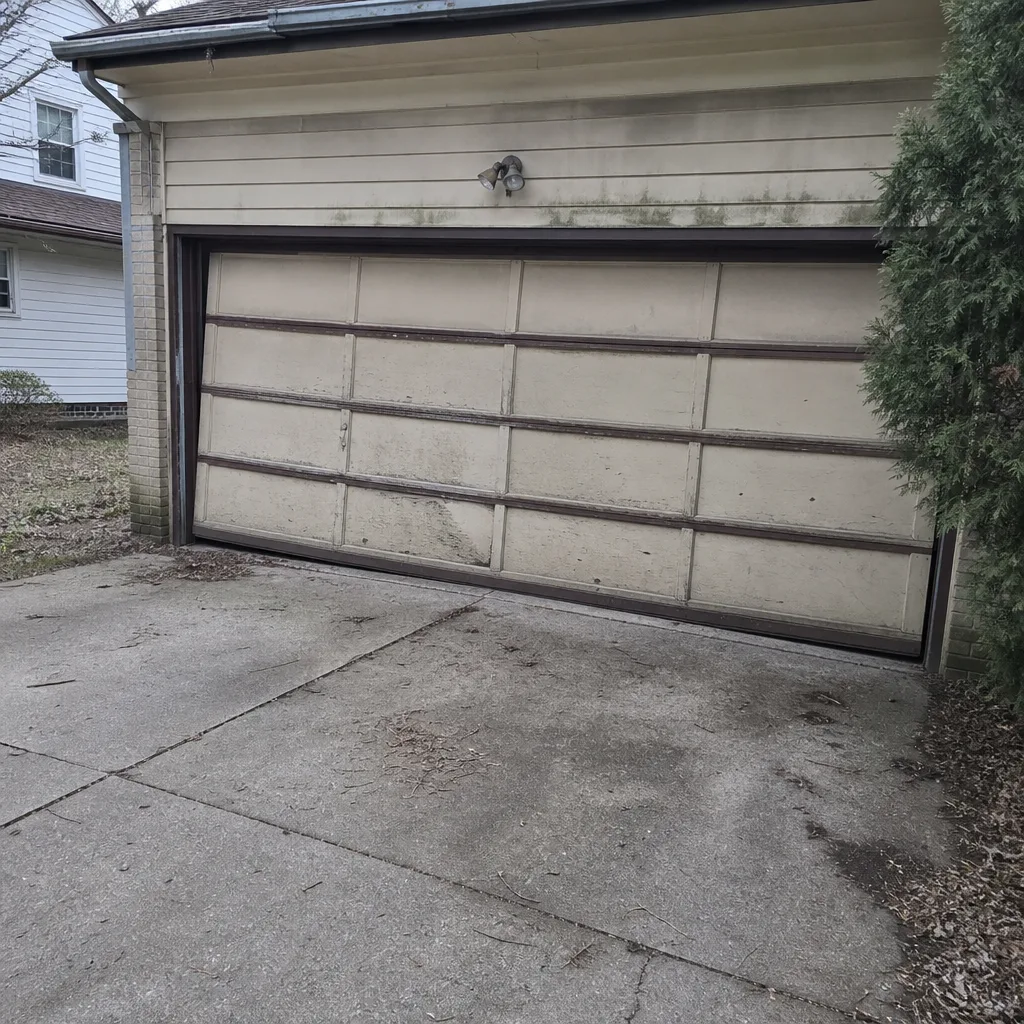 Before
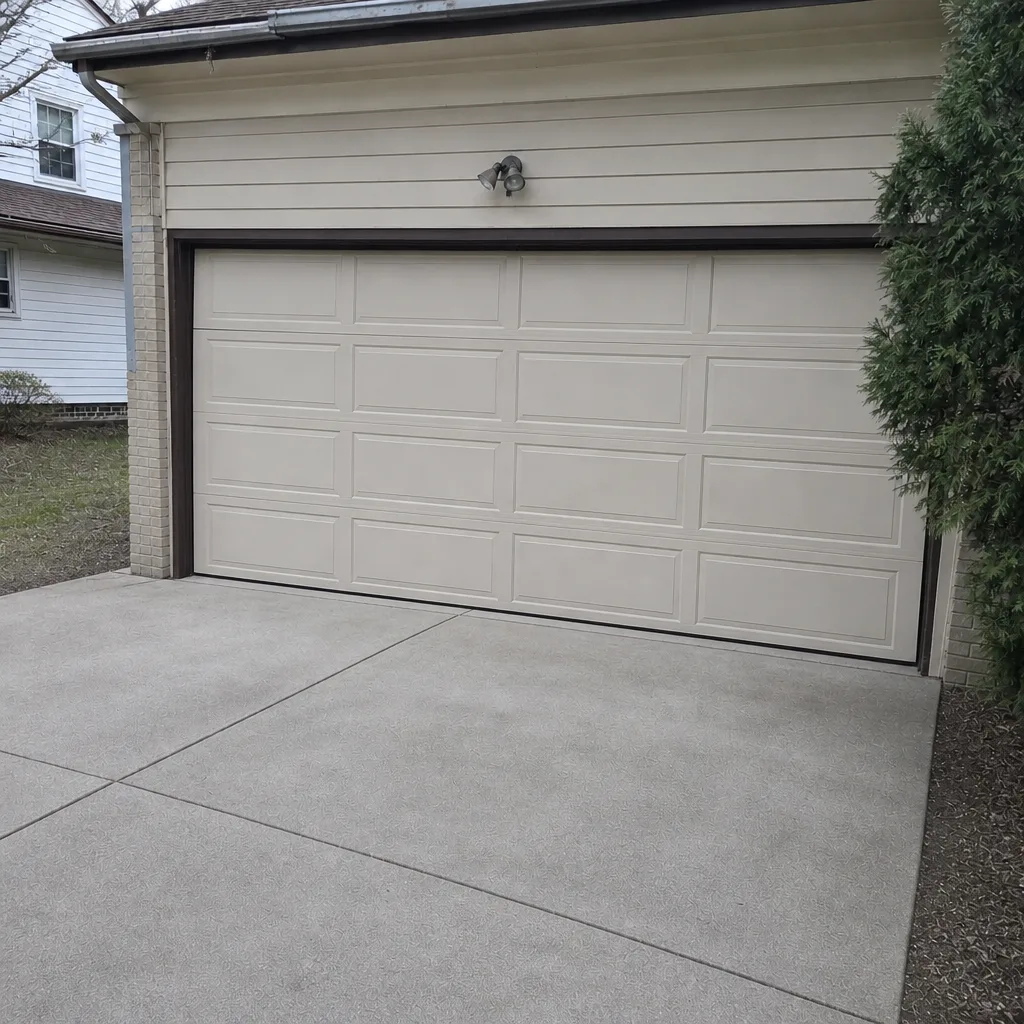 After
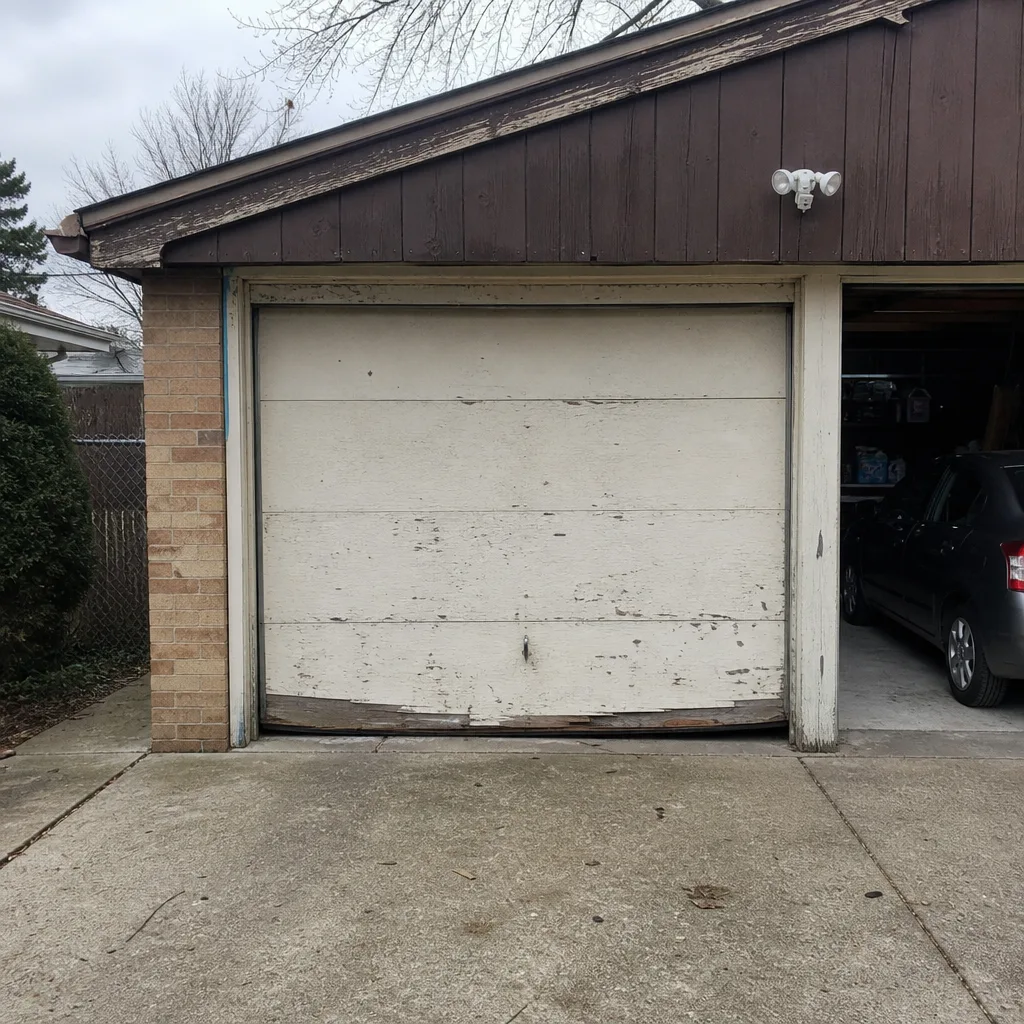 Before
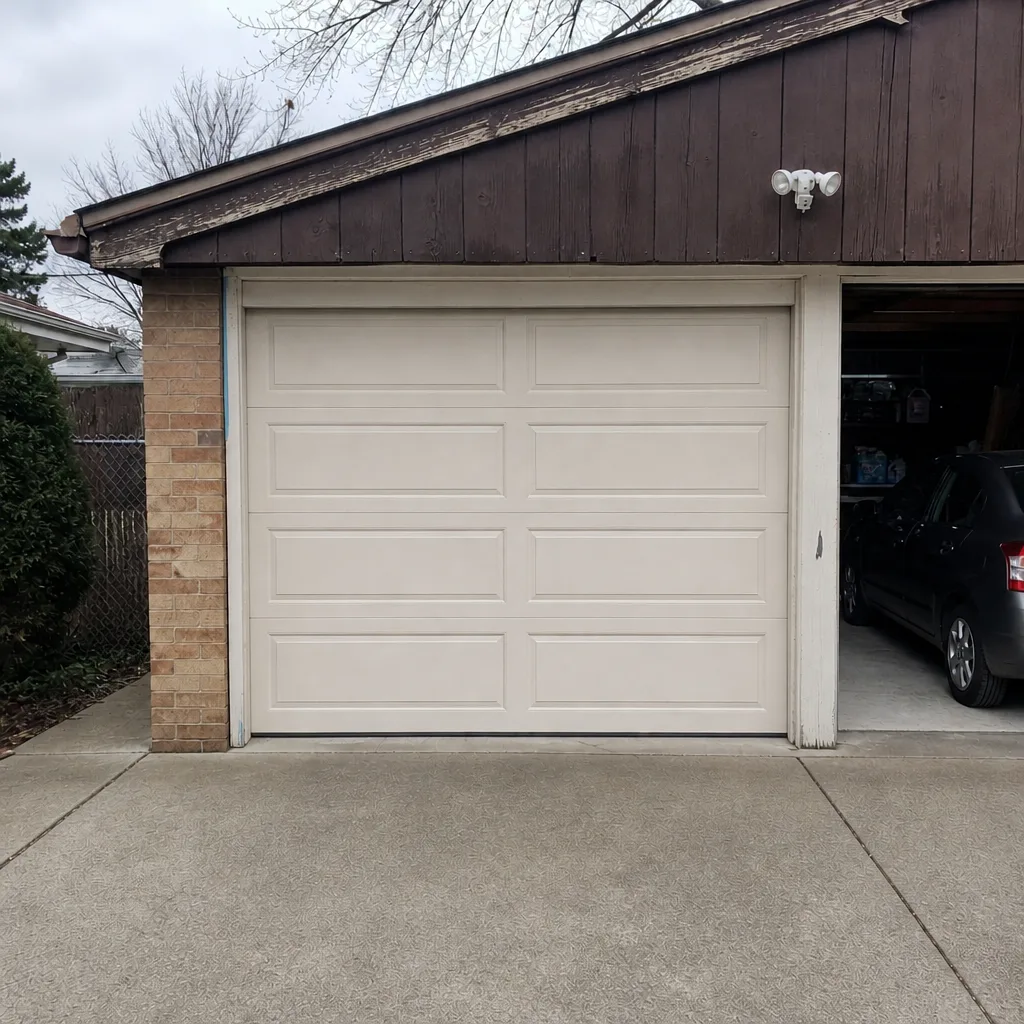 After
When to Call a Professional
Call a professional the moment you suspect a spring, cable, or track problem; when a door slams, hangs crooked, or won’t lift by hand; when the opener sparks, smokes, or behaves erratically after a basic power check; or when the door closed on something and stayed put. Also call if you’ve tried one safe fix and the symptom persists, or if you’re not confident in your diagnosis. These are the situations where one more DIY attempt becomes a more expensive repair. Skokie Garage Door Repair Co offers free estimates in Skokie – call (844) 670-3544. Emergency calls for stuck doors that create a security or access issue are part of our standard service. We work on all eight of the industry’s most-installed brands including LiftMaster, Chamberlain, Genie, Clopay, Amarr, Wayne Dalton, Craftsman, and Raynor, so the technician who arrives already knows your system.
Frequently Asked Questions
No. Never attempt to repair, adjust, or replace a torsion spring or extension spring yourself. A garage door spring holds enough stored force to cause serious or fatal injury if it releases without the right tools and training, and overhead cables carry similar risk. Call a trained technician instead: spring work is a core specialty of ours, and our technicians have up to 14 years of experience on torsion and extension springs.
Typical Skokie garage door repairs run from about $100 to $400 depending on the category. Track and roller repairs usually sit at the lower end, spring replacement runs $180 to $340 for a single torsion spring (matched pairs cost roughly double), and opener motor or logic board repairs land between $150 and $400. The written estimate is the price, and we agree to it before work starts. Call (844) 670-3544 for an exact quote – estimates are free.
That symptom usually points to one of four causes: a broken spring that eliminated the counterweight, a photo-eye sensor that’s misaligned or blocked, a travel-limit setting that’s drifted out of adjustment, or a bind in the track. Rule out the sensor first by wiping the lenses and checking the LED lights. If the door feels heavy by hand and behaves inconsistently, that’s a spring issue and worth a technician visit. Call (844) 670-3544 and we’ll help you isolate it.
Yes. Emergency service is part of our core offering for doors that are stuck, blocked, or hanging on a broken spring, especially when the door is your only vehicle access or your main security barrier. Call (844) 670-3544 and describe what the door is doing so we can prioritize.
Cold metal contracts, grease thickens, and remote batteries lose voltage faster than in warm weather. That’s why a door that runs fine in October may sound louder, hesitate on the first press, or need two remote presses in January. Those are normal seasonal effects and settle as the weather warms. A door that hangs crooked, won’t lift by hand, or reverses without an obstruction is not a normal cold-weather effect and needs diagnosis. Call (844) 670-3544 if you’re unsure which you’re dealing with.
No. The written estimate is the price. After diagnosis, you get a clear number that covers the parts and labor for the fix. We don’t start work until you’ve seen it and agreed, and if we find something different from the initial diagnosis, we talk to you before proceeding so there are no surprises on the invoice. Call (844) 670-3544 to book a free estimate.
The Bottom Line
Every garage door problem announces itself before it becomes an emergency, and every problem fits one of four categories: spring, opener, track, or sensor. Isolating the category fast, using a safe five-minute triage, saves you from adjusting the wrong part or replacing an opener that was fine. The stop-here list matters as much as the fix list: springs, cables, and bottom brackets belong to a trained technician, not a homeowner with a wrench and a YouTube video. For a free estimate in Skokie on any repair or replacement, call Skokie Garage Door Repair Co at (844) 670-3544.
Written by the team at Skokie Garage Door Repair Co.