Last updated November 23, 2026
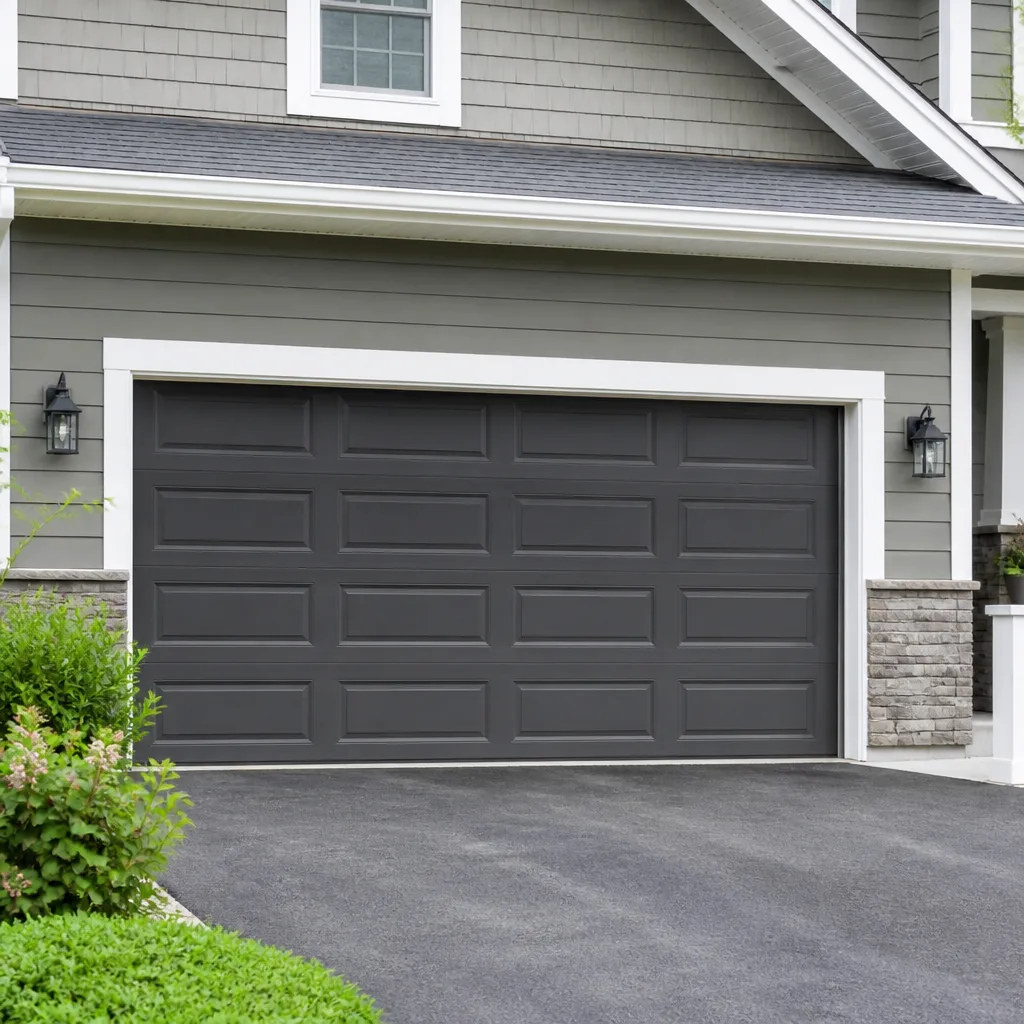 Raised-panel steel
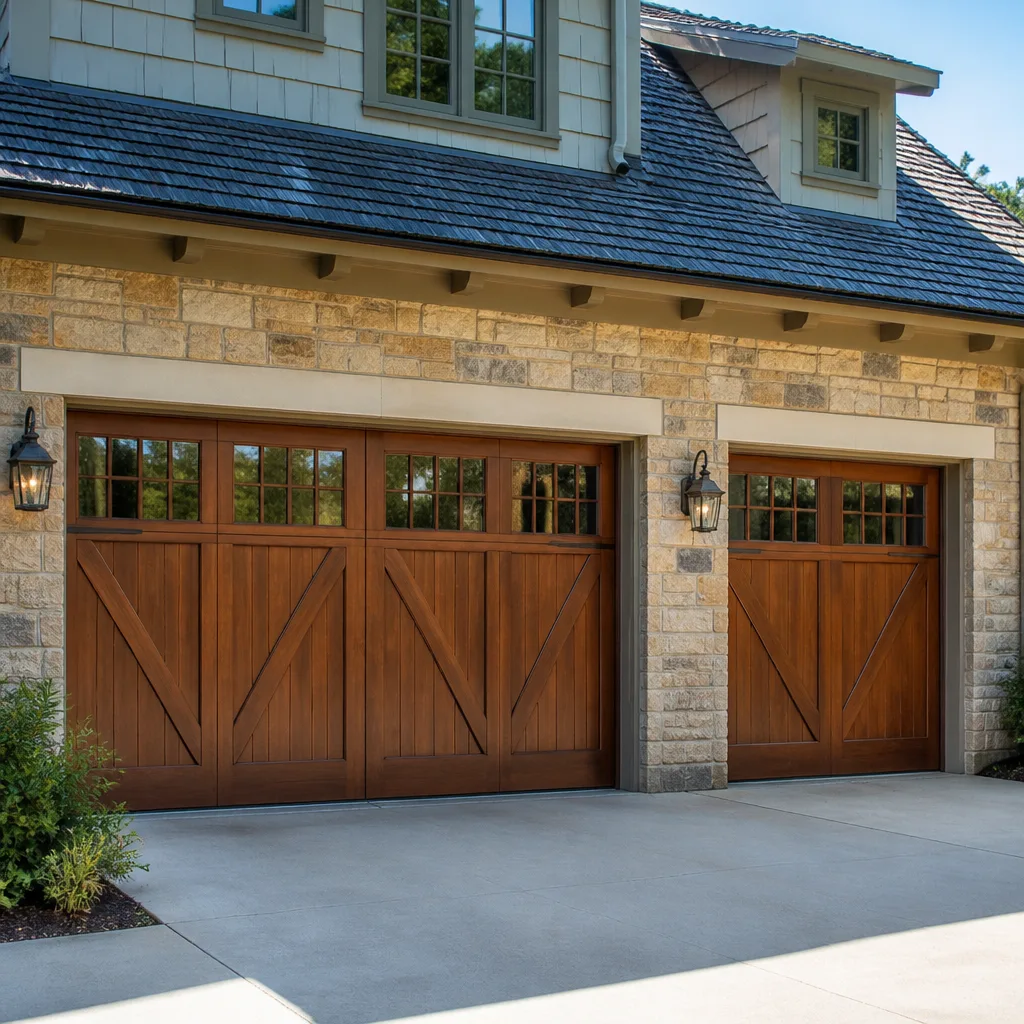 Carriage house
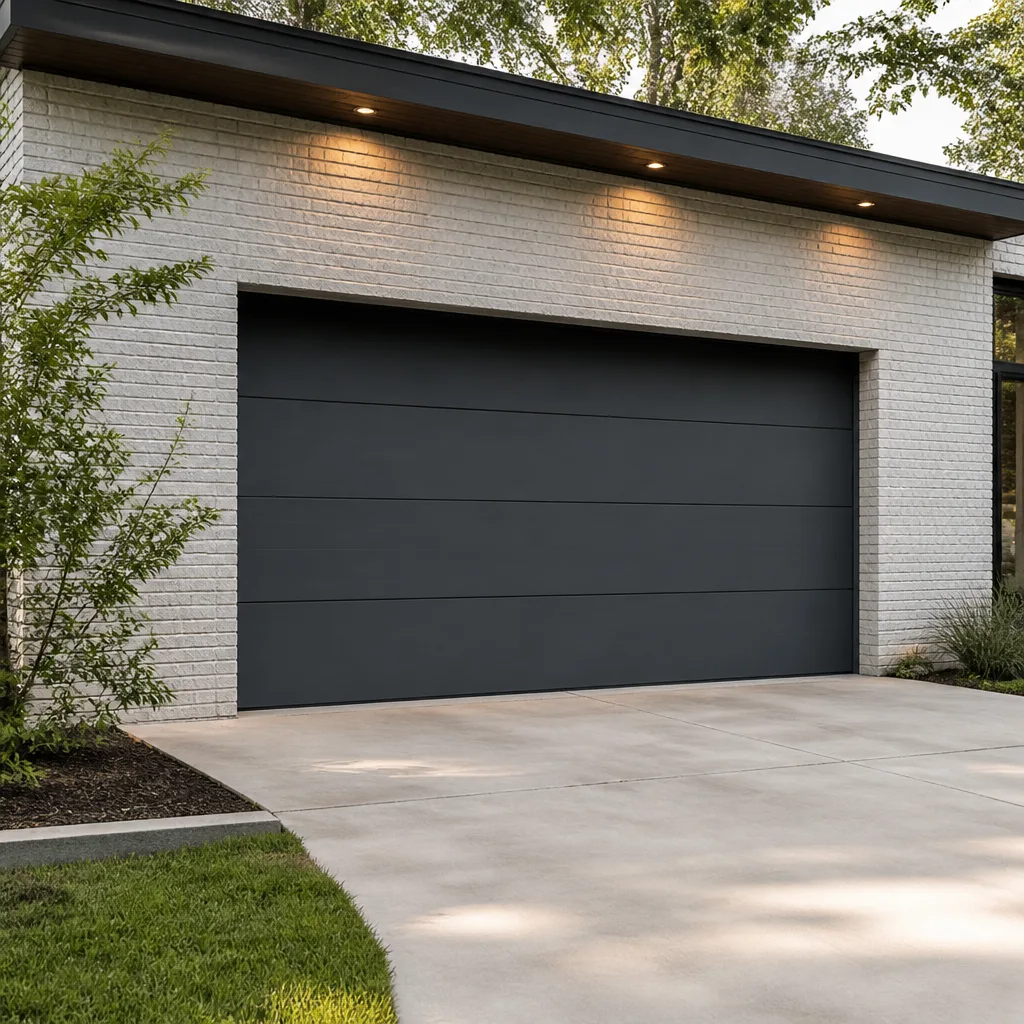 Modern flush
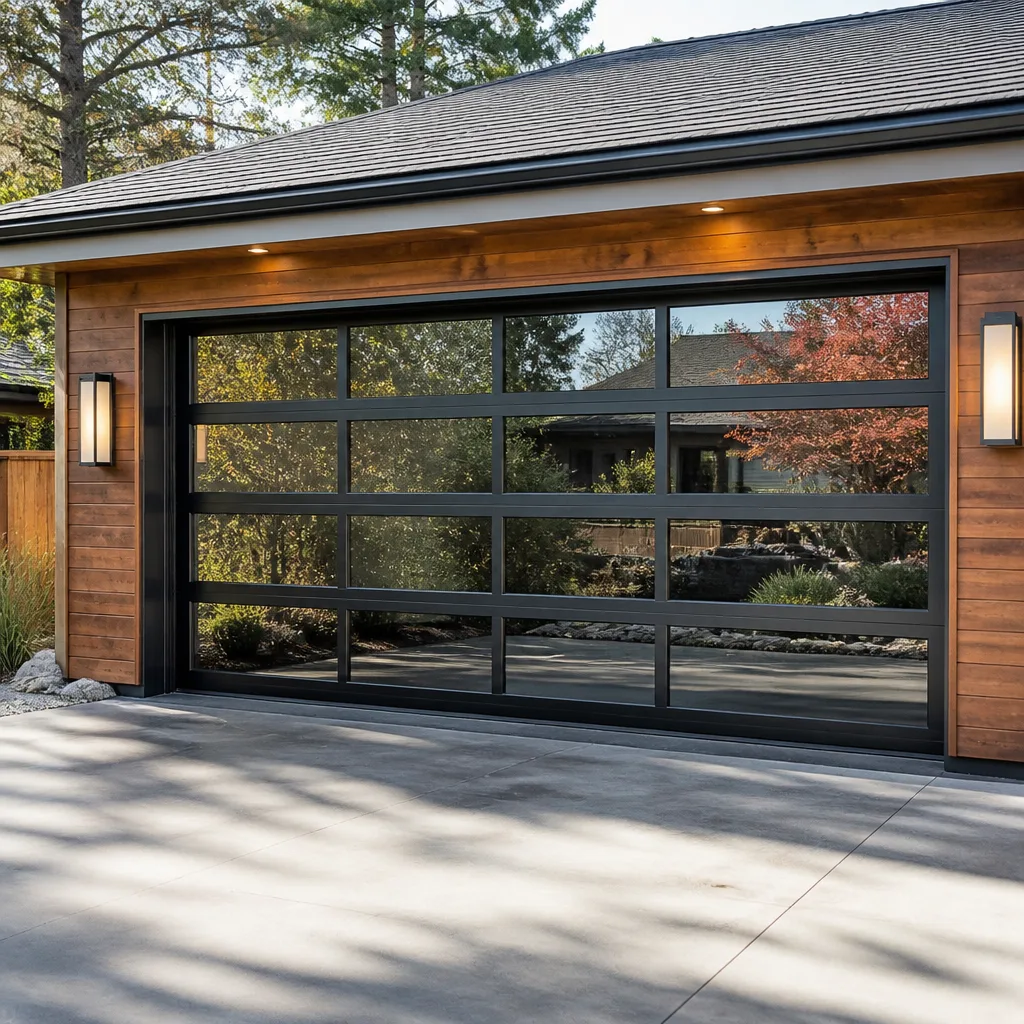 Full-view glass
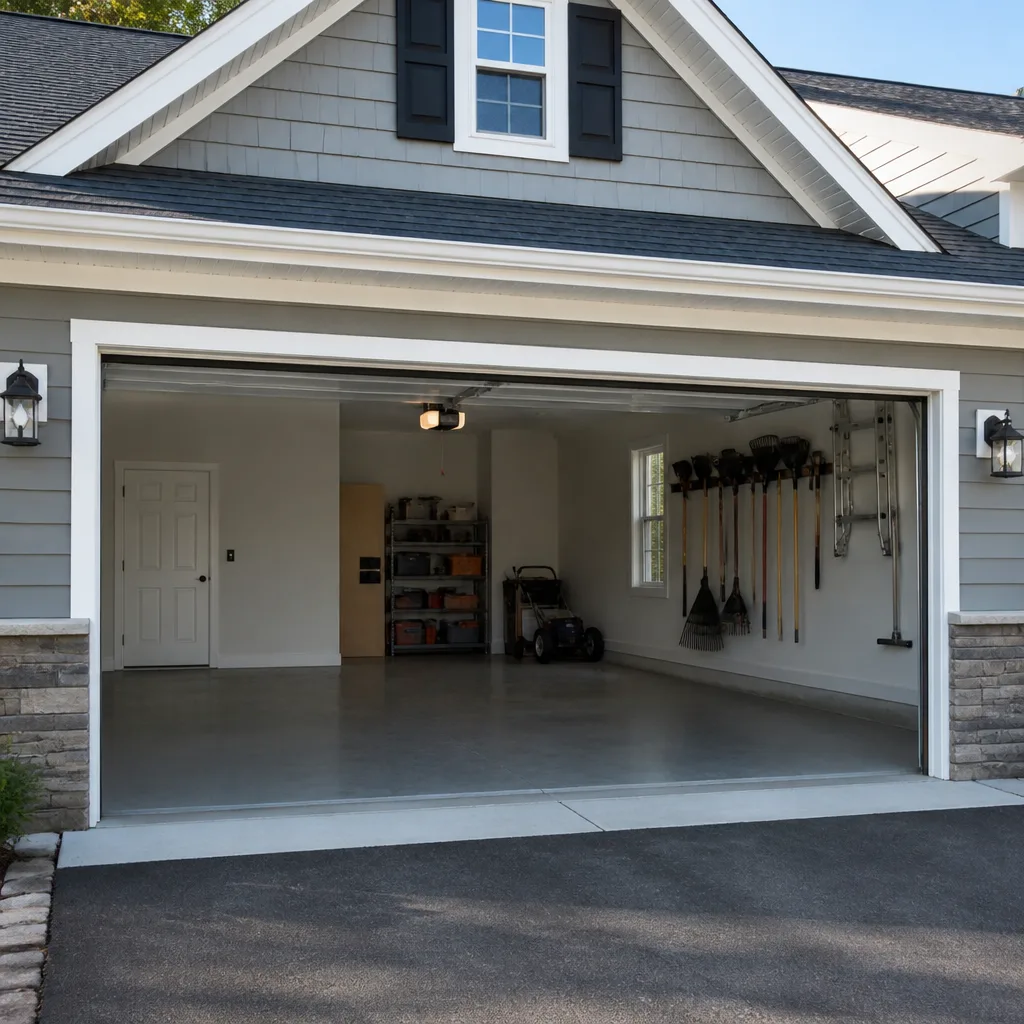 LiftMaster openers
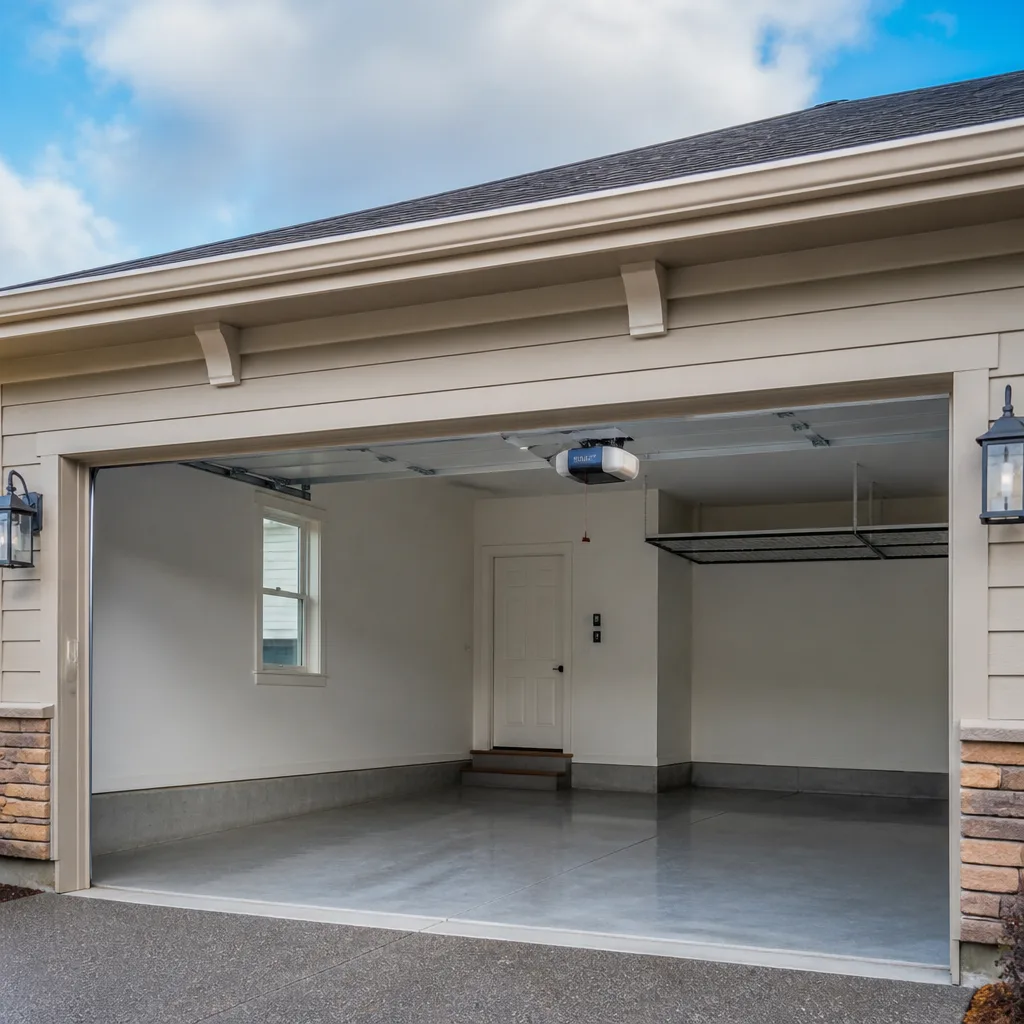 Chamberlain openers
Full 25-point door and opener safety check with every visit - springs, cables, rollers, tracks, and your LiftMaster or Chamberlain opener included
You get a price before we start. It does not change when the pro arrives.
Get your free estimateThe Complete Guide to Garage Doors in Skokie
Most garage door guides are written for a hypothetical suburban house: a wide lot, a deep setback, a garage built yesterday. Skokie isn’t that. The village grew up fast in the postwar years, and its housing stock is a dense mix of 1950s bungalows, 1960s and 70s split-levels, and newer infill that squeezes onto lots the older homes left behind. That mix produces garage doors with low header heights, narrow openings, shared walls, and aluminum framing that quietly eliminates half the options a salesperson will quote you. This guide maps the real decisions – door style, insulation, opener, hardware, quote reading – to the actual homes and winters you live with in Skokie.
Quick Answer
A garage door replacement in Skokie typically runs $950 to $2,800 for a single-car door and $1,600 to $4,200 for a double, fully installed, depending on material, insulation, and whether the opening needs modification. The right door for a Skokie home is usually a steel or steel-backed door sized to your actual opening, insulated enough to keep an attached garage from bleeding cold into the house, and matched to an opener that was built for that door’s weight. The written estimate you sign is the price – not a range that drifts once the work starts.
Styles & brands we work with
- Raised-panel steel
- Carriage house
- Modern flush
- Full-view glass
- LiftMaster openers
- Chamberlain openers
Table of Contents
- How Skokie’s Housing Stock Changes What Fits
- Door Types That Actually Work in Skokie
- Insulation and R-Value: What Matters in a Cook County Winter
- Choosing an Opener for Your Specific Door
- Brands and Parts in the Skokie and North Shore Corridor
- Setbacks, Aesthetics, and Village of Skokie Considerations
- How to Read a Garage Door Quote
- Repair or Replace? A Decision Framework
How Skokie’s Housing Stock Changes What Fits
The single biggest reason a Skokie garage door project goes sideways is that the measurement wasn’t taken before the shopping started. National guides assume a standard 16-foot double opening with eight feet of headroom and a header that sits comfortably above the opening. Skokie homes built in the postwar decades often don’t cooperate.
Here’s what we see again and again in Skokie’s older neighborhoods and why it matters before you ever look at door styles:
- Low header heights. Many 1950s bungalows and split-levels have a header that leaves six to seven feet of clearance, not the eight-plus a standard door needs for a proper torsion-spring setup and track radius. That single measurement can push you from a standard door to a low-headroom configuration or a different spring type entirely.
- Narrow openings. Infill construction and older subdivision lots sometimes produced openings that are a few inches shy of the nominal width. A door ordered to the “standard” size doesn’t fit, and re-cutting an opening is a framing job, not a door job.
- Shared and party walls. Some attached garages in Skokie share a wall with the neighboring home or sit directly under living space. That changes how the door is anchored, how the tracks are braced, and how much noise an opener can make before it becomes your neighbor’s problem.
- Aluminum and thin-wall framing. Some postwar garages used aluminum or thin steel framing around the opening. It’s fine for a light original door, but it can’t carry the weight and tension of a heavier insulated door without reinforcement, and a salesperson who quotes you a heavy door without checking that framing is setting you up for trouble.
- Attached garages that share a wall with the house. Very common in Skokie. It means insulation and weather sealing matter more than they would on a detached garage in a farther-out suburb.
The fix is simple: measure first. Opening width, opening height, headroom above the opening, backroom behind the opening, and the condition of the framing all come before style. Any quote that skips those steps isn’t a quote worth comparing. If your house has an unusual opening, it’s worth understanding what garage door repair can address versus what needs full replacement.
Door Types That Actually Work in Skokie
Once you know your opening, style becomes a much easier conversation. Skokie homeowners tend to fall into a few clear groups, and the door that fits one often fits the others.
Sectional steel doors
The workhorse for Skokie bungalows and split-levels. Steel doors are common because they handle the region’s freeze-thaw cycles well, don’t warp the way wood can, and come in enough panel styles to match a postwar façade without fighting it. A standard steel door is the most common replacement we see, and it’s usually the best value when the opening is standard.
Insulated steel with a polyurethane or polystyrene core
The step up for attached garages. More on the specifics below, but the short version: if the garage shares a wall with your living space, don’t treat insulation as cosmetic.
Aluminum and glass doors
Popular on newer infill construction and modern remodels where the garage faces the street. They look great, but the trade-off is weight and thermal performance. They also demand precise anchoring, which matters if your opening framing wasn’t built for it.
Wood and wood-look doors
Wood looks right on some of Skokie’s older homes and complements the original architecture. It also needs more seasonal attention in this climate – moisture swings and road-salt staining on the lower panels are things steel doors don’t struggle with.
Brand matters less than fit, but it does matter for parts availability. A door from Clopay or Amarr is common enough around here that sections and hardware are straightforward to source. A Wayne Dalton door is also well-represented on Skokie homes, especially in older subdivisions. When you eventually need a panel or a hinge, the brand on the door tells you where the part comes from.
Insulation and R-Value: What Matters in a Cook County Winter
This is where the marketing numbers get confused with the useful ones. A door’s R-value is a measure of how well it resists heat flow – higher means more resistance. What the number doesn’t tell you is how well the whole assembly performs once the door is installed, and the assembly is what you actually live with.
What the number really measures
Insulation value is largely about the core of the panel. A non-insulated steel door has effectively none. A polystyrene-insulated door is a reasonable step. A polyurethane-insulated door generally achieves a higher R-value for the same thickness than polystyrene does – which is why polyurethane doors are typically deeper and heavier.
Where the number stops mattering
An R-value stamped on a door doesn’t account for the gaps around the door – between the door and the jambs, along the bottom seal, around the weatherstripping. In a Cook County winter, an attached garage with a “high-R” door and a worn bottom seal will feel colder and leak more than a moderately insulated door that’s properly sealed. Sealing is where a lot of the real-world comfort comes from.
What to actually choose for a Skokie attached garage
- Detached garage, no heat: a non-insulated or lightly insulated steel door is fine. Don’t overspend on a thermal door that has nothing to protect.
- Attached garage sharing a wall with living space: an insulated door with a proper bottom seal and perimeter weatherstripping is worth it. This is the most common Skokie scenario.
- Attached garage with living space above or beside it: go a step further – insulated door, careful sealing, and consider the weight implications on your existing opener and springs.
One honest note: an insulation upgrade adds real weight. A heavier door loads the springs and the opener differently. If your current springs were sized for a non-insulated door, upgrading without adjusting the spring system is a recipe for early spring failure. Our garage door spring repair approach always starts by matching the springs to the actual door weight, not the door that used to be there.
Choosing an Opener for Your Specific Door
An opener is not a generic motor that gets bolted to whatever door you picked. It’s sized to the door’s weight and the height it lifts. A door that got heavier when it got insulated needs an opener that can carry that load, or it wears out fast and takes the door’s hardware with it.
The openers Skokie homeowners most often already have
LiftMaster, Chamberlain, Genie, and Craftsman openers show up on Skokie garages again and again because they were the most-installed residential brands of the era. Recognizing the specific system matters when something goes wrong – is it a chain drive? A belt? A screw drive? Does the wall control use a particular wiring configuration? Is the safety reversal system an older mechanical style or a more current beam type? A technician who knows the brand walks in already knowing the answers.
Matching the opener to the door
- Confirm the door’s weight after any change. Insulated doors, glass doors, and heavier steel doors all weigh more than the door that was there originally.
- Check the headroom. If your opening has less than standard headroom, some openers won’t fit; a low-profile or jackshaft-style opener may be the only sensible option.
- Match the drive type to your noise sensitivity. Belt drive is the quietest and most common choice for attached garages where living space is close. Chain drive is louder but durable. Screw drive splits the difference.
- Confirm safety reversing and force limits are set correctly. This is a safety system, not a convenience feature. It has to be tested after any opener work.
If your opener is failing, whether it’s a LiftMaster that won’t reverse, a Genie that only runs a few inches, or a Craftsman remote that’s stopped syncing, the fix is usually brand-specific rather than generic. That’s why we treat garage door opener repair as its own discipline, not an add-on to door work.
Smart features and what they’re worth for a Skokie home
Most current openers offer app control, scheduling, and notifications when the door is opened. They’re genuinely useful – and worth having if you want to know whether the door is down on a bad-weather night without walking outside. Just budget for the upgrade on the opener you can actually fit, not on a model that requires eight feet of headroom your garage doesn’t have.
Brands and Parts in the Skokie and North Shore Corridor
Here’s a question most guides skip: when a hinge cracks or a spring breaks, where does the part actually come from? Around Skokie the answer depends on the brand, and it changes how fast a repair happens.
Some brands have strong aftermarket support locally – common hardware and springs are available through regional suppliers, and a trained technician can typically source what’s needed without a long lead time. Other parts, particularly proprietary opener components, remote systems, and certain door panel sections, may need to be ordered from a distributor or a national warehouse. That’s not a deal-breaker. It just means the timeline is different, and a straight answer about timing up front is worth more than an optimistic one.
What brand fluency buys you
- The right diagnosis the first time. Every opener brand has its own failure patterns. Knowing them means fixing the actual problem, not replacing parts until the symptom stops.
- The right part on the first order. Model numbers and part numbers differ by brand and generation. Getting them right the first call matters in a corridor where a wrong part can mean another week without a working door.
- Honest replacement conversations. When a repair no longer makes financial sense, a technician who knows your brand can tell you what a direct replacement looks like instead of offering something generic.
We work on Clopay, Amarr, Wayne Dalton, LiftMaster, Chamberlain, Genie, Craftsman, and Raynor systems specifically. That range is exactly why a homeowner with a branded opener doesn’t have to explain their system to a generalist – the technician already knows it.
Setbacks, Aesthetics, and Village of Skokie Considerations
A garage door that faces the street is the largest single object on most Skokie front façades. Replacing it is a visible change to a home’s street presence. That doesn’t automatically make it a permit item, but it’s worth understanding what the Village of Skokie will actually review.
What typically gets reviewed
- Setback implications if you’re altering the opening, extending the garage, or changing the structure. A same-size door swap usually doesn’t trigger a setback review. A change to the opening size, garage footprint, or structure often does. When in doubt, ask the Village of Skokie’s building department directly – the answer depends on your specific lot and your specific plan.
- Aesthetic review on visible façades. Skokie homes on corner lots, near certain corridors, or in areas where the village has flagged architectural consistency can see more scrutiny of a visible door replacement. It’s worth a phone call before ordering a door with a distinctive color or panel style.
- Whether a permit is required for a door replacement or opener installation. Sometimes it is, sometimes it isn’t, and it varies with the scope of the work. Don’t assume; ask.
Choosing a door that fits the neighborhood, not just the catalog
Skokie’s streets are visually mixed – bungalows with modest raised-panel doors next to mid-century split-levels with flatter panels, next to newer builds with modern aluminum-and-glass. The door that looks right on the house three doors down might look out of place on yours. A short, honest conversation about the house’s original architecture, before you fall in love with a style, saves a lot of second-guessing.
How to Read a Garage Door Quote
Two quotes with the same bottom-line number are rarely the same job. The most common frustration we hear from Skokie homeowners is that they got three quotes and none of them could be compared line for line. The fix is knowing what to look for.
The line items that should be there
- Door make, model, and exact size. Not just “16-foot steel door.” The model number is what tells you what you’re comparing.
- Insulation type and rating (or a clear statement that it’s non-insulated). This is the number one hidden difference between quotes.
- Spring system – type, size, and whether it’s a single spring or a matched pair. A door with two springs is a different job from one with a single spring, and the quote should say which.
- Opener make and model if included, and whether it replaces an existing unit. “Opener not included” is fine – if it’s stated.
- Removal and disposal of the old door. Some quotes include haul-away, some don’t.
- Track, hinge, roller, and weatherstripping specs. These are the wear parts. A quote that includes them is a different (usually better) value than one that doesn’t.
- Any framing, header, or opening modifications required by your specific garage. On Skokie’s older homes, this is often the line most likely to be missing.
- The permit situation. Whether the permit is pulled by the contractor, by you, or not required.
- A clear statement of what the price includes and whether it’s binding. The written estimate you sign is the price. If a quote is “starting at,” treat it as a range until you have a written estimate.
What a fair typical range looks like
- Single-car steel door, standard opening, installed: roughly $950 to $1,900.
- Single-car insulated door, installed: roughly $1,300 to $2,400.
- Double-car steel door, standard opening, installed: roughly $1,600 to $2,900.
- Double-car insulated door, installed: roughly $2,100 to $4,200.
- Custom sizing, glass, or heavy wood-look doors: typically well above the ranges above.
- Spring replacement (one spring): roughly $180 to $340. A matched pair is usually replaced together, so a pair costs about twice that.
These are typical estimates, not a quote. Your written estimate is the price, and it’s quoted and agreed before any work starts.
Repair or Replace? A Decision Framework
This is the question that decides how a garage door project actually goes. The answer isn’t “always replace” or “always repair.” It depends on the door’s age and condition, the opening’s limitations, and what you’re trying to achieve.
Repair usually makes sense when:
- The door panels and the opener are in sound condition.
- A single component failed – a spring, a roller, a hinge, a remote, a circuit board.
- The opening is standard and the door hasn’t reached the end of its expected life.
- You’re dealing with an isolated opener problem on an otherwise healthy door.
Replacement usually makes sense when:
- The door is at or past the end of its service life and repairs are accumulating.
- Panels are dented, bowed, or delaminating with rust on multiple sections.
- You need better insulation and the current door can’t deliver it.
- The opener is failing and the door is heavy enough that upgrading the opener alone won’t fix the problem.
- You’re planning a remodel that changes the opening or the façade.
The evaluation is the same for both – measure the opening, weigh the door, check the springs, assess the opener, look at the framing. We treat the diagnosis as one job and the repair-or-replace conversation as the natural conclusion of it, so you’re never passed to a second company to finish the thought.
Common Mistakes to Avoid
- Ordering a standard-size door before measuring the opening. In Skokie’s older neighborhoods, a nominal sixteen-foot opening is often a few inches shy. A door ordered to the wrong measurement becomes a framing job rather than a door job.
- Upgrading insulation without checking the springs and opener. A heavier door needs springs sized for the new weight and an opener that can carry it. Skipping that step leads to premature spring failure within the first season.
- Treating R-value as an installation guarantee. A high-R door with worn bottom seals and perimeter weatherstripping leaks more heat than a moderate door that’s correctly sealed. Budget for the sealing, not just the number.
- Comparing quotes by bottom line only. Two quotes at the same price can differ enormously in insulation type, spring configuration, opener inclusion, disposal, and whether opening modifications are covered. Compare line by line.
- Assuming a permit isn’t needed because it’s “just a door.” For a same-size swap, often true. For anything touching the opening, the framing, or the footprint – ask the Village of Skokie’s building department before the work begins.
- Choosing a door style without considering the house and the street. In a neighborhood with mixed architecture, a style that works on a modern infill build can look out of place on an original bungalow. Look at the door in context, not just in the showroom photo.
- Taking on spring work as a DIY project. Torsion and extension springs are under high tension. Adjusting, releasing, or replacing them without the right tools and training is genuinely dangerous. This is the one part of a garage door you shouldn’t attempt yourself.
See the difference
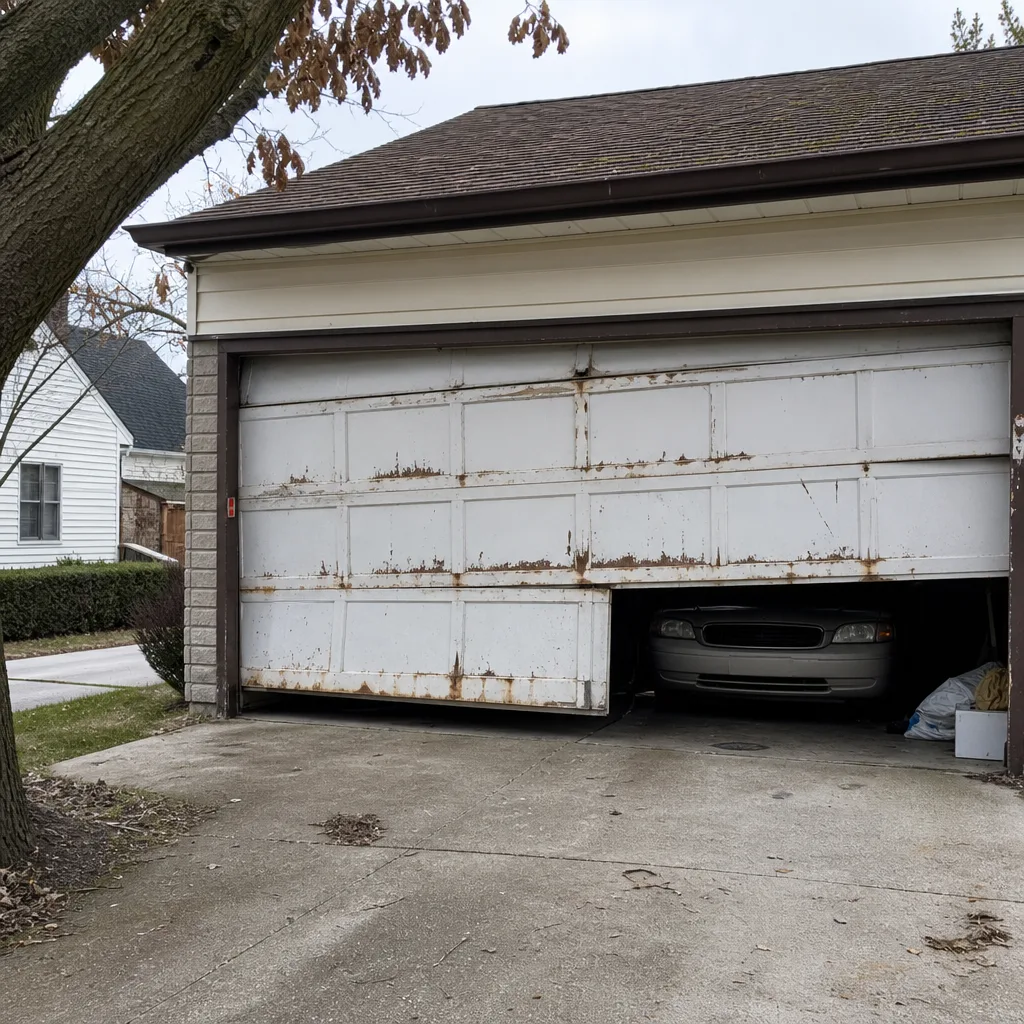 Before
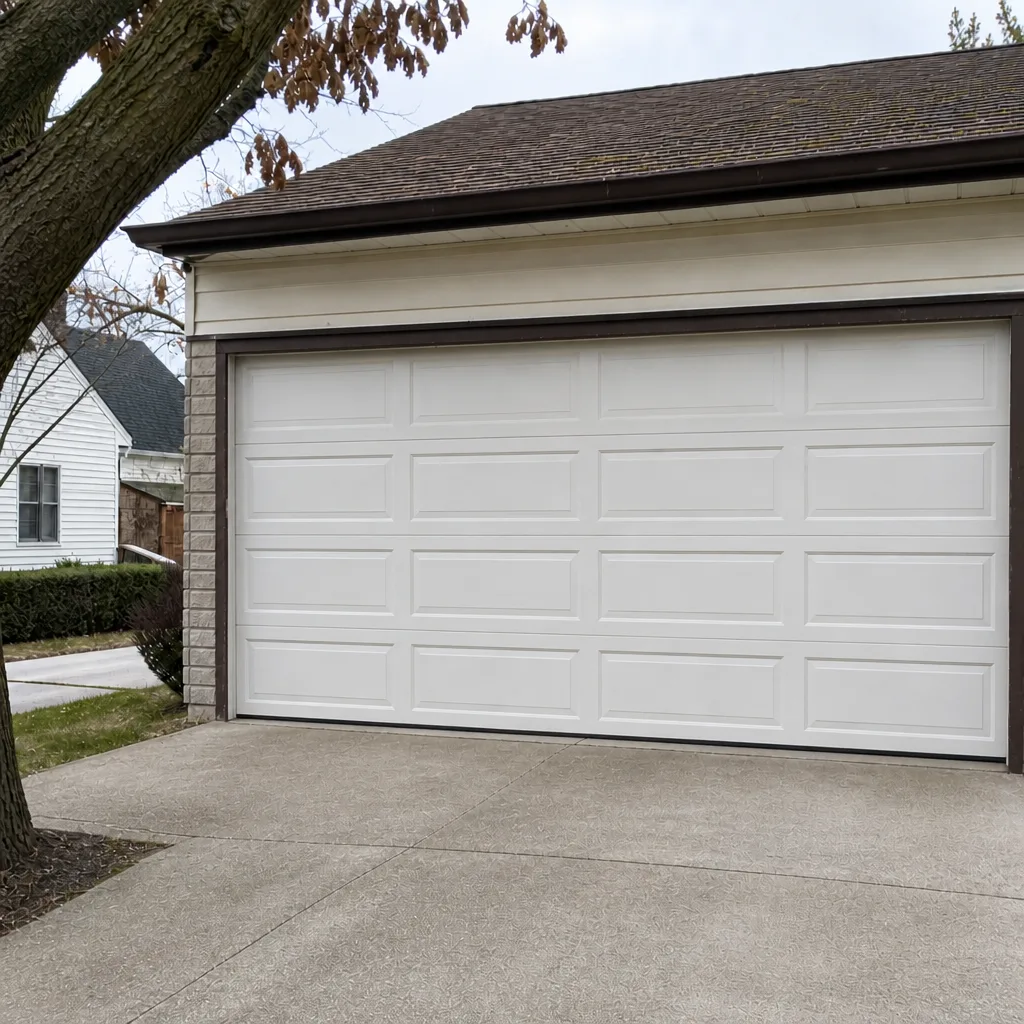 After
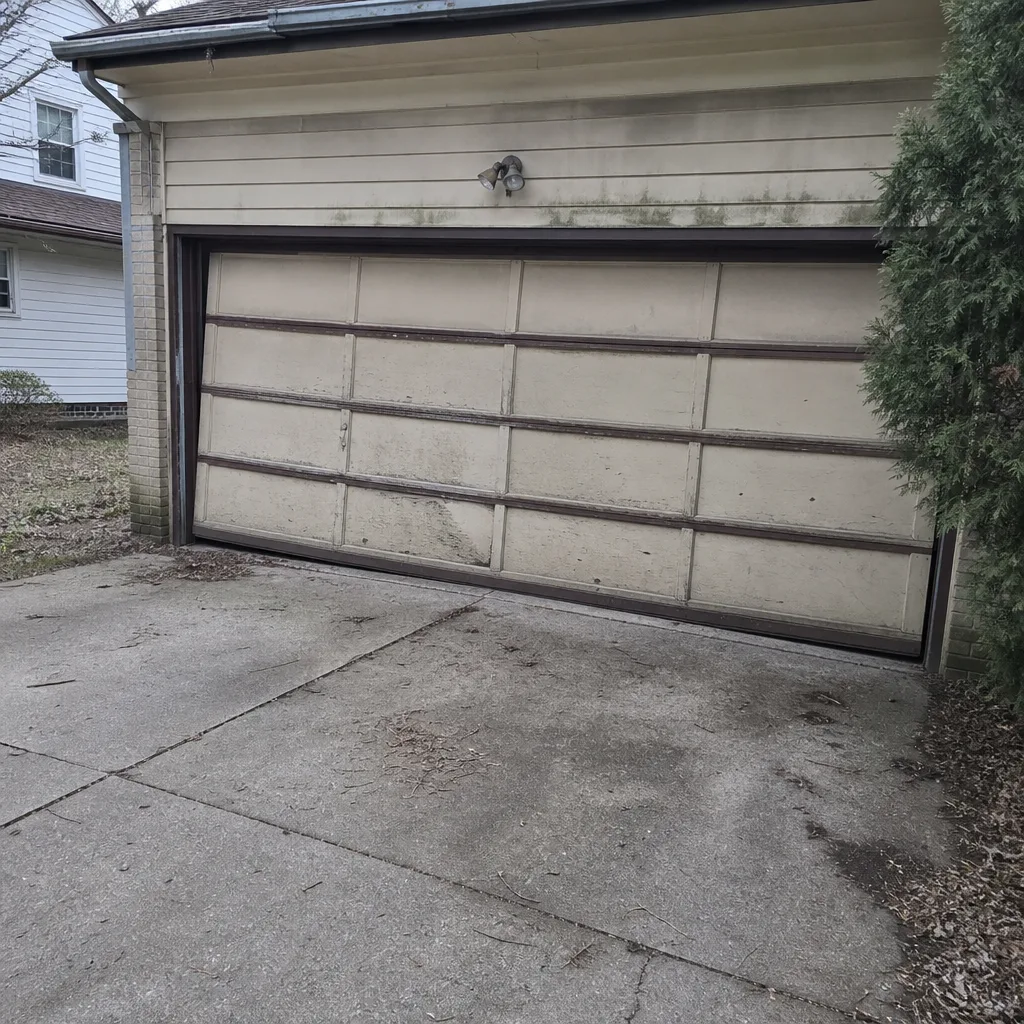 Before
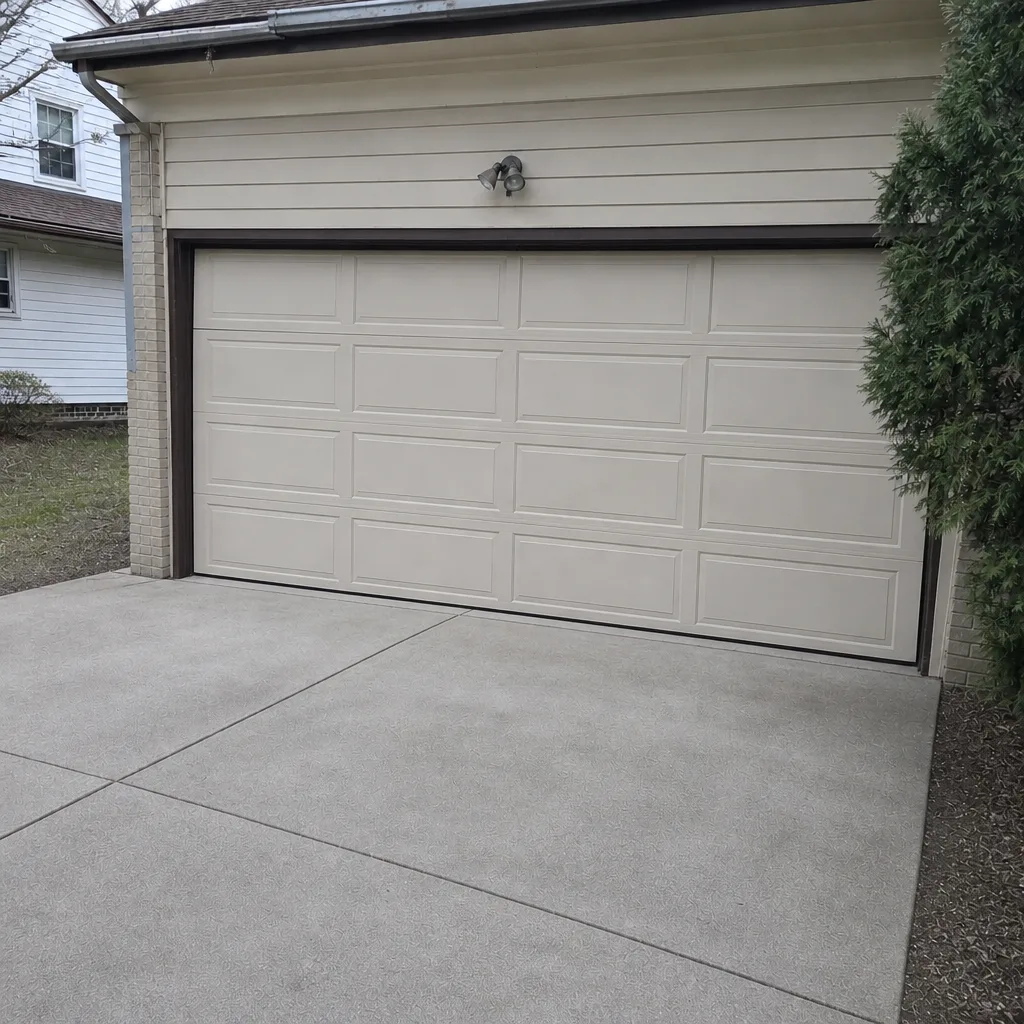 After
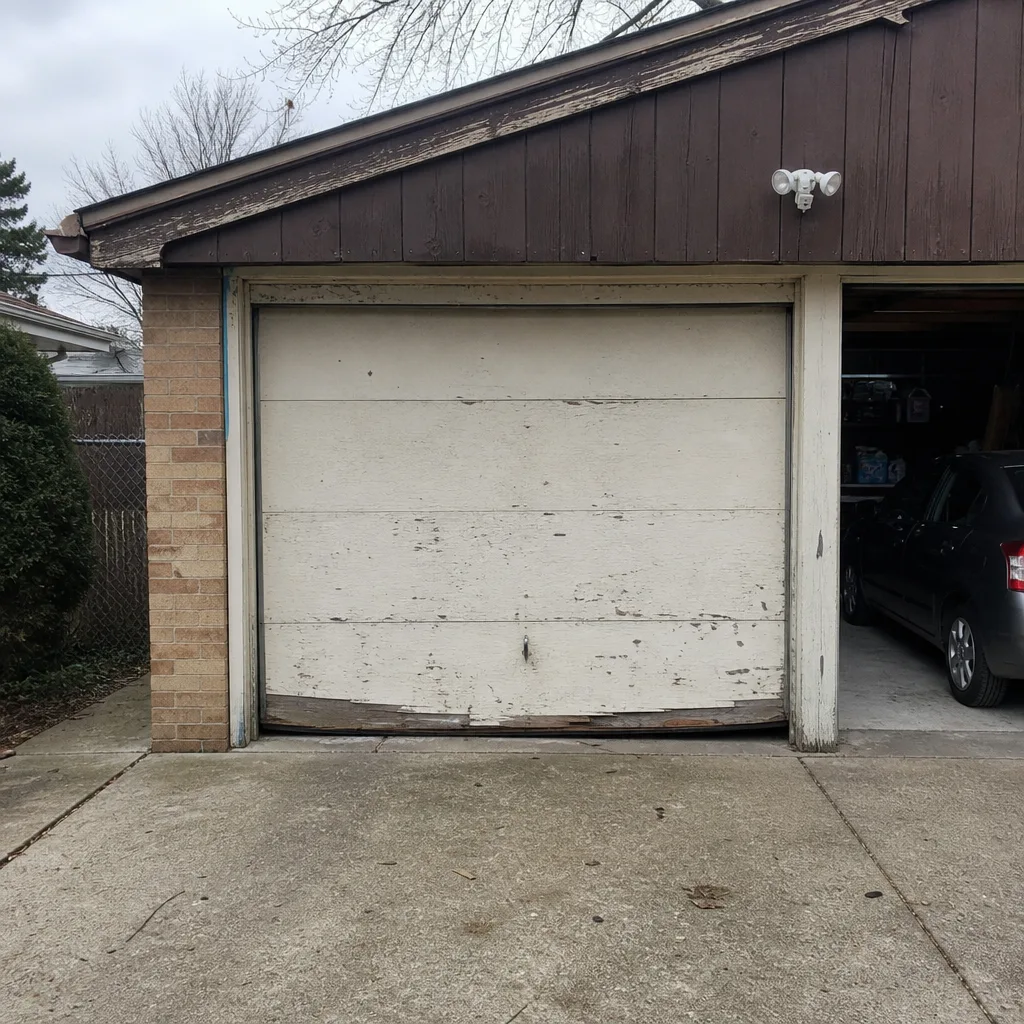 Before
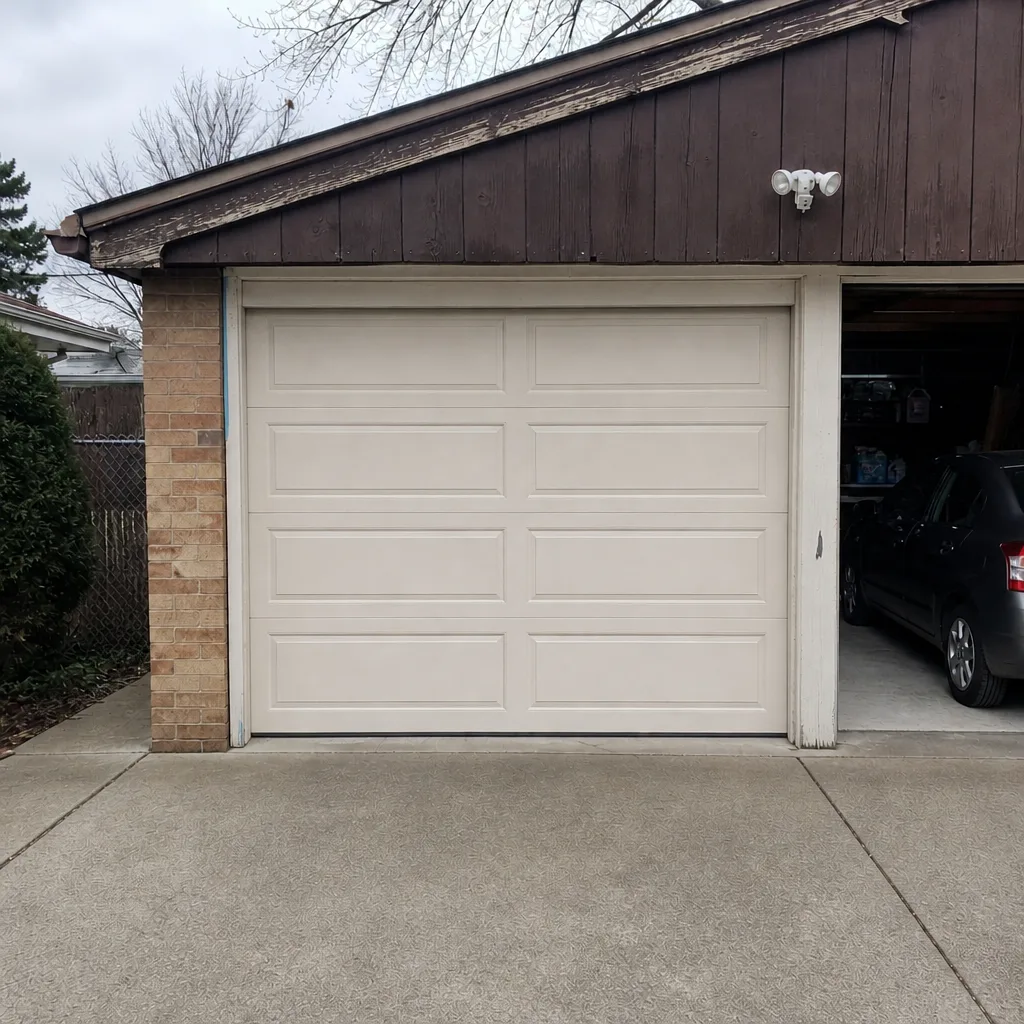 After
When to Call a Professional
Some garage door problems are safe to look at, and some aren’t. Calling a professional makes clear sense in a handful of specific situations:
- You see a broken spring – snapped coil on an extension setup, or a torsion spring with a clean break – and the door won’t lift.
- The opener runs but the door doesn’t move, or moves a few inches and stops.
- A torsion cable has slipped or looks frayed.
- The door is visibly off its tracks, or one side hangs lower than the other.
- The opener’s safety reversing system fails its test – it should reverse when it meets an obstruction.
- You’re considering a heavier replacement door and need the springs and opener evaluated before you order.
Springs and cables are the parts that cause serious injuries. Touching them without training and the right tools is a risk we’d steer anyone away from. For everything else, a diagnosis is the right first step. Skokie Garage Door Repair Co offers free estimates in Skokie – call (844) 670-3544. Our technicians have up to 14 years of experience and service the major brands, so you’re not explaining your system from scratch when the call begins. Emergency situations – a stuck door with a car trapped inside, a security door that won’t close – are handled as emergencies, not squeezed into a scheduled visit. If you’re earlier in the decision and just need a repair, our Skokie Garage Door Repair Co team can help you sort it out.
Frequently Asked Questions
A single-car steel door installed typically runs $950 to $1,900 in Skokie, and a double-car door typically runs $1,600 to $2,900. Insulated doors push those ranges higher, and custom sizing, glass, or wood-look doors go higher still. The written estimate you sign is the price – it’s quoted and agreed before any work starts. Call (844) 670-3544 for an exact quote; estimates are free.
Most Skokie bungalows have a single-car opening of roughly eight to nine feet wide, but “most” isn’t “yours.” Postwar construction gave the village openings that vary by builder and by decade, and some older homes have openings a few inches off the standard. The opening must be measured before any door is ordered – width, height, headroom, and backroom all matter. We measure as part of every estimate.
A same-size door replacement often doesn’t require a permit, but a change that touches the opening, the framing, or the garage’s footprint can. The Village of Skokie’s building department has the final word on your specific lot and plan, so ask before ordering. Don’t rely on a contractor’s verbal assumption on this one – it’s worth the phone call.
Spring replacement in Skokie typically costs about $180 to $340 for one spring. Most doors have a matched pair, and pairs are usually replaced together, so expect roughly twice that for a pair. Prices depend on spring type (torsion or extension) and door weight. Call (844) 670-3544 for an exact quote; estimates are free.
For repair and emergency situations, same-day service is common – if the door is stuck open or shut, if a car is trapped, or if the home isn’t secure, we prioritize it. For installation and full replacement work, the timeline is measured and scheduled rather than same-day, because the door has to be ordered to your opening. Call (844) 670-3544 and we’ll tell you honestly what’s available.
No. The written estimate is the price. If something on the assessment changes what’s needed – the door is heavier than expected, the framing needs work the estimate didn’t cover – you’ll hear about it before any work begins, not after. You agree to the change or you don’t. We don’t start work and surprise you with a different number.
We connect you to vetted local professionals, and the local pro is licensed and insured as their state requires. That’s the standard we hold every job to. Ask about credentials on the call and you’ll get a straight answer.
The Bottom Line
The right garage door for a Skokie home starts with the opening, not the catalog. Measure the width, height, headroom, and backroom before you shop. Match the insulation choice to how the garage is actually used – non-insulated for a detached garage, insulated and well-sealed for an attached one. Size the springs and opener to the door’s real weight. Read every quote line by line, and treat the Village of Skokie’s building department as your authority on permits and visible-façade considerations. If your door is failing, spring work is a job for trained hands. If you’re planning a replacement, take the time to measure first. Either way, the written estimate is the price – that’s the part we take most seriously.
For a free estimate on repair, spring replacement, opener work, or a new door installation anywhere in Skokie, call Skokie Garage Door Repair Co at (844) 670-3544. We’ll measure the opening, walk through your options, and give you a written price before anything starts. Curious about common repairs first? Our garage door repair page walks through what we typically handle.
Written by the team at Skokie Garage Door Repair Co.