Last updated November 23, 2026
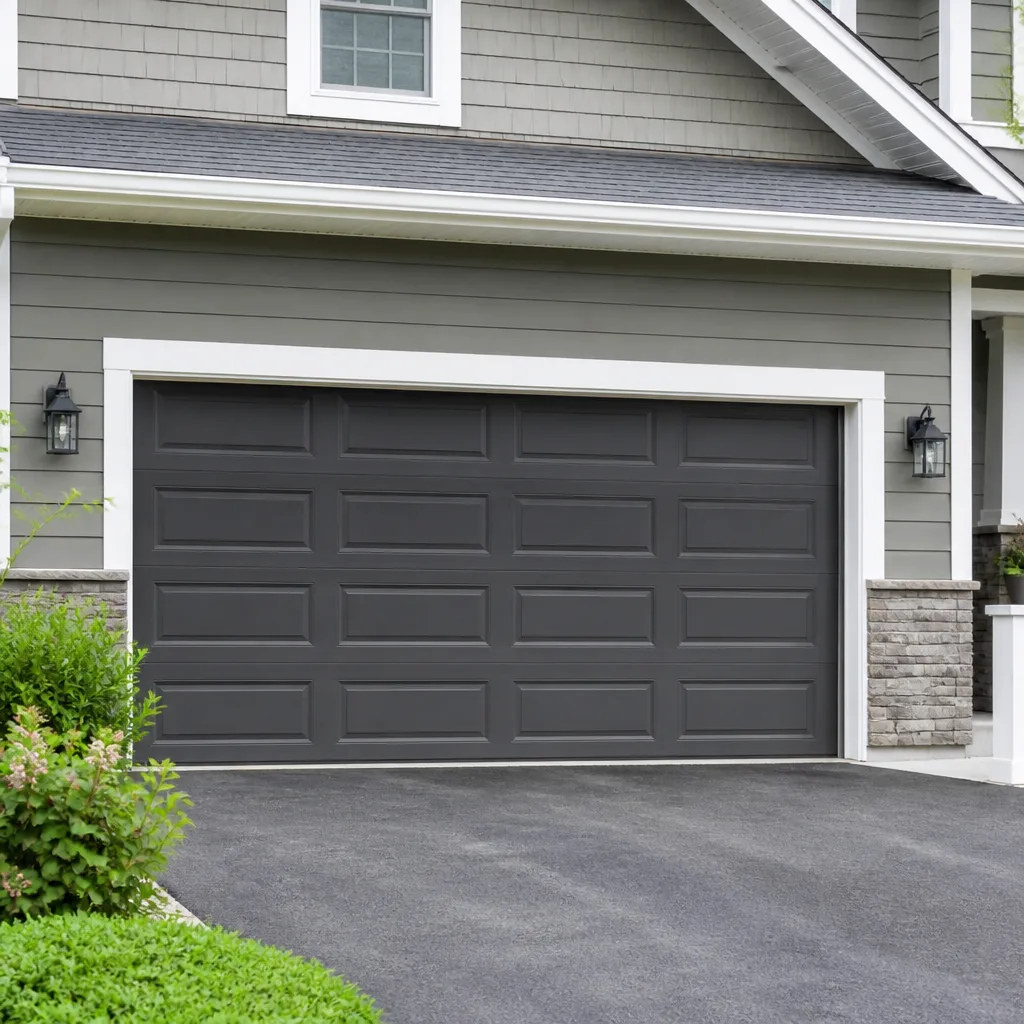 Raised-panel steel
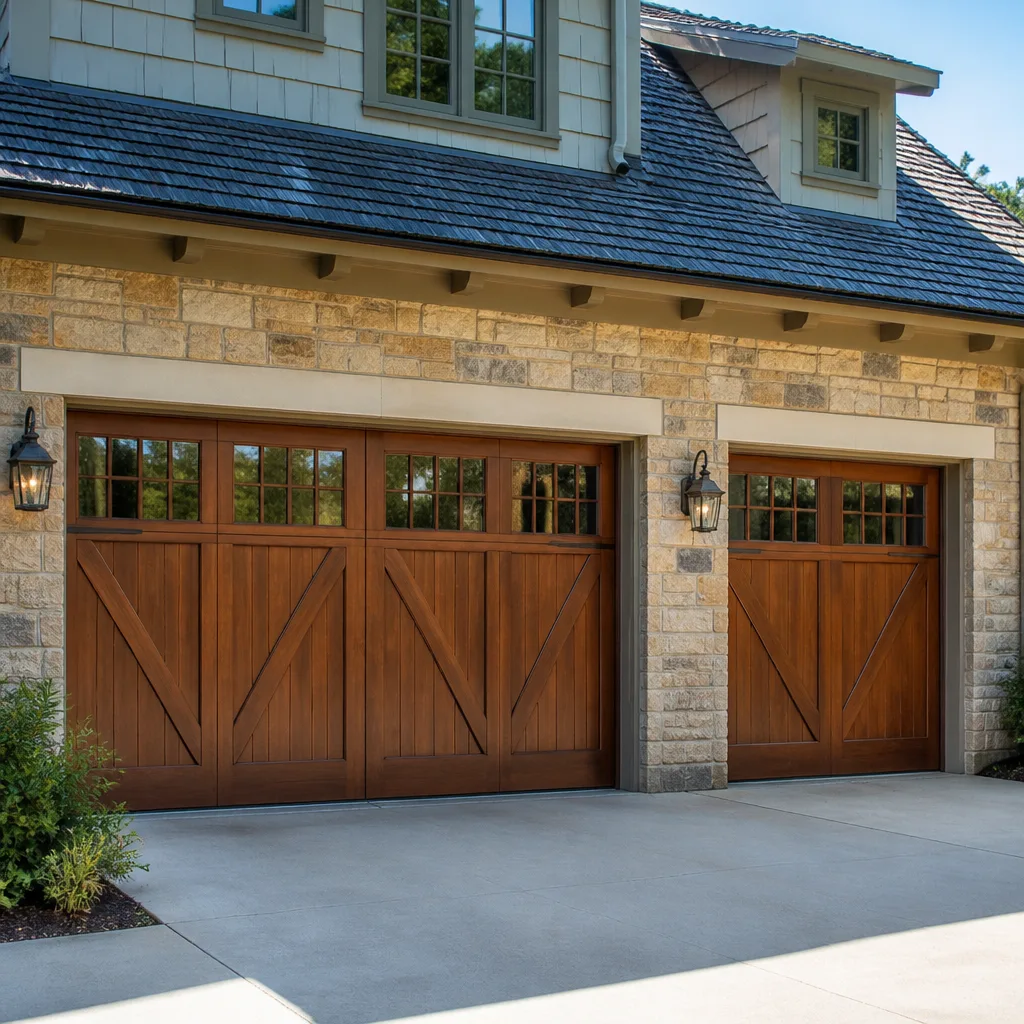 Carriage house
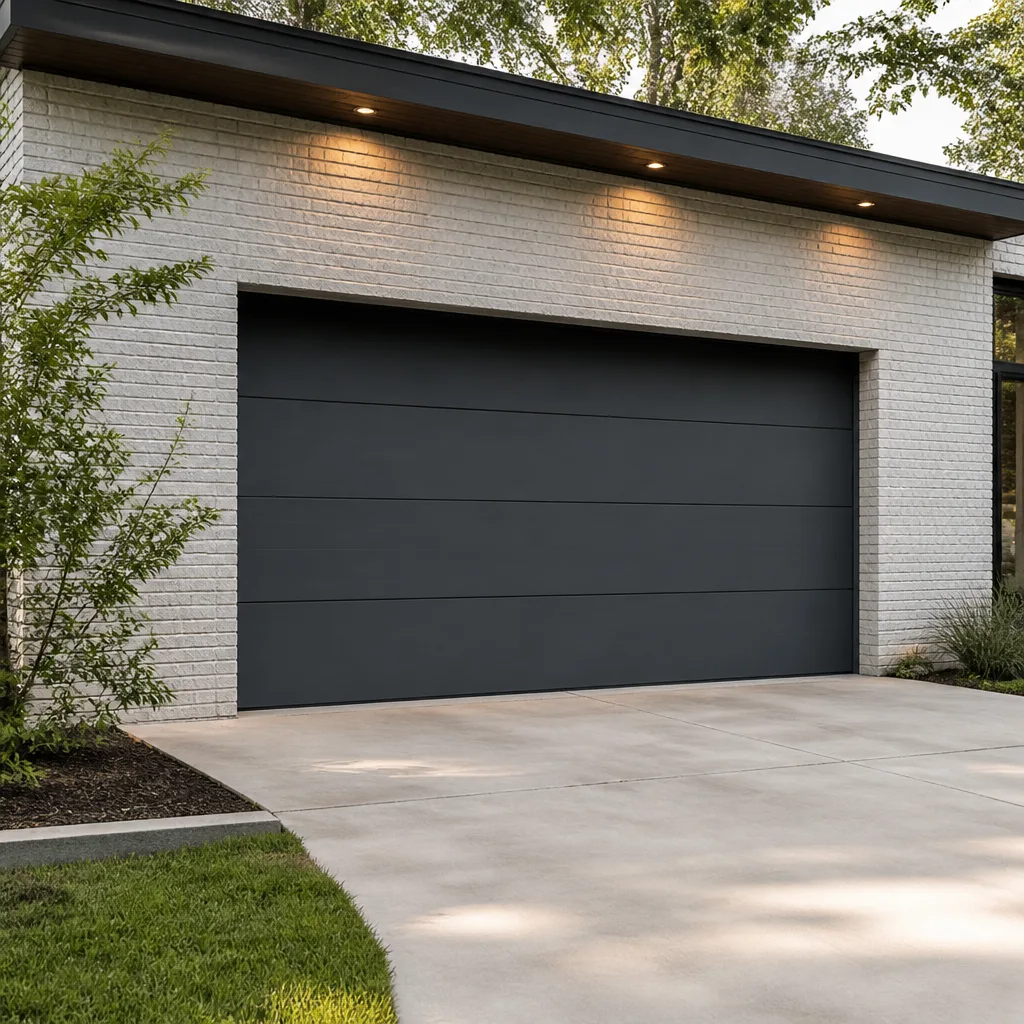 Modern flush
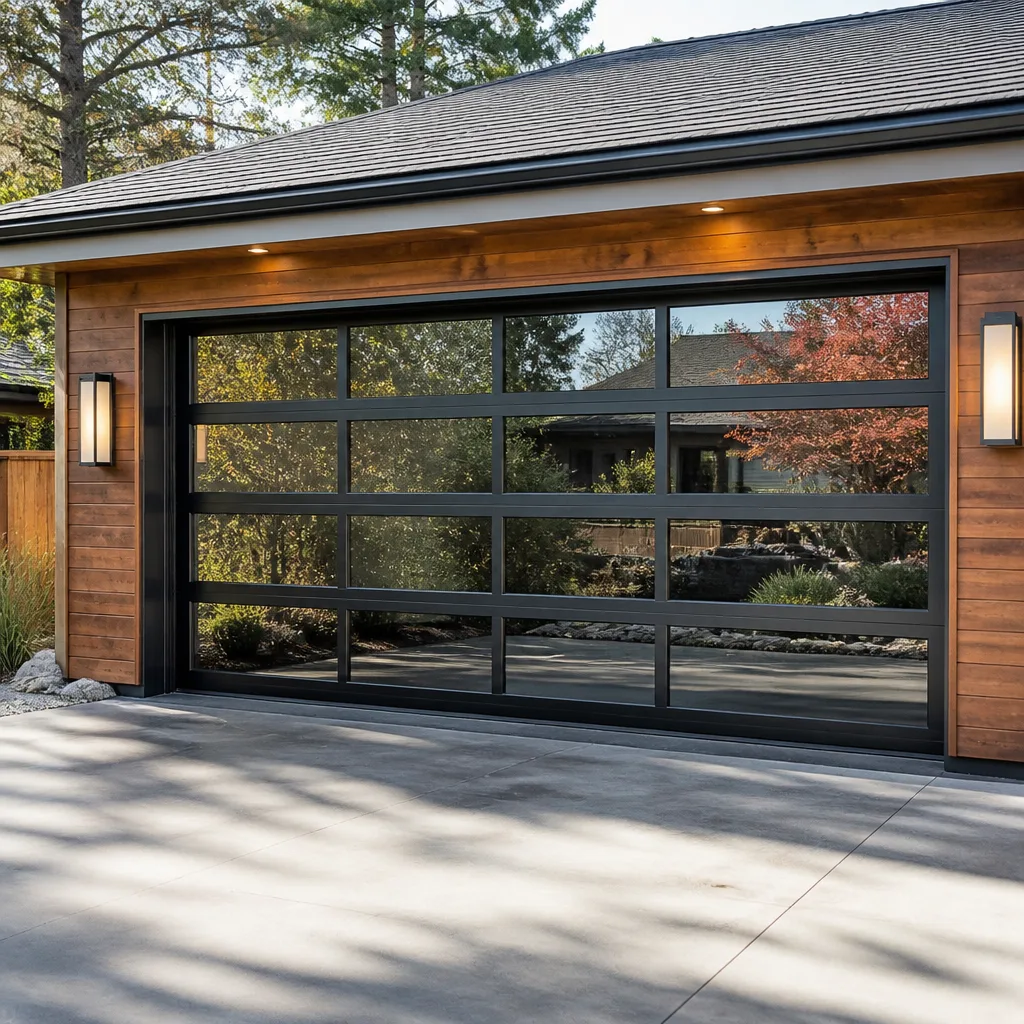 Full-view glass
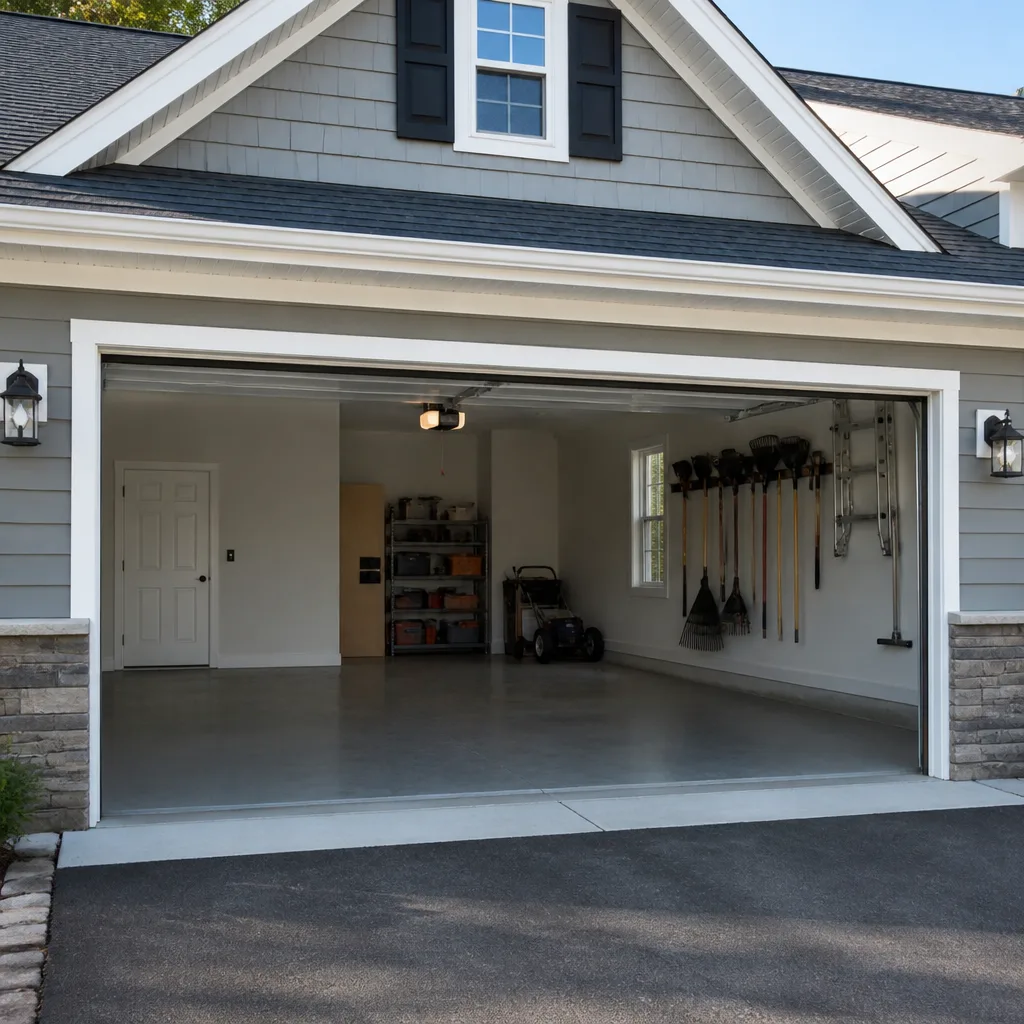 LiftMaster openers
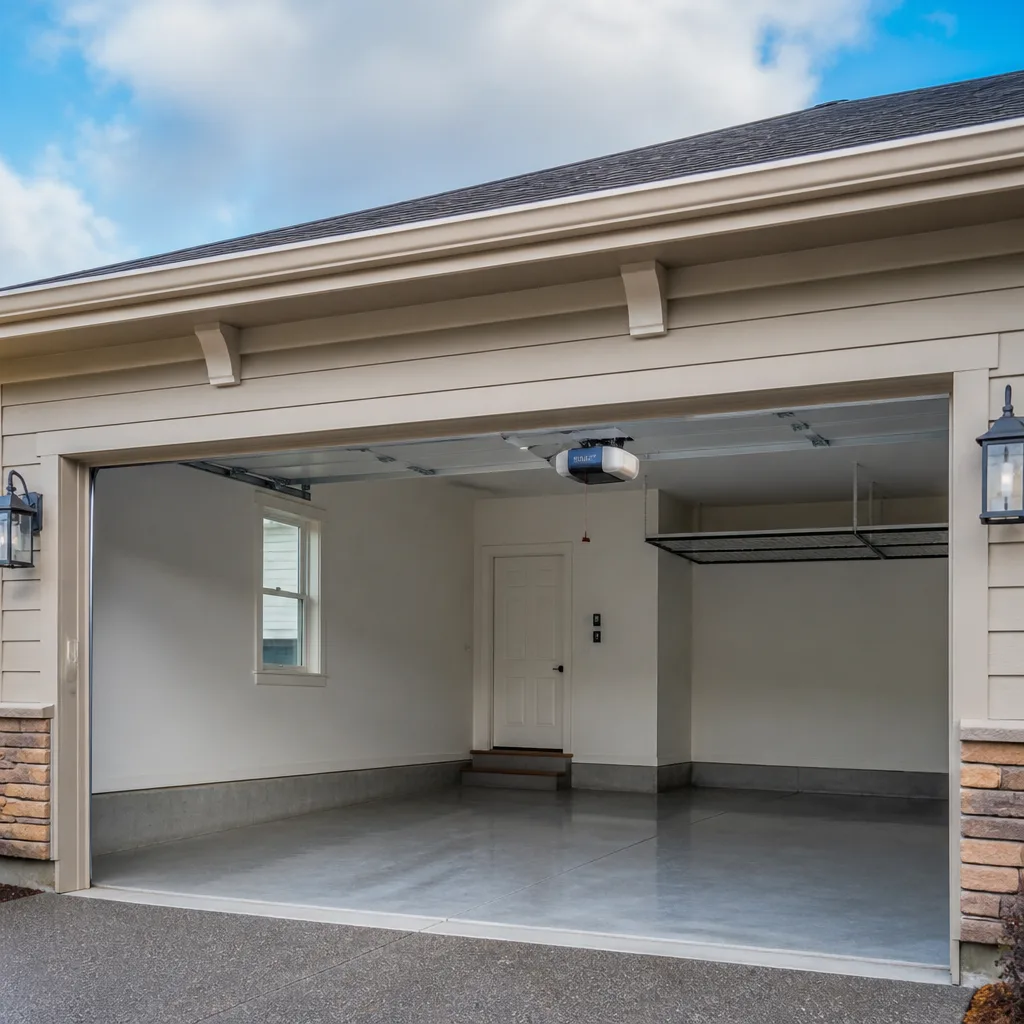 Chamberlain openers
Full 25-point door and opener safety check with every visit - springs, cables, rollers, tracks, and your LiftMaster or Chamberlain opener included
You get a price before we start. It does not change when the pro arrives.
Get your free estimateGarage Door Cost Breakdown: The Skokie Homeowner’s Reference for 2026
A $900 garage door installation quote and a $1,400 quote for the same door can both be fair – or one can be a bait-and-switch. The difference is entirely in what’s itemized for springs, tracks, hardware, and disposal, which most quotes bundle into a single line and most homeowners never question. In Skokie, where postwar homes often have non-standard opening widths and shallow headroom, that missing detail matters more than the bottom line. This reference breaks down what each component actually should cost in 2026, so you can read a bid instead of just comparing totals.
Quick Answer
In Skokie, a basic single-car steel door runs about $850 to $1,600 installed, a double-car door typically lands between $1,400 and $3,200, and a full torsion spring replacement costs around $180 to $340 per spring. Opener replacement generally runs $300 to $700 installed. Labor in the Skokie and North Shore market tends to run higher than national averages because of older housing stock and low-clearance installs, and the written estimate should itemize the door, springs, tracks, hardware, opener, and disposal separately.
Styles & brands we work with
- Raised-panel steel
- Carriage house
- Modern flush
- Full-view glass
- LiftMaster openers
- Chamberlain openers
Table of Contents
- Component-Level Cost Breakdown for Skokie
- How Door Material and Insulation Change the Price
- Labor Cost Variables Specific to Skokie Homes
- What “Lifetime Warranty” on Springs Really Means
- Opener and Accessory Costs
- How to Read an Itemized Quote
- Red Flags in a Garage Door Quote
- Common Mistakes to Avoid
Component-Level Cost Breakdown for Skokie
Most homeowners only see the total. The better way to evaluate a bid is to price each component on its own, because a quote that hides the springs and hardware inside the door price can’t be compared to one that breaks them out. Below is what each part of the system typically costs in Skokie in 2026, as a range for a standard residential opening.
- Door panel or complete door section: $700 to $2,800 depending on size and material
- Torsion spring replacement (single spring): $180 to $340
- Extension spring replacement (single spring): $120 to $250
- Torsion spring replacement (matched pair): $360 to $680 – a pair is usually replaced together
- Track replacement: $150 to $400 for a full set
- Rollers and hinges: $80 to $200 for a full hardware swap
- Opener unit installed: $300 to $700
- Keypad or remote programming and add-on: $40 to $150
- Old door removal and disposal: $100 to $250
- Installation labor: $300 to $800, depending on opening type and clearance
If you add those lines to a mid-grade steel door, you land near the ranges above and you can see exactly where the money goes. When a bid comes in at $900 for a door that a competitor quoted at $1,400 for, the first question to ask is what got left off. Often it’s the springs, sometimes it’s disposal, sometimes it’s track. The written estimate should always list them out. If you need the door itself repaired rather than replaced, garage door repair typically costs far less and can often be scheduled quickly.
How Door Material and Insulation Change the Price
The door surface is only part of what you’re paying for. Steel gauge, insulation layer, and panel style drive most of the price difference between two doors that look identical on a screen. Here’s how the options stack up in the Skokie market.
Steel Doors by Gauge
- 24-gauge steel: entry level, $700 to $1,200 for a single door. Light, fine for a detached or unheated garage, but it dents more easily.
- 25-gauge steel: mid-range, $850 to $1,600. The most common choice for attached garages in Skokie.
- 27-gauge steel: heavier, $1,200 to $2,400. Better for high-use doors and warmer garages.
Aluminum and Wood Composite
Aluminum doors run $1,300 to $2,600 for a single panel and are ideal for full-view or glass-paneled designs. They’re lighter than steel, resist rust, and look distinctly different from a standard raised-panel door. Wood composite or wood-look doors tend to run $1,800 to $3,500 and offer the warm appearance of wood without the annual refinishing. Both are common upgrades on North Shore homes where the door faces the street.
Insulation Layers
Insulation is where shoppers get confused. Single-layer (non-insulated) doors are the cheapest and work for storage-only garages. Polystyrene (two-layer) doors add rigidity and a modest thermal break, $150 to $300 more than single-layer. Polyurethane (three-layer) doors are the warmest and quietest, and cost $300 to $600 more than single-layer doors. For an attached garage under a bedroom in Skokie, the polyurethane option is almost always the better long-term pick because it also reduces noise transfer.
Labor Cost Variables Specific to Skokie Homes
Labor in Skokie doesn’t follow a national formula. The North Shore’s postwar housing stock creates install conditions that raise or lower a typical job compared with a newer subdivision. The three variables we see most often are clearance, opening width, and garage structure.
Low-Clearance Installs
Some older garages have less than a foot of headroom above the door when open. A low-clearance torsion setup or a low-profile opener adds $100 to $250 to the labor line, because the brackets, drums, and spring position all change. Trying to force a standard install into a low-clearance garage is how door panels get cracked on the first open.
Non-Standard Opening Widths
Standard single openings are 8, 9, or 10 feet wide. Standard double openings are 16 feet. Skokie homes in certain blocks of the village have garages that fall between those numbers, and doors sized to 9-foot-3 or 15-foot-4 require custom panels. Expect $200 to $600 more for a custom-width door plus a longer install window because of the manufacturing lead time.
Shared-Wall Attached Garages
An attached garage that shares a wall with the living space gets extra care during a door swap. Track anchoring has to avoid cable and conduit routed inside the shared cavity, and any fastener that could penetrate a wall cavity with wiring calls for an alternate anchor point. We adjust for this and it usually adds $50 to $150 to the labor estimate, not because the job is harder but because the safety planning is. Ask the estimator whether they’ve looked at the wall construction before quoting.
If your opener is also aging, it often makes sense to price an opener swap at the same time. garage door opener repair is a separate ticket, but bundling saves a second trip charge.
What “Lifetime Warranty” on Springs Really Means
Springs carry a “lifetime” or “10,000-cycle” label more often than any other component, and the label rarely means what a buyer assumes. A cycle is one open-and-close. A household that runs the door four times a day puts the spring through about 1,460 cycles a year, so a 10,000-cycle spring has roughly seven years of service. A 25,000-cycle spring has about seventeen. The word “lifetime” applies to a specific cycle count, not to the door or to your lifetime of ownership.
What Usually Voids a Spring Warranty
- Over-winding or under-winding during installation
- Rust and corrosion (springs in unheated Chicago-area garages corrode faster than most warranties anticipate)
- Improper door balance after a spring swap
- Using a spring rated for a different door weight than what’s actually hanging
- Lubrication with the wrong product or none at all
The Long-Term Cost Picture
A standard 10,000-cycle spring costs less up front but usually gets replaced one more time than a 25,000-cycle upgrade over a typical ownership window. For a Skokie homeowner planning to stay in the house, the higher-cycle spring usually pays back within one replacement cycle. The right question to ask is not “does it have a lifetime warranty?” but “what cycle rating is this spring and what voids the warranty?” If the estimator can’t answer both on the spot, that’s a signal.
Spring work is one of the few jobs where we strongly recommend against DIY. High-tension torsion springs store enough force to cause serious injury, and the winding process requires specific rods and technique. A trained technician should do the work. If a spring has already snapped, start with garage door spring repair rather than trying to force the door up.
Opener and Accessory Costs
The opener is the most-frequently-upgraded component after the door itself, and the price spread is wider than most homeowners expect. A basic chain-drive unit and a smart belt-drive unit can look similar in a review, but they’re separated by $200 or more in labor and wiring.
- Chain-drive opener installed: $300 to $450. Noisy but reliable and cheap.
- Belt-drive opener installed: $400 to $600. Quieter, preferred for attached garages under bedrooms.
- Screw-drive opener installed: $350 to $500. Durable, works well in cold weather.
- Smart opener with Wi-Fi and battery backup: $500 to $700 installed.
- Keypad addition: $60 to $150 installed and programmed.
- Photo-eye or safety sensor replacement: $80 to $180.
Brand matters less than fit. If you already have a Chamberlain or LiftMaster opener, a new unit in the same family often reuses the existing wiring and rail, which can save $50 to $100 on the install. If your garage was wired for an older Genie, we may recommend staying in that family for the same reason. We work on all of these systems, which is why we don’t push a swap just because a base unit is old. Ask the estimator what the reused hardware is worth before committing.
How to Read an Itemized Quote
A fair quote tells you what you’re buying and what each part costs. If a number is missing, expect it to reappear as an add-on later. Here’s how to read one properly, in order.
- Confirm the door size and model. Width, height, gauge, and manufacturer should all be listed. “Standard 16×7 steel” is not enough.
- Check the spring line. Cycle rating, spring count, and whether it’s torsion or extension should be visible. If springs are “included” with no cycle rating, ask for it in writing.
- Verify the track and hardware line. Track, rollers, and hinges should be itemized, not buried in labor.
- Confirm disposal is included. Old door haul-away is a real cost. If it’s not listed, plan on paying for it separately.
- Check the opener and accessories. The opener model, rail type, and whether remotes and a keypad are included should be spelled out.
- Read the warranty terms. Manufacturer warranty on the door, spring warranty terms, and labor warranty length are three separate things.
- Confirm the written estimate is the price. The agreed written estimate should be what you’re invoiced, and the work shouldn’t start until both sides sign off on it.
If a bid is a single line, ask for it broken down before you sign. Any legitimate installer should be able to itemize on request. Bringing this list to a bid review is the fastest way to separate a real quote from a teaser.
Red Flags in a Garage Door Quote
Some signs show up repeatedly in bad bids. Knowing them saves you a phone call after the fact.
- Missing line items that always get added later. Disposal, springs, and opener programming are the three most common late adds. If any is absent from the quote, ask where it lives.
- Aftermarket spring substitutions. The door line might name Clopay or Amarr while the springs are unlabeled. A matching spring rated for the door weight is the difference between a smooth five years and a spring failure in eighteen months.
- No cycle rating on springs. Any legitimate spring line should show a cycle count. Without one, “premium” is meaningless.
- Track or hardware listed but never installed. Some quotes itemize a full hardware kit but the crew reuses existing rollers to save time. Confirm what’s actually being replaced.
- One-line pricing with “labor included.” Labor is a real line item and hiding it inside the door price makes comparison impossible.
- Verbal promises not in the written estimate. Anything agreed over the phone needs to be in the printed quote before work begins.
- High-pressure same-visit discounts. A fair price today is also a fair price tomorrow. Pressure to sign on the spot belongs in used cars, not garage doors.
A good quote is often longer than a bad one. That’s a feature, not a bug.
Common Mistakes to Avoid
- Comparing totals instead of line items. A $900 door and a $1,400 door may be the same door with different inclusions. Itemize before you decide which is cheaper.
- Assuming springs are included. Many low bids leave springs out and add them at the visit. Confirm the spring line by name.
- Skipping the low-clearance check. Skokie garages from the postwar era often have less headroom than a new build. Get the estimator to measure clearance before quoting a door.
- Buying a door for looks without checking gauge. A 24-gauge door that matches a neighbor’s won’t hold up in a busy attached garage the same way a 27-gauge will.
- Ignoring opener brand compatibility. A new opener in a brand family you don’t already use may add wiring and rail cost. Ask what’s reused.
- Choosing a spring by price instead of cycle rating. A cheaper spring that lasts half as long costs more over the ownership window.
- Skipping disposal in the estimate. Old door haul-away is a real cost. Confirm it’s in the quote, not an add-on.
See the difference
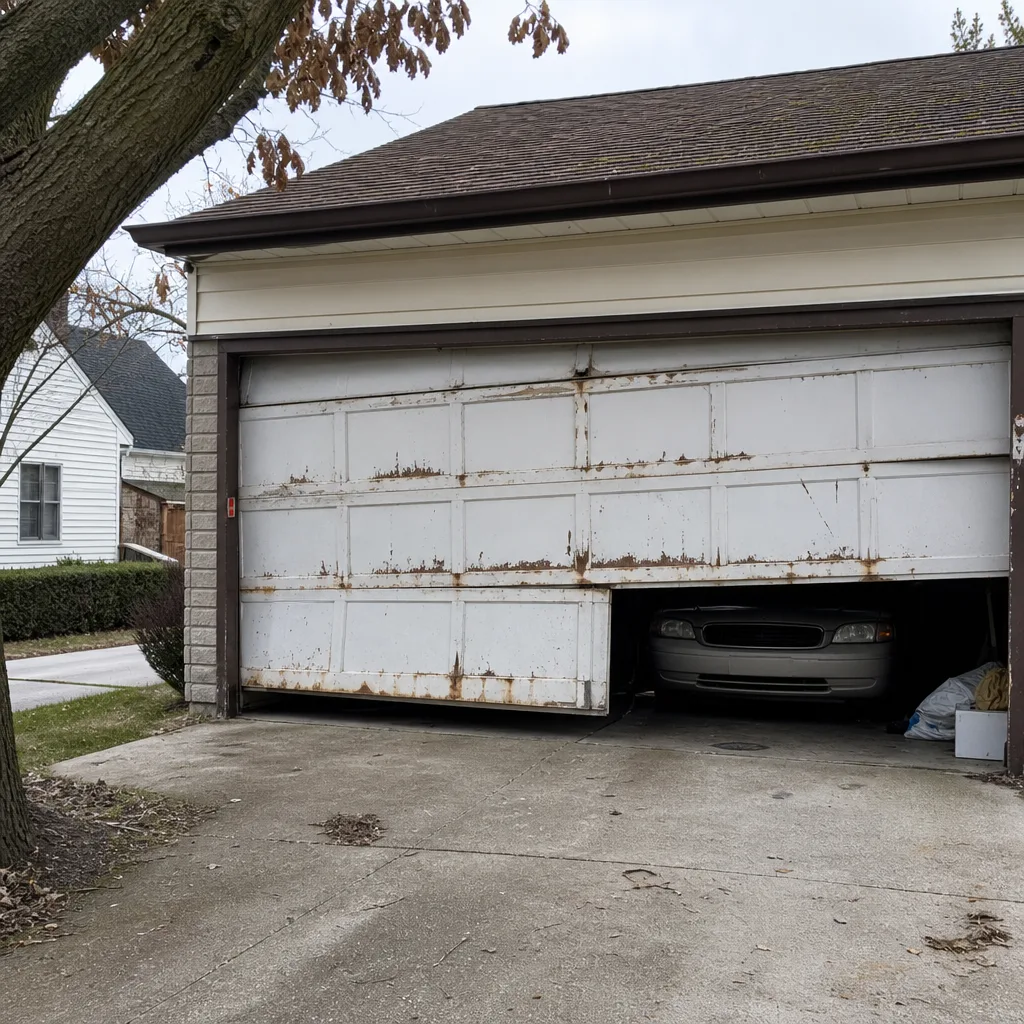 Before
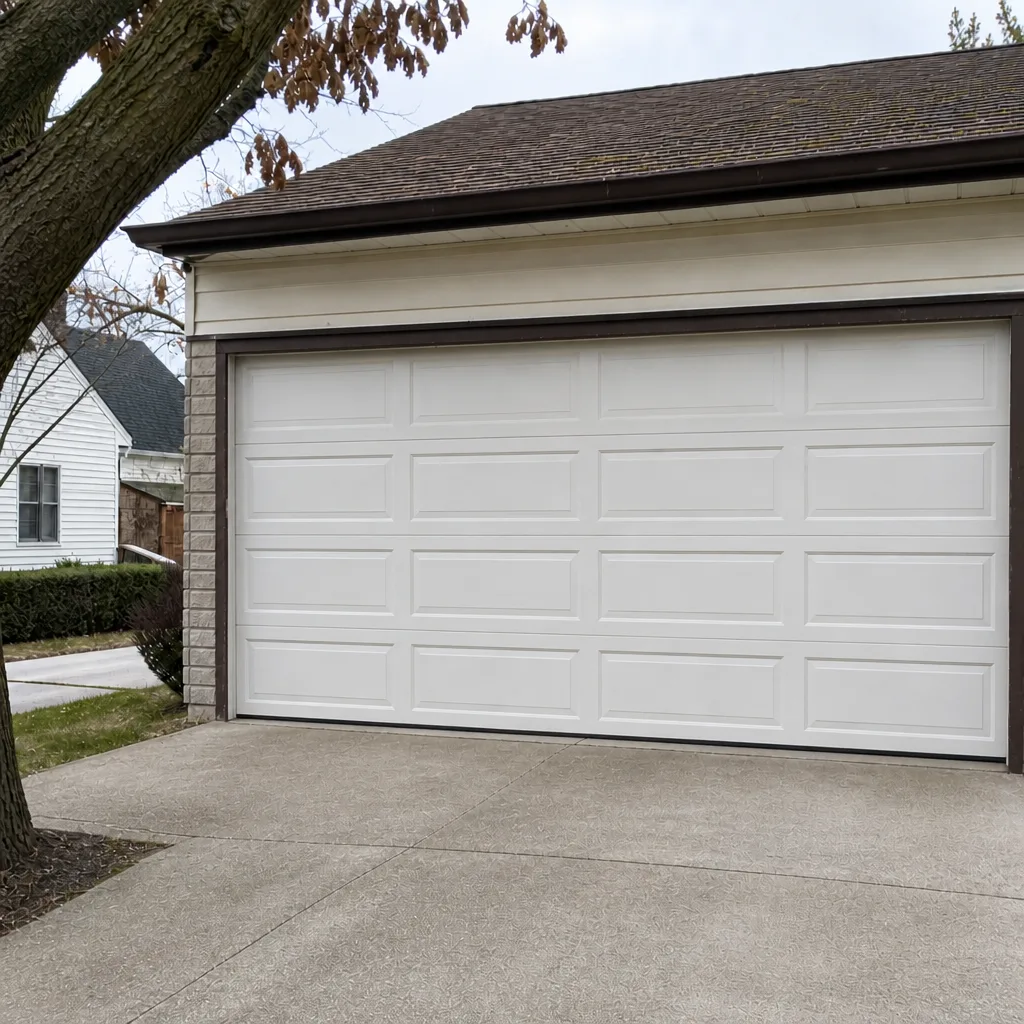 After
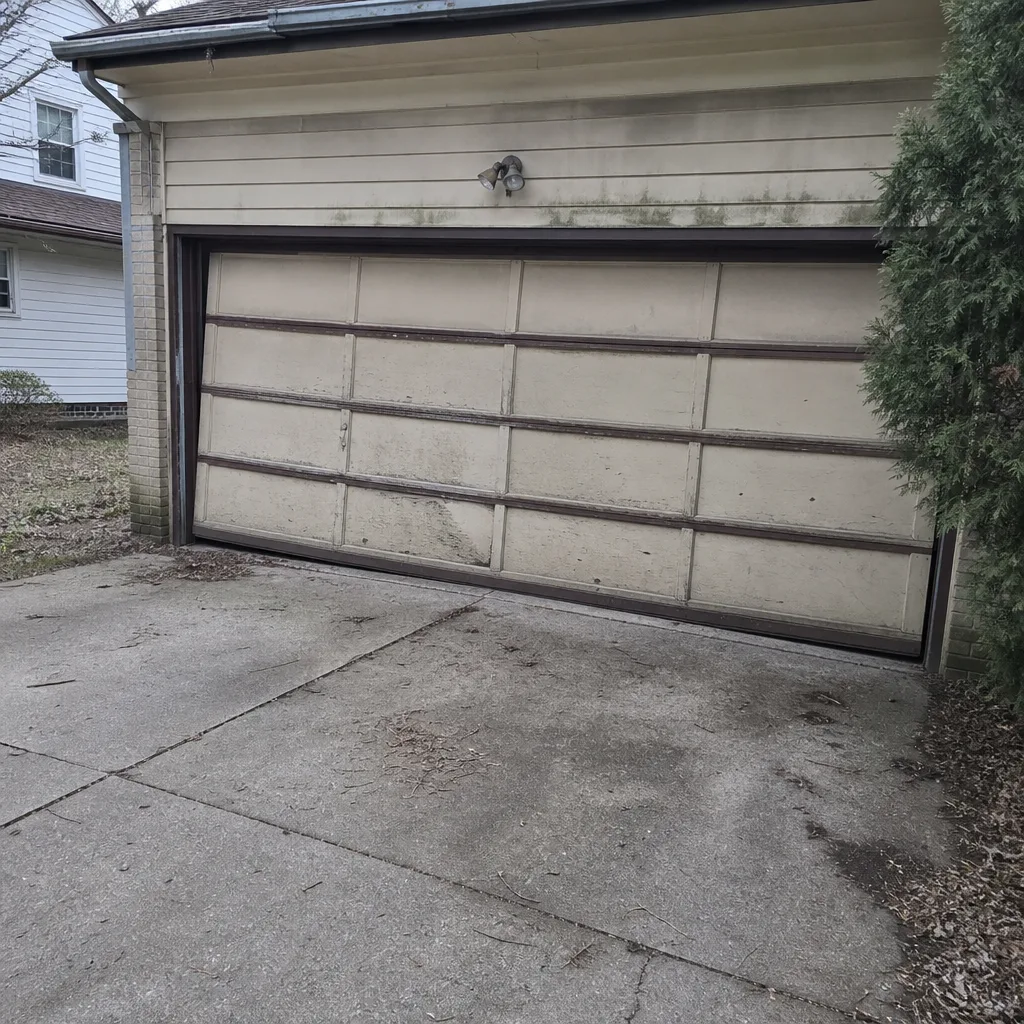 Before
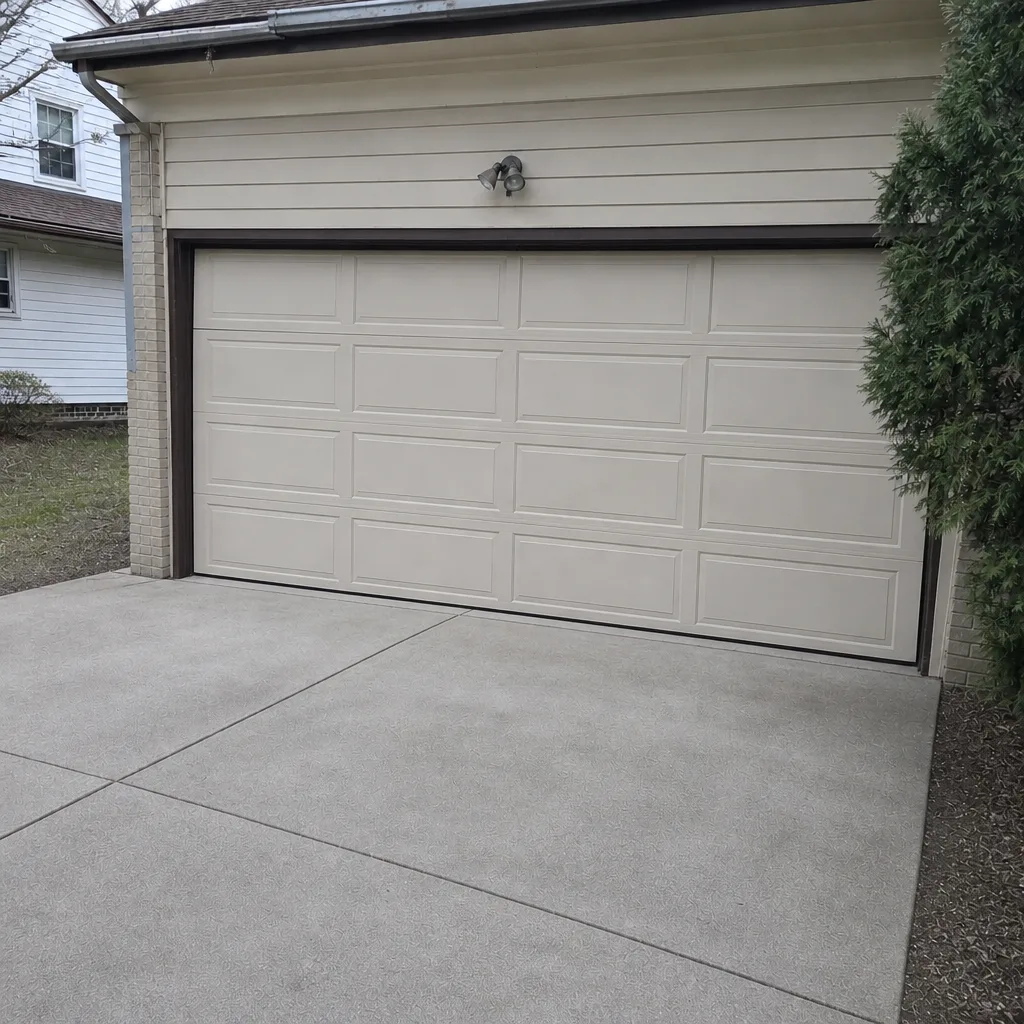 After
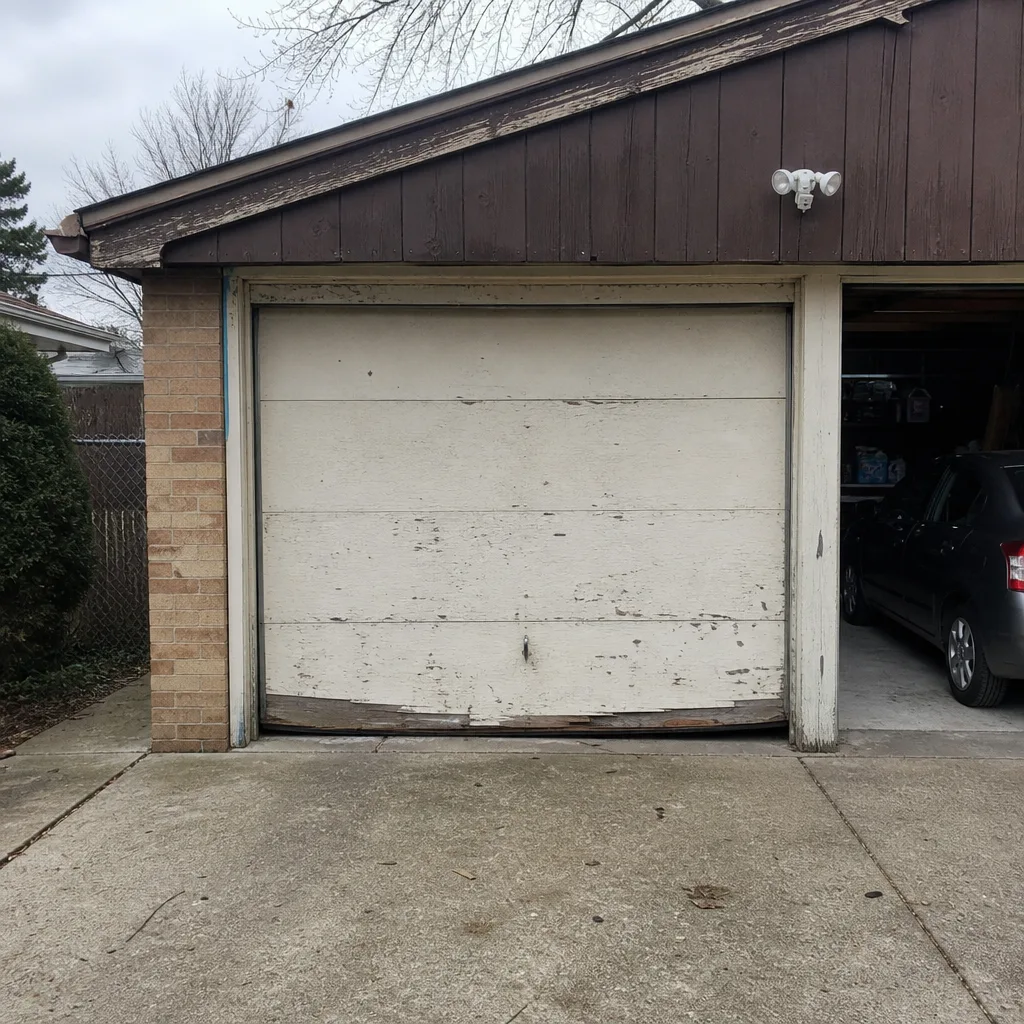 Before
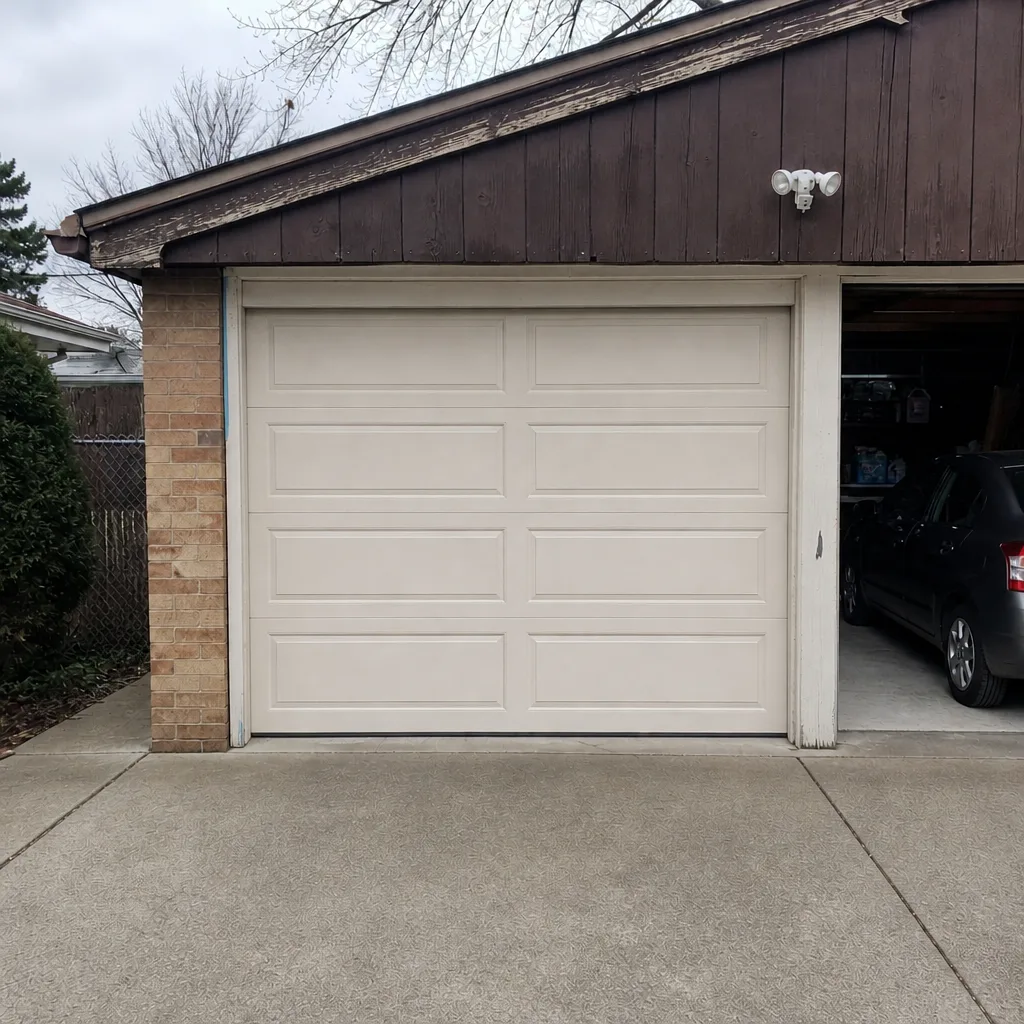 After
When to Call a Professional
Some jobs are fine to consider yourself, and some aren’t. If the door is noisy but moves evenly, lubrication and hardware inspection are reasonable first steps. When the door is out of balance, when a torsion spring has snapped, when the cable has come off a drum, when the opener motor runs but the door doesn’t move, or when the door reverses without an obstruction, it’s time to call. Springs and cables are genuinely dangerous to handle without the right tools and training, and the balance and force settings on a door need specific gauges to set correctly. In Skokie, Skokie Garage Door Repair Co offers free estimates – call (844) 670-3544. Our technicians have up to 14 years of experience, our technicians are trained on LiftMaster, Chamberlain, Genie, Clopay, Amarr, Wayne Dalton, Craftsman, and Raynor systems, and we can work with your insurer if a covered loss is involved.
Frequently Asked Questions
A basic single-car steel door installed in Skokie runs about $850 to $1,600, and a double-car door typically lands between $1,400 and $3,200 depending on material and insulation. Custom widths and low-clearance installs push toward the upper end. The written estimate should be the final price. Call (844) 670-3544 for a free estimate – it’s a measured quote, not a phone guess.
Often, yes. Spring failure is one of the most common emergency calls we handle, and when the parts and door weight are a standard match, we can typically get a technician out the same day. Call (844) 670-3544 and describe the door size and what happened – we’ll tell you what’s realistic for Skokie on that day.
The written estimate is the price. The number quoted before work starts is the number invoiced. If the visit reveals something genuinely unexpected, such as a cracked drum or hidden wall damage, we’ll stop and get your approval on the additional cost before doing anything further. Nothing gets added to an invoice that wasn’t on the approved quote. Call (844) 670-3544 to schedule a free estimate.
Yes – the local pro we connect you with is licensed and insured as Illinois requires. We work with trained technicians who handle torsion and extension spring work as a specialty, not as a side task. Call (844) 670-3544 if you’d like details before booking.
Torsion springs run along a bar above the door and work by twisting; extension springs run along the sides and stretch. Torsion is standard on newer and heavier doors; extension is common on older postwar homes. Both are priced per spring, so a matched pair costs about twice the single-spring range. If you can’t identify which you have, take a photo of the bar above the door and send it when you call (844) 670-3544.
Often, yes – a stuck opener, a motor that runs without lifting the door, or a photo-eye fault can usually be diagnosed and repaired on the same visit. A full opener replacement is scheduled rather than same-day because of the unit and rail required. Call (844) 670-3544 and we’ll tell you which situation applies.
The Bottom Line
The number at the bottom of a garage door or opener quote tells you very little on its own. What matters is the itemized list above it: door model and gauge, spring type and cycle rating, tracks, hardware, opener model, disposal, and labor. Read the quote line by line, ask what the springs are rated for, and confirm the written estimate is what you’ll be invoiced. That’s how you compare bids fairly and avoid the add-ons that turn a $900 quote into a $1,400 invoice. Whether you’re repairing a spring, replacing an opener, or pricing a new door, the free estimate should tell you exactly what you’re buying.
When you’re ready, Skokie Garage Door Repair Co is here to walk the whole thing through with you. From repair to full replacement, we handle the diagnosis, the spring work, the opener, and the install in one conversation. We’ve worked on LiftMaster, Chamberlain, Genie, and Clopay systems enough to spot what a quote is hiding before you sign it. Call (844) 670-3544 for a free estimate, and we’ll give you a written, itemized price before any work starts.
For more on our core services, start with Skokie Garage Door Repair Co or explore the pillar pages above. Our team handles everything from diagnosis to install, and the estimate is always free.
Written by the team at Skokie Garage Door Repair Co.