Last updated November 23, 2026
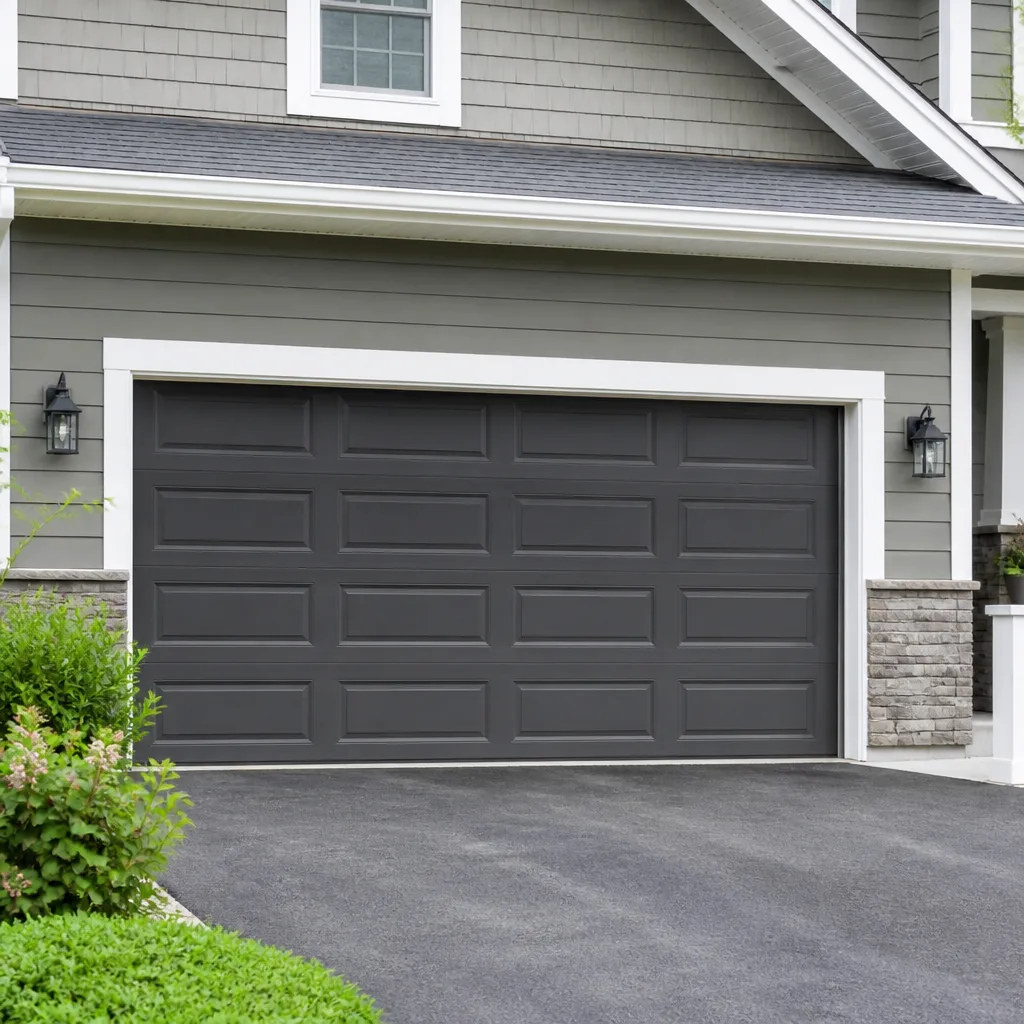 Raised-panel steel
 Carriage house
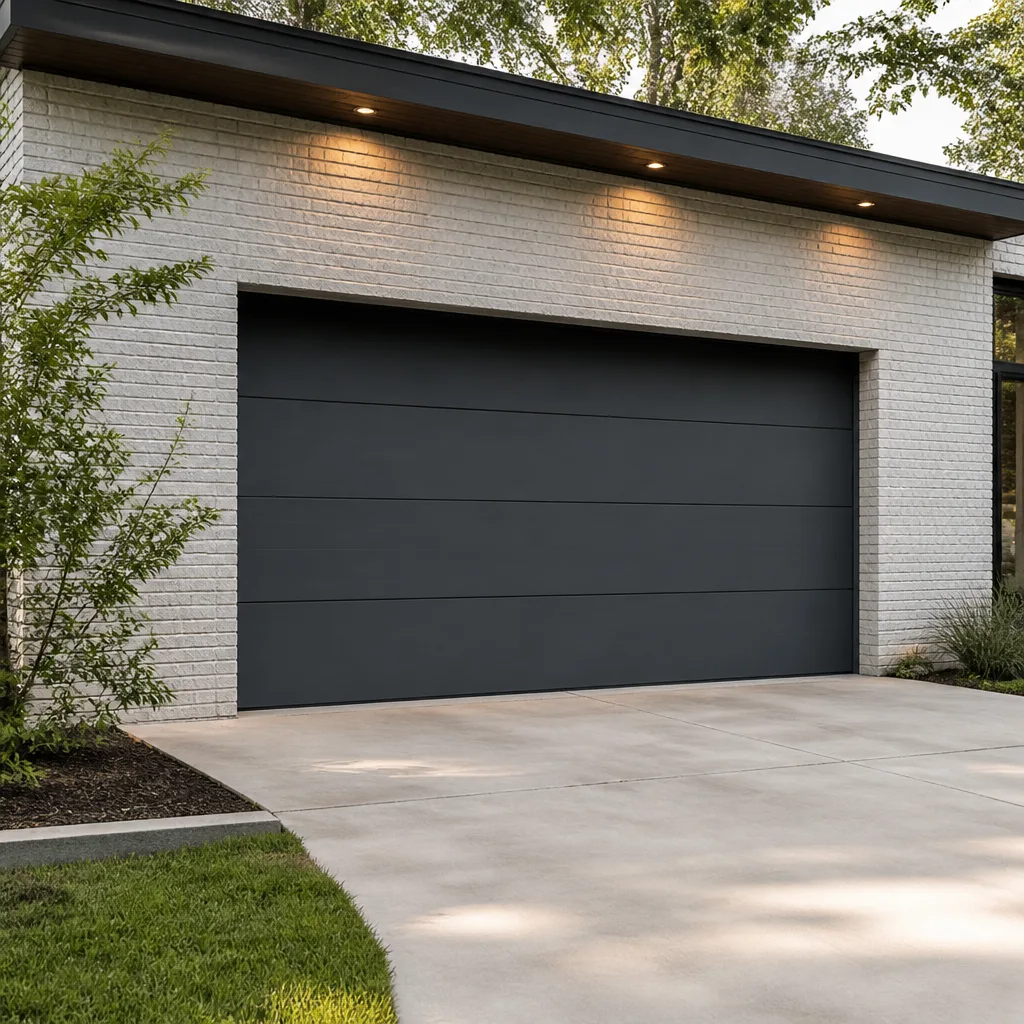 Modern flush
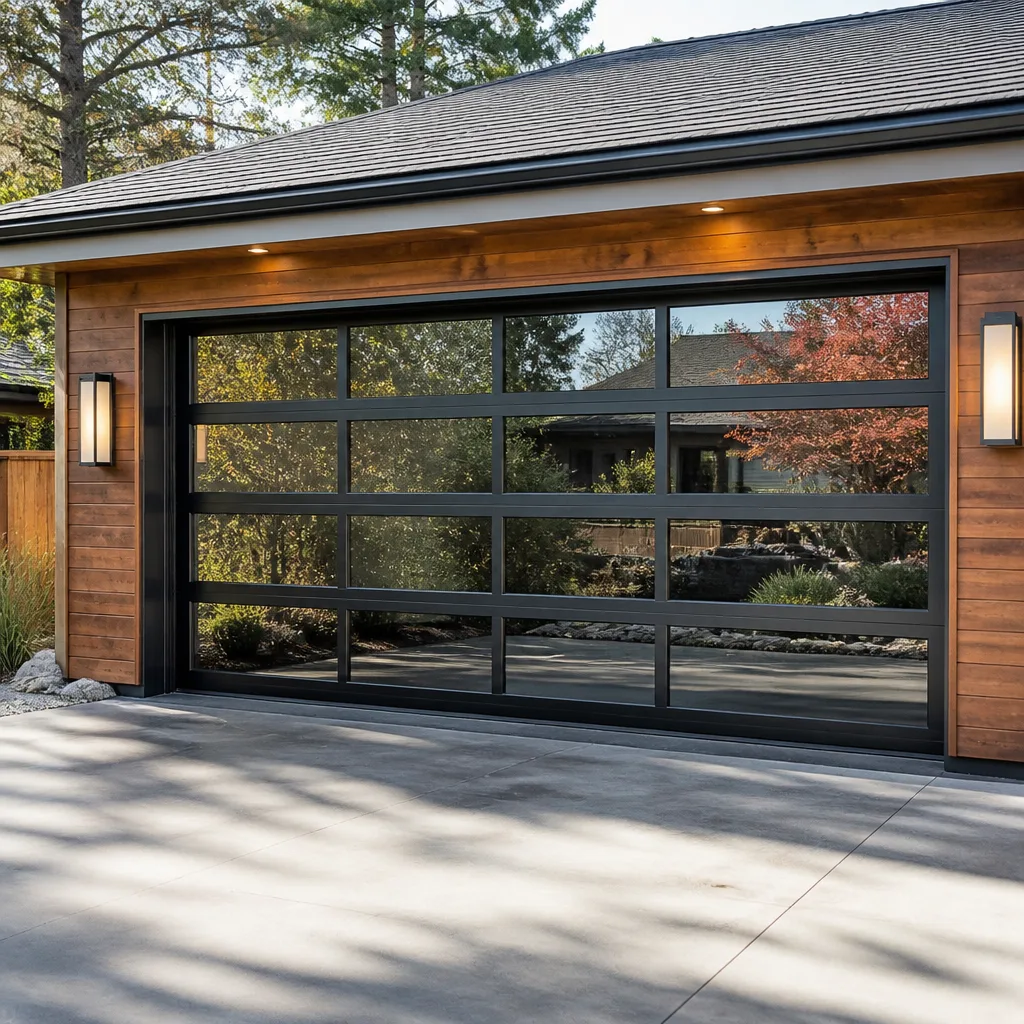 Full-view glass
 LiftMaster openers
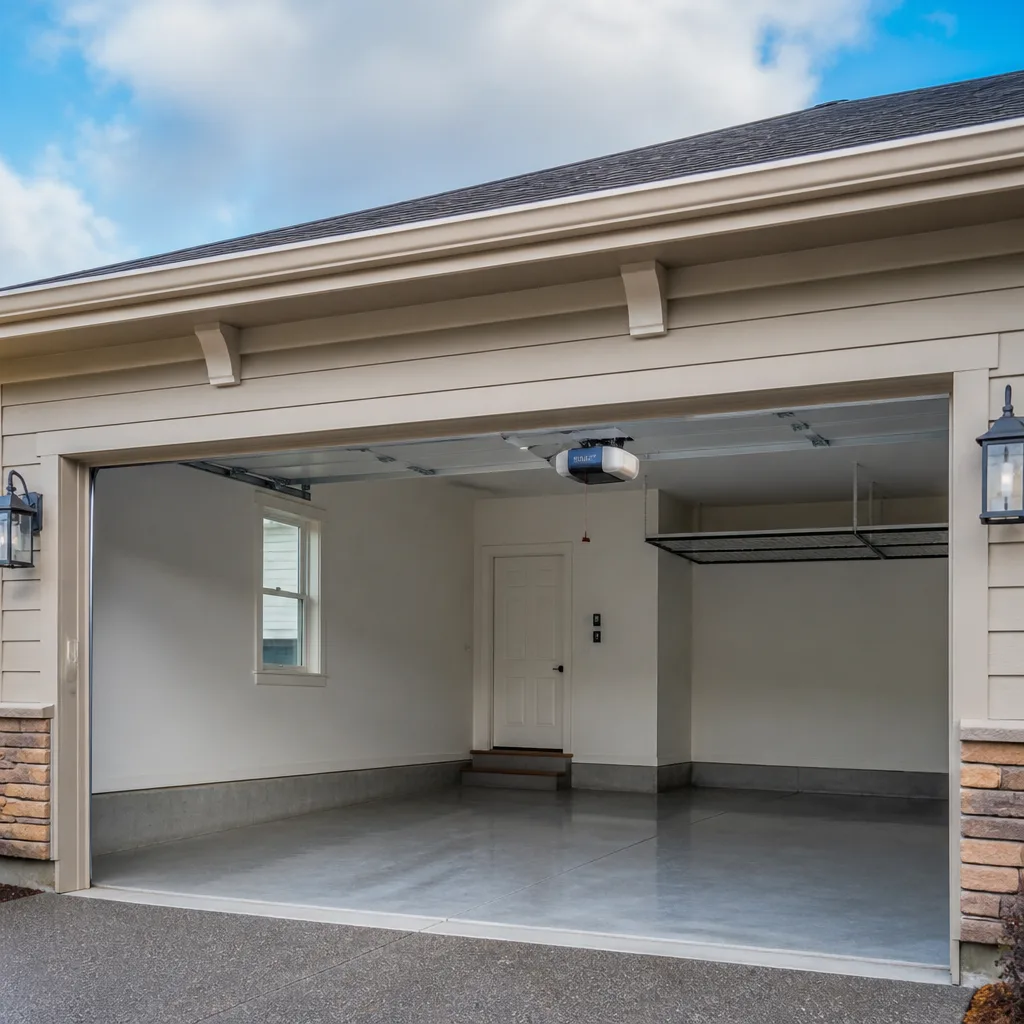 Chamberlain openers
Full 25-point door and opener safety check with every visit - springs, cables, rollers, tracks, and your LiftMaster or Chamberlain opener included
You get a price before we start. It does not change when the pro arrives.
Get your free estimateDIY vs Professional Garage Door: The Skokie Homeowner’s Decision Guide
Most garage door advice online treats “DIY vs professional” as a personality question, as if the only thing standing between you and a repair is confidence. That framing gets people hurt. The real divide is mechanical. Some garage door jobs are genuinely within reach for a careful homeowner with a Saturday and a socket set. Others involve components storing enough energy to break bone if released the wrong way, and no amount of YouTube watching changes the physics. This guide draws the line clearly, task by task, so you know what’s safe to take on and what belongs to a trained technician. We’ll cover cost math, Illinois permit rules, tool reality, and the exact moments in a repair when you should stop and call someone. Skokie readers get specific local context throughout.
Quick Answer
In Skokie, safe DIY garage door work is limited to low-tension maintenance: lubricating moving parts, replacing weather stripping and the bottom seal, aligning safety sensors, and programming remotes and keypads. Everything involving torsion or extension springs, cables, track replacement, and the electrical side of an opener should go to a trained technician. The reason is force, not skill. A wound torsion spring can hold roughly 100 foot-pounds of torque, and a sudden release can cause a serious hand or facial injury even for an experienced DIYer.
Styles & brands we work with
- Raised-panel steel
- Carriage house
- Modern flush
- Full-view glass
- LiftMaster openers
- Chamberlain openers
Table of Contents
- Why Garage Door Springs Change the Whole Conversation
- The Definitive Task List: Safe DIY vs Professional-Only
- The Real Math on DIY Opener Installation
- Permits in Skokie: What You Can Pull and What You Can’t
- Tool Reality Check: Is a One-Time DIY Worth the Cost?
- How Skokie Weather Affects the DIY Decision
- How to Find the Edge of Your Competence Mid-Repair
- When a Branded System Changes the Answer
Why Garage Door Springs Change the Whole Conversation
The torsion spring is the part that makes most people underestimate their garage door. It’s not that the door is heavy in the way a piece of furniture is heavy. It’s that the spring system stores energy equal to the door’s weight, and that stored energy is what lets a door weighing hundreds of pounds lift with one hand. When you’re looking at a broken spring, you’re looking at a component that was, moments earlier, under a load of roughly 100 foot-pounds of torque. Springs don’t fail while at rest. They fail when the metal fatigues and the load releases all at once.
Our technicians have up to 14 years of experience, and spring replacement is handled as a core specialty rather than an add-on, because the setup for doing it safely is specific: two winding bars, a vice grip on the torsion shaft, the door in full tension or full release, and a deliberate sequence that keeps the force contained in the spring rather than in your hands. That’s not a judgment about your willingness. It’s a description of what the job requires.
What stored energy actually means
A torsion spring under load behaves like a coiled spring under tension. Cut a cable or release the winding improperly, and the energy discharges into whatever is nearest, which is usually a hand, an arm, or a face. Extension springs, which run along the tracks on older doors, can whip if a safety cable isn’t present. Both spring types are covered by the same rule: this is professional territory regardless of your comfort with tools. If you notice a spring with a visible gap, a door that rises slowly or jerks, or a door that won’t stay up on its own, treat it as a safety call. Our garage door spring repair page explains the specific symptoms in more depth.
The Definitive Task List: Safe DIY vs Professional-Only
Here’s the line, drawn task by task. If a job appears in the first list, you can reasonably do it yourself. If it appears in the second, keep it with a professional. The mechanical reason for each classification is next to it.
Safe DIY tasks
- Weather stripping replacement. The stripping along the sides and top of the door is a friction seal, not a load-bearing part. Replacing it only requires trimming and fitting, and there’s no stored energy involved.
- Bottom seal replacement. The rubber seal at the base of the door wears out from contact with a concrete slab. It slides into a channel on the door’s bottom edge, so swapping it is light work and low risk.
- Lubrication. A silicone or lithium lubricant on rollers, hinges, and the torsion bar bearings keeps the door quiet and lets parts move freely. This is the single highest-value maintenance task a homeowner can do and it takes minutes.
- Safety sensor alignment. The two photo-eye sensors near the floor need to see each other. Dust, a knocked bracket, or a misaligned lens is often the whole cause of a door that closes and immediately reverses. You can clean and realign the brackets yourself.
- Remote and keypad programming. Pairing a new remote or changing a keypad code is a menu operation on LiftMaster, Chamberlain, Genie, and Craftsman units. You don’t need a technician and you don’t need to open the motor housing.
- Visual inspection. A monthly walk-around catches frayed cables, uneven gaps, loose brackets, and a door that rests crooked. That inspection is what tells you when a DIY task has become a professional job.
Professional-only tasks
- Torsion and extension spring replacement. Loaded to counterbalance the door’s weight. The winding process is the danger, not the disassembly.
- Cable replacement or adjustment. Cables carry the same tension as the springs. A fraying cable is a warning sign that something is about to release, so do not handle it yourself.
- Track replacement or realignment. A bent track binds the door and puts stress on the rollers, the springs, and the opener. Straightening a track that’s shifted requires understanding why it shifted.
- Opener electrical work. Wiring a new opener, replacing a capacitor, or troubleshooting a circuit board involves line voltage and the risk of a motor fault that burns out the board. This is where a branded opener specialist earns their fee.
- Roller and hinge replacement on a loaded door. Replacing individual rollers is sometimes manageable, but if the door is up and the spring is under tension, do it with the door closed and locked, or let a technician handle it.
- Panel replacement on a damaged door. A warped or dented panel can be cosmetic or structural depending on where it sits. Panel geometry affects how the door tracks.
Our technicians have up to 14 years of experience and are trained on the most-installed brands, so what looks like an unfamiliar assembly to a homeowner is a routine setup to us. If you’re honestly unsure where a job sits, that uncertainty is the answer. Call us and describe what you’re seeing.
The Real Math on DIY Opener Installation
The opener is where DIY temptation is strongest, because the box looks manageable and the job looks like “hang a motor and connect some wires.” The math on doing it yourself is more interesting than it looks. What you save up front is the labor portion of an opener installation. What you risk is the opener manufacturer’s warranty, because a unit installed by anyone other than a qualified technician can fall outside coverage when the failure traces back to installation, and the labor to fix or replace it afterward lands on you. On a LiftMaster or Chamberlain unit, that’s not a small exposure.
Cost of the most common DIY mistakes
- Hanging the header bracket in the wrong spot. The door needs the right amount of downforce to close fully; misplaced brackets cause the opener to strain or the door to reverse mid-travel.
- Misaligned safety sensors. A door that reverses and won’t close is often just a sensor issue, but if it comes from wiring problems rather than alignment, fixing it means opening the housing.
- Wrong travel limits. Without correct limit settings, the opener pushes the door against the floor or stops it short, and both put load on the motor.
- Line voltage mistakes. Wiring an opener to the wrong source or using an under-rated box can damage the unit or create a shock hazard. Not worth the savings.
The honest calculation looks like this. If your opener brand is one we work on constantly, the labor on installation is a predictable, one-time cost, and the value is the warranty coverage plus the travel-and-force calibration that only a technician tunes correctly. If your opener is on its last legs and you’re debating replacement anyway, the smarter move is a proper diagnosis first, because a motor that fails to close might be a sensor and a door that reverses might be a spring. Our garage door opener repair page is a good next read if you’re not sure which problem you have.
Permits in Skokie: What You Can Pull and What You Can’t
Permit rules are where a repair stops being a repair. In most of Illinois, including Skokie, this is how the line generally falls:
- Maintenance and like-for-like replacement of weather stripping, bottom seals, and hardware are typically not permit items. These are routine upkeep.
- Opener replacement in an existing opening usually doesn’t require a permit, but a homeowner should confirm with the city’s building department, because the rules change over time and depend on whether the work touches the electrical circuit.
- New door installation where the door size, header, or structure changes can require a building permit, and a licensed contractor is generally required for structural and electrical work.
- Electrical work tied to adding a new circuit or relocating an opener feed falls under the electrical code, which in practice means a licensed electrician or contractor pulls the permit.
What a Skokie homeowner can pull a permit for versus what requires a licensed contractor is a question the city’s building department answers definitively. Don’t rely on a neighbor’s memory or a forum post. A call to Skokie’s building department before you start any structural work on your garage door is worth ten minutes.
Tool Reality Check: Is a One-Time DIY Worth the Cost?
The tool question is where a lot of honest DIY plans die, and it deserves a straight answer rather than a shopping list. Some jobs need tools you already have. Others require equipment you’d buy once and use once, and the tool cost exceeds the labor you’re saving.
Where the tools are cheap and you probably have them
To lubricate a door, you need a lubricant and a rag. To align sensors, you need a screwdriver. To replace a bottom seal, you need a utility knife, a tape measure, and maybe a pair of pliers. To program a remote, you need a ladder or a step stool. These are the DIY tasks where the tool math is obvious: your cost is materials and an hour, no question.
Where the tools quietly tip the scale
For a spring replacement, you need properly rated winding bars, a vice grip for the shaft, and a ladder rated for the height of your torsion bar. For a full door install, you need a set of clamps, a level, a drill, and a way to safely handle door sections that weigh more than a person should lift alone. In our experience, a homeowner pricing those tools against a single job is usually pricing themselves into the “call someone” column, because the tools don’t get cheaper and the spring doesn’t wait. The tool cost is a useful signal: if buying the tools costs more than the labor, the repair wasn’t a DIY job in the first place.
How Skokie Weather Affects the DIY Decision
Skokie’s climate imposes a maintenance schedule that homeowners in warmer places can ignore longer. Cold winters drive the weekly freeze-thaw cycle on driveways, and that cycle affects the bottom seal, which is why the seal on a Skokie door wears sooner than the same part in a milder climate. Humidity through the summer and fall can rust rollers and hinges, which is why the lubrication task on the safe-DIY list is a monthly one here, not a yearly one. Road salt from the driveway tends to spray up toward the bottom of the door and into the rollers, which shortens the life of parts a homeowner can inspect and maintain. The climate doesn’t make a spring repair any more or less safe, but it does make inspections more valuable, and inspections are the cheapest professional-adjacent task on this list.
Our garage door repair team works in this climate every day, so the failure patterns are familiar. When the seasons turn and you’re not sure whether a sound is a weather-stripping issue or a failing spring, get it looked at before the door gets stuck in the cold.
How to Find the Edge of Your Competence Mid-Repair
The most useful skill in this guide isn’t a tool technique. It’s knowing when to stop. Every professional has a defined edge, and so should you. Here are the decision points that tell you a task has crossed the line:
- You’ve found a broken spring or a frayed cable. Stop. Don’t touch, don’t lift the door manually to inspect further, don’t try to straighten anything. The load has shifted and you don’t control it anymore.
- The door sits crooked or one side sags. Uneven doors put asymmetric load on the springs and cables, and the cause is usually on the tension side of the door.
- You’ve unplugged something to free a jammed door and can’t figure out how to get it to close evenly. This is usually a limit-setting problem on the opener, and you can call us to walk through it. That’s a reasonable middle ground between DIY and a full service call.
- Any part you removed can’t be reinstalled with confidence and the door still moves under load. Stop and call. A door held by hardware you can’t verify isn’t safe.
- The job has grown past the task you started. A bottom-seal replacement that becomes a track straightening, for example, is a sign the door has been failing for a while.
Every one of those is a stop sign. None of them is a failure. Getting the diagnosis right matters more than saving the labor on a task you didn’t need to do yourself.
When a Branded System Changes the Answer
If you have a branded opener or a branded door, brand fluency changes the DIY calculation in both directions. On a LiftMaster, Chamberlain, Genie, or Craftsman opener, programming a remote or resetting a keypad is a homeowner task and we’ll tell you so. On the repair side, brand fluency is the difference between a technician who knows the specific motor and one who’s guessing. Raynor doors, Clopay doors, and Wayne Dalton and Amarr units each have their own panel geometry and hardware patterns. A technician trained on all of them can spot a failing hinge or a warped panel that a homeowner might miss because it looks “normal” for that door. Our Skokie Garage Door Repair Co technicians are trained on those brands, so a diagnosis doesn’t start with “let’s see what we’re looking at” on your system.
Common Mistakes to Avoid
- Manually lifting a garage door to test it when a spring is clearly broken. It might lift, and then come down faster than you expect because the door’s weight is no longer counterbalanced.
- Buying a matched pair of springs but paying for one. Springs are usually replaced as a pair, even when only one has broken, because the remaining one is at the same wear stage. Plan for the pair.
- Assuming the opener is the problem. A door that reverses or won’t close is often a sensor or spring issue. A Skokie door that fails in winter is often a seal or track issue. Diagnose before you replace.
- Ignoring the permit question on a new door install. Most cities, including Skokie, have rules about structural changes to the opening. Ask the city’s building department before you buy the door.
- Doing a “quick fix” on cables or springs. Cables and springs hold the door’s weight. A temporary fix is a real safety hazard until the permanent fix is done.
- Letting a small seal problem sit through a Skokie winter. Water and road spray work into the gap and start to rust the closer parts.
- Skipping the lubrication schedule. Quiet doors last, and noise is usually the first warning.
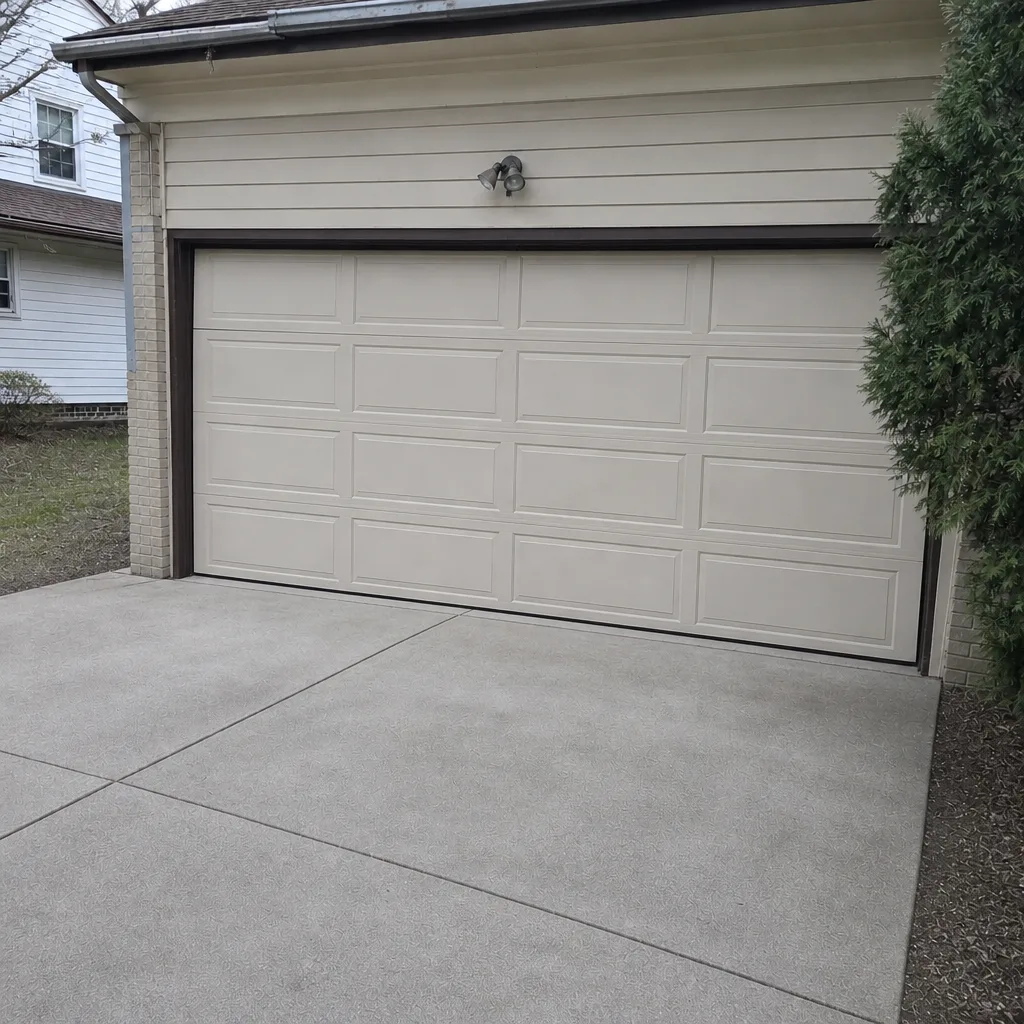
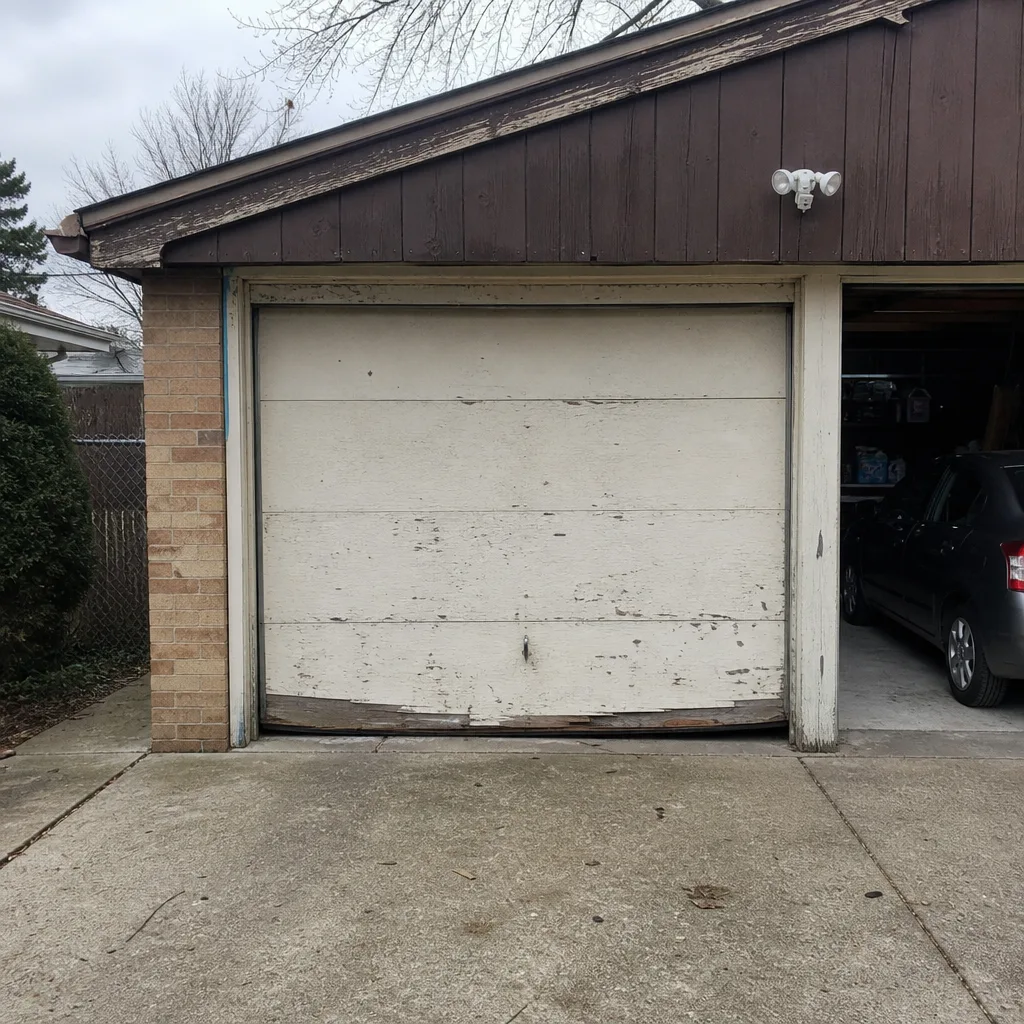
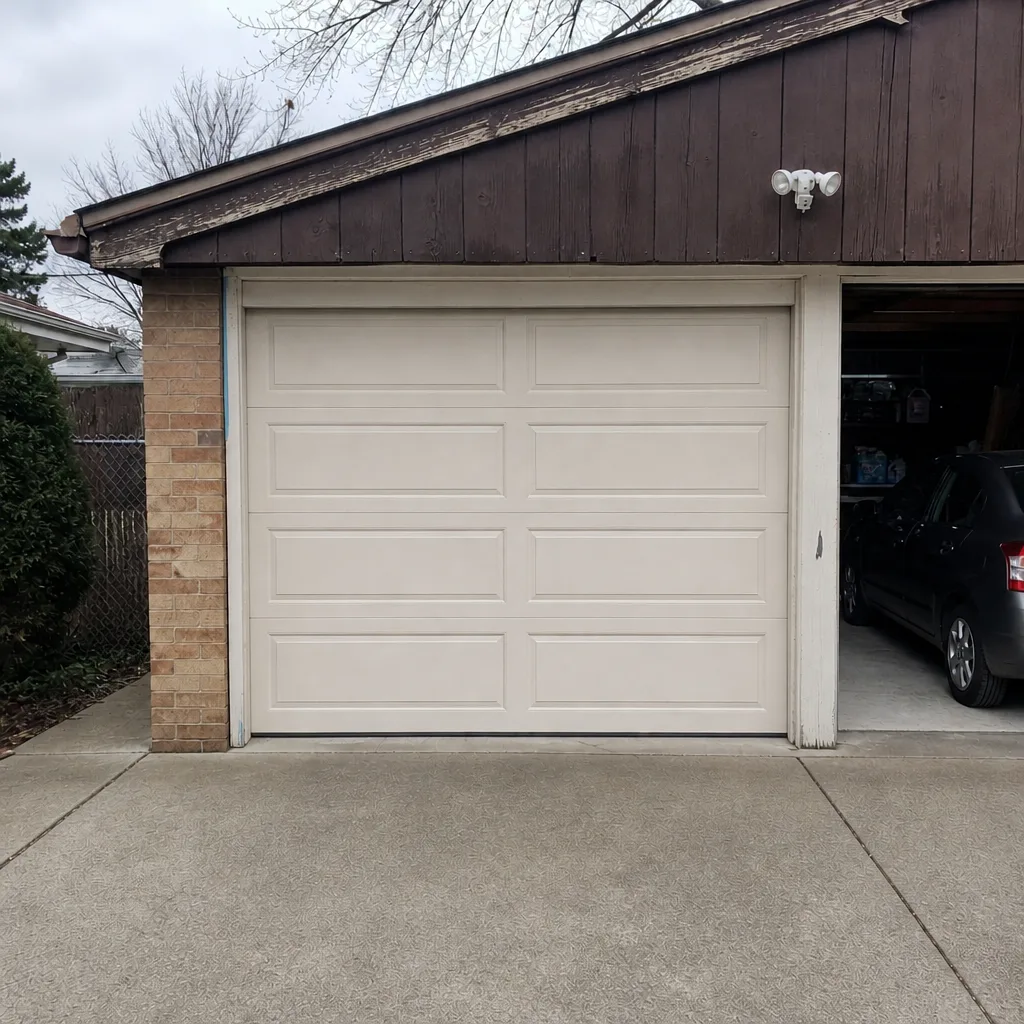
See the difference
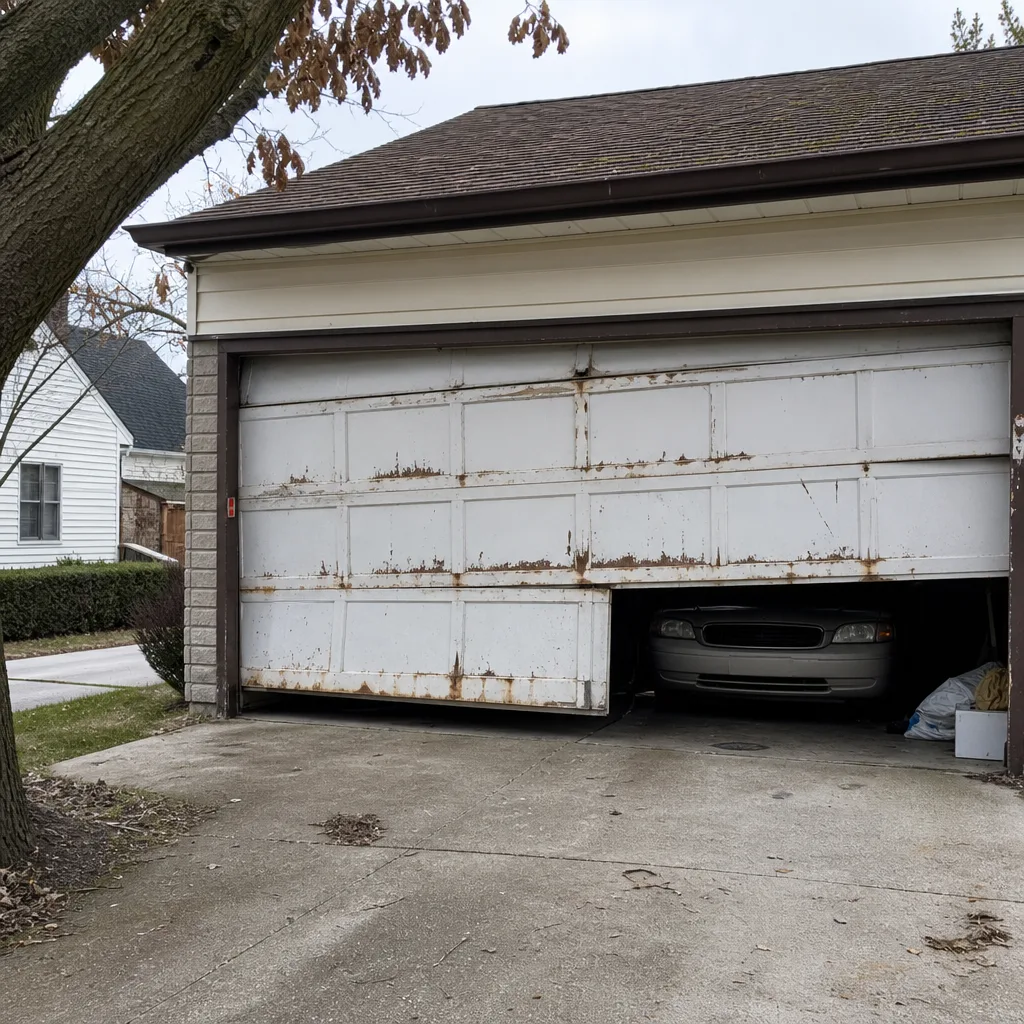 Before
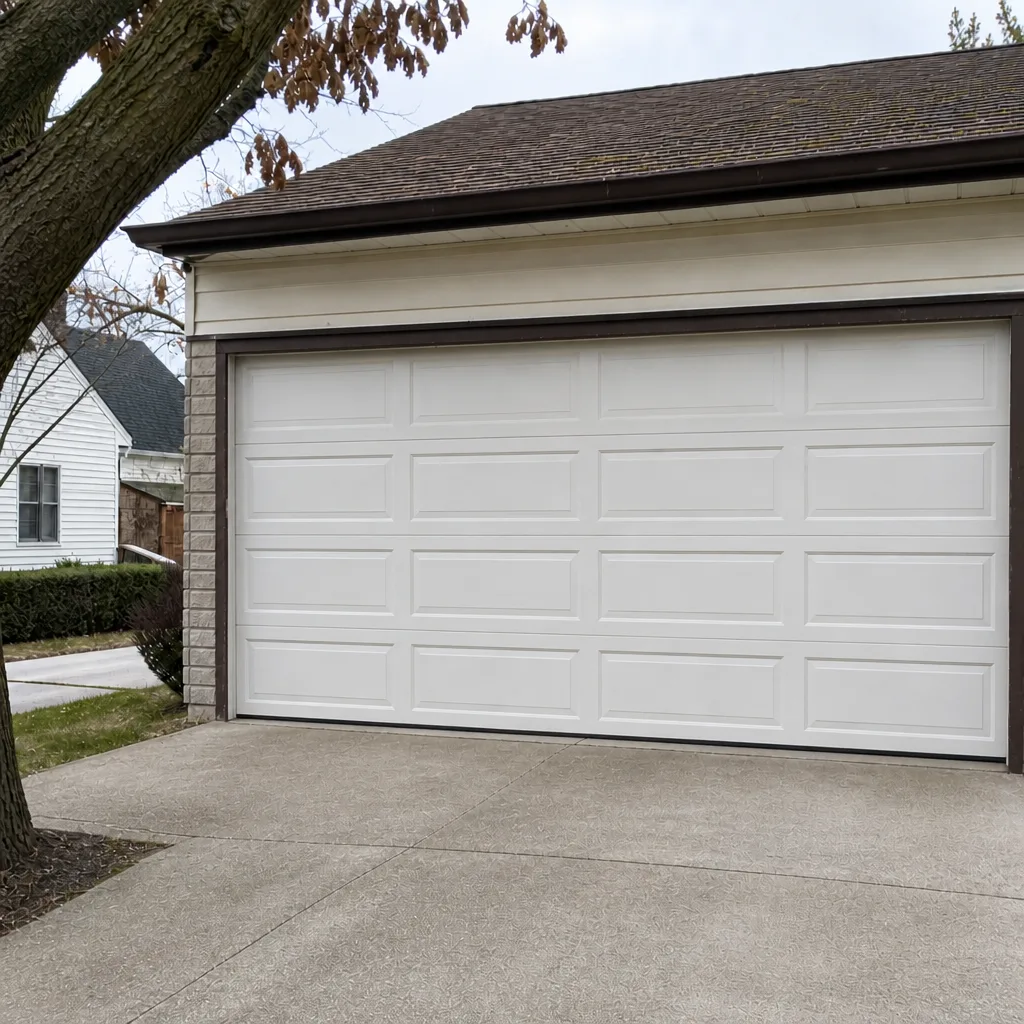 After
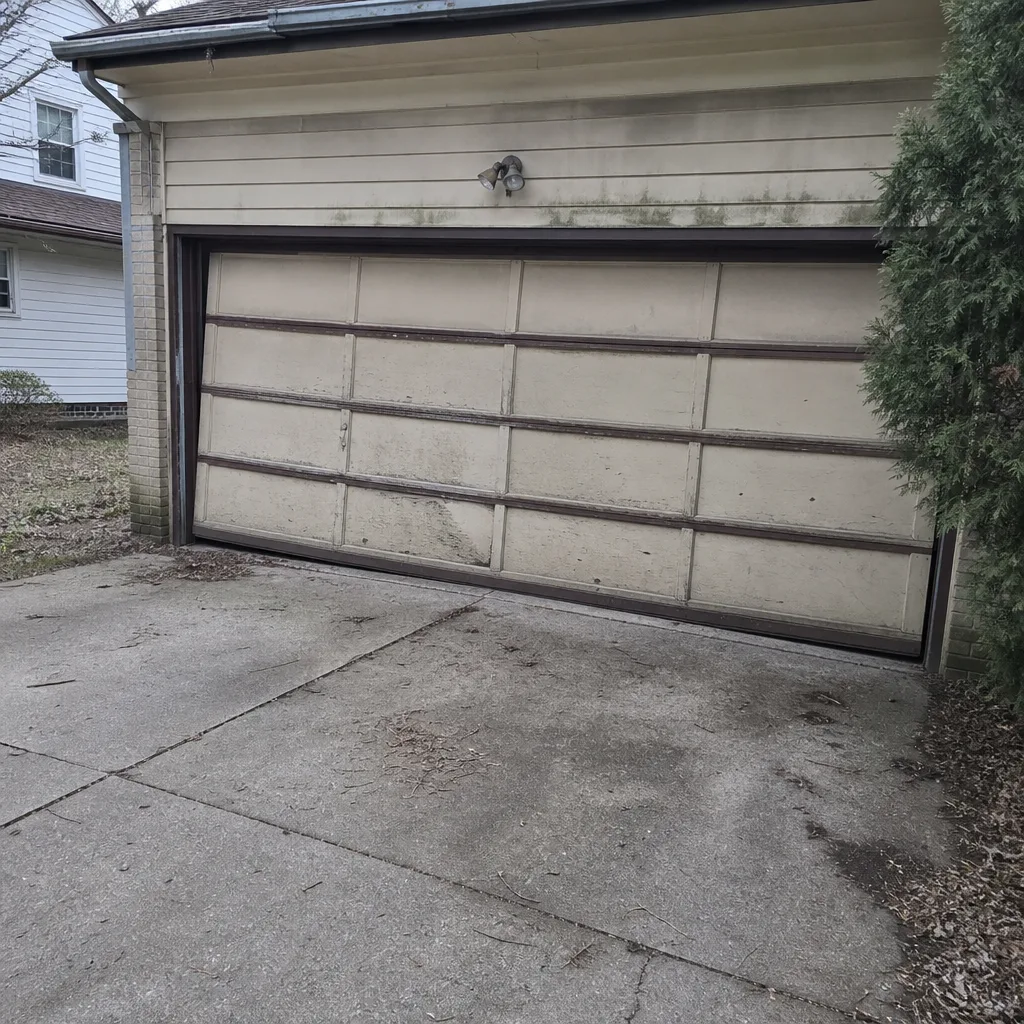 Before
 After
 Before
 After
When to Call a Professional
Call a professional when the problem is a broken spring, a damaged cable, a bent track, a failing opener motor, or any repair where the door stops moving under its own weight. Call when you’re uncertain what you’re looking at, and call when the diagnosis points to a part you can’t safely inspect. Spring and cable jobs are the clearest professional-only category because of stored energy, and opener electrical work is a close second. For less urgent situations like a door that’s noisy, a seal that needs replacing, or a sensor that needs alignment, a phone diagnosis can often tell you whether you’re on the safe side of the line. Skokie Garage Door Repair Co offers free estimates in Skokie. Call (844) 670-3544 and describe what the door is doing.
Frequently Asked Questions
No. A torsion spring under load stores roughly 100 foot-pounds of torque, and an improper release can cause a serious injury regardless of how comfortable you are with tools. Spring replacement requires tools and a winding sequence that belong to a trained technician. Call (844) 670-3544 for a free estimate instead.
Lubricating the door, replacing weather stripping and the bottom seal, aligning the safety sensors, and programming remotes and keypads are the safe DIY list. Those tasks involve low-tension parts or menu operations with no stored energy. Anything touching springs, cables, tracks, or opener wiring belongs with a professional. Call us if you’re unsure which side of the line your task falls on.
It can. Installation-related failures aren’t always covered when the unit was installed by a non-professional, and the manufacturer’s warranty terms vary by brand. On a LiftMaster, Chamberlain, Genie, or Craftsman unit, the travel and force settings are the common failure points, and those are set correctly by a trained installer. Call (844) 670-3544 and we’ll walk through your specific situation.
You may, depending on whether the work changes the door’s size, header, or structure. Routine maintenance typically doesn’t require a permit, but structural changes usually do, and electrical work is a separate category. Skokie’s building department is the authority on what applies to your door. For any job that crosses into structural or electrical territory, call us for a free estimate.
If a spring is broken, a cable is frayed, the door hangs crooked, or the door won’t move freely under its own weight, the job is beyond DIY. Those symptoms mean the load has shifted and the safe option is to leave the door closed and locked. Call (844) 670-3544 and describe what you see.
It depends on the mistake. A misaligned sensor costs a bit of time. A DIY opener install can cost warranty coverage and a replacement unit. A DIY spring repair carries injury risk, which is the reason this guide draws that line so firmly. For any Skokie job where you’re not sure, get a free estimate before you start. Call (844) 670-3544.
The Bottom Line
The line between DIY and professional garage door work is mechanical, not personal. Lubrication, weather stripping, bottom seals, sensor alignment, and remote programming are all within reach for a careful homeowner, and doing them yourself stretches the life of the door. Springs, cables, tracks, and opener electrical work are not DIY, because the stored energy in a torsion spring or the voltage in an opener housing doesn’t care how skilled you are. Use the task list in this guide, check in with Skokie’s building department before any structural work, and stop the moment a repair crosses the line. For the jobs that cross it, a free estimate is the cheapest next step.
Call Skokie Garage Door Repair Co at (844) 670-3544 for a free estimate on any garage door repair, opener repair, spring replacement, or new door installation in Skokie. A written estimate sets the price before any work starts, so there’s no surprise on the invoice. Our technicians have up to 14 years of experience and are trained on LiftMaster, Chamberlain, Genie, Clopay, Amarr, Wayne Dalton, Craftsman, and Raynor systems.
Written by the team at Skokie Garage Door Repair Co.